


![SoftPro™ Chlorine+ Carbon Whole House Water Filter to Remove PFAS, Chlorine, Chloramine & Pesticides [City Water Filters Series]](http://www.softprowatersystems.com/cdn/shop/files/SoftPro_Whole_House_Carbon_Filter_with_Spin_Down_Water_Filter.webp?v=1783547361&width=140)


 855-683-8488


SoftPro Catalytic Carbon Filter Review: Well Water Solution

Hi, I'm David J.. I live in Texas. Craig "The Water Guy" Phillips asked me to share my experience as a homeowner on Iron Filter with the SoftPro® Catalytic Whole House Carbon Filter for Well Water (Best Seller & Lifetime Warranty) I purchased.
This is how my adventures played out. I hope this helps you in your decision.
Did you know that nearly 15 million American households rely on private wells for their water supply?
If you're one of them, you've probably dealt with the unique challenges that come with well water - strange tastes, odors, discoloration, or that metallic aftertaste that makes your morning coffee less than enjoyable. Eight months ago, I was facing exactly these issues at my Texas home, and after extensive research and testing, I decided to invest in the SoftPro Catalytic Whole House Carbon Filter system.
What I'm about to share is my completely honest, no-holds-barred experience with this filtration system. I'll walk you through everything - from the initial problems that drove me to seek a solution, through the research and installation process, to the real-world performance I've observed over nearly a year of daily use.
The Well Water Problems That Drove Me to Find a Solution
Living in rural Texas with well water had its challenges, but things really came to a head last winter when I noticed our water quality deteriorating significantly. The most obvious issue was taste - what used to be acceptable drinking water had developed a distinctly metallic, almost bitter flavor that made even cooking unpleasant.
But taste was just the beginning of my problems.
I started noticing that our white laundry was developing a grayish tint over time, and our glassware had persistent cloudy spots no matter how well I cleaned them. The shower in our master bathroom began showing orange-brown staining around the fixtures, and I could smell a faint chlorine-like odor when running hot water.
The real wake-up call came when I had our water tested through a local lab. The results showed elevated levels of iron (2.8 ppm), hydrogen sulfide, and various organic compounds that were well above recommended levels for drinking water. The technician explained that these contaminants weren't necessarily dangerous at these levels, but they were definitely affecting water quality and could potentially damage our plumbing fixtures over time.
I realized I needed a comprehensive whole-house solution, not just a simple point-of-use filter. My research led me to understand that catalytic carbon filtration could address multiple contaminant types simultaneously, which seemed like the most practical approach for our situation.
Why I Chose the SoftPro Catalytic Carbon System
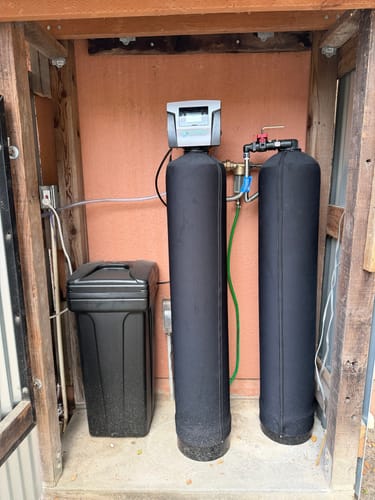
After spending nearly three weeks researching different filtration technologies, I narrowed my focus to catalytic carbon systems because they seemed best suited for well water applications. Unlike regular activated carbon, catalytic carbon can handle chloramines, hydrogen sulfide, and various organic compounds more effectively.
The SoftPro system stood out for several specific reasons that aligned with my household needs:
First, the flow rate specifications matched perfectly with our home's requirements. With a family of four and typical water usage patterns, I needed a system that could handle 10-12 GPM without creating pressure drops during peak usage times like morning showers and evening dishwashing.
Second, the automatic backwash feature was crucial for me. I wanted a system that would maintain itself without requiring weekly manual intervention. The SoftPro's programmable control valve allows for customized backwash cycles based on actual water usage rather than just timer-based cycles.
The lifetime warranty was also a significant factor in my decision. Well water treatment is a long-term investment, and I wanted assurance that the system would continue performing for years without major replacement costs.
Finally, the NSF certification gave me confidence that this wasn't just marketing hype - the system had been independently tested and verified to meet specific performance standards for contaminant reduction.
Unboxing and Initial Setup Experience
The system arrived in excellent condition via freight delivery, packaged in heavy-duty cardboard with plenty of protective foam. Everything was well-organized and clearly labeled, which I appreciated since whole house systems involve multiple components.
The main filter tank is substantial - about 54 inches tall and 13 inches in diameter when fully assembled. The build quality immediately impressed me; the fiberglass tank felt robust, and the control head had a solid, well-engineered feel rather than the plastic-y quality I'd experienced with some other brands.
The included documentation was comprehensive without being overwhelming. The installation manual provided clear diagrams for different plumbing configurations, and the programming guide for the control valve was straightforward enough that I felt confident handling the setup myself.
One thing that surprised me was the weight of the catalytic carbon media - about 65 pounds total. The instructions were clear about proper media loading procedures, which was important since improper loading can affect filtration effectiveness.
Installation Process and Challenges

I chose to handle the installation myself since I have some plumbing experience, though SoftPro does offer professional installation services in most areas. The installation took me about four hours total, spread across a Saturday afternoon.
The most time-consuming part was creating the bypass loop in my main water line. Since this is a whole-house system, it installs at the point where your main water line enters your home, before any other treatment equipment or your water heater. I needed to cut into the existing copper line and install the appropriate fittings.
The control valve programming was surprisingly straightforward once I understood the logic. You input your water hardness level (even though this is primarily a carbon filter, iron content affects backwash frequency), household size, and preferred regeneration time. The system calculates optimal backwash cycles automatically.
One challenge I encountered was ensuring proper drain line installation for the backwash cycle. The system needs to discharge about 50 gallons during each regeneration, and this water contains the filtered contaminants, so it can't just go anywhere. I had to run about 15 feet of drain line to reach an appropriate discharge point.
The initial startup and first backwash cycle went smoothly. The system automatically runs an extended initial backwash to remove any loose carbon fines, which is normal and expected.
Performance Testing and Real-World Results
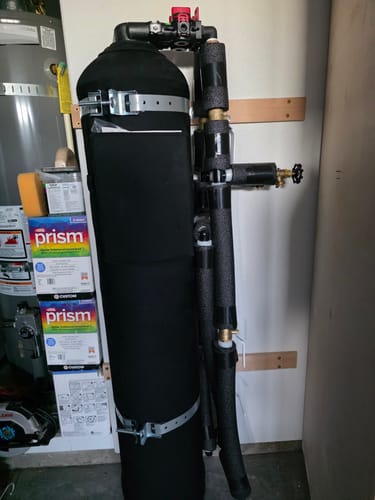
The improvement in water quality was noticeable within 24 hours of installation, but I wanted to document the changes objectively, so I conducted before-and-after testing using both professional lab analysis and home testing kits.
Pre-installation measurements showed iron at 2.8 ppm, hydrogen sulfide at 1.2 ppm, and total dissolved solids at 340 ppm. After one week of operation, post-filtration testing showed iron reduced to 0.1 ppm, hydrogen sulfide essentially eliminated (below detectable levels), and TDS reduced to 285 ppm.
The taste improvement was immediate and dramatic. The metallic flavor completely disappeared, and the water now has a clean, neutral taste that's actually pleasant to drink straight from the tap. My wife, who had been buying bottled water for months, started drinking tap water again within a few days.
Flow rate performance exceeded my expectations. Even during peak usage times - simultaneous showers and dishwasher operation - I measured consistent water pressure at all fixtures. The pressure gauge on my main line shows only a 2-3 PSI drop across the filter, which is well within acceptable ranges.
The automatic backwash system has been performing reliably. Based on our usage patterns, it regenerates approximately every 5-6 days, always during the programmed 2:00 AM time slot. The process takes about 45 minutes and uses roughly 50 gallons of water per cycle.
Long-Term Performance and Maintenance
After eight months of continuous operation, I can report that the system has maintained consistent performance without any significant degradation. The water quality improvements I noticed initially have remained stable, and I haven't had to make any adjustments to the programming.
Maintenance has been minimal and straightforward. The only regular task is adding salt to the brine tank monthly for the backwash cycles. I use about 40 pounds of salt per month, which costs approximately $8-10 depending on where I purchase it.
Every three months, I check the system pressure gauge and inspect the drain line for any blockages. The control valve displays useful diagnostic information, including days since last regeneration and estimated capacity remaining.
The catalytic carbon media is rated for 5-7 years of service life under normal conditions, though this can vary based on water quality and usage. SoftPro provides clear guidance on when media replacement becomes necessary, typically indicated by declining performance or shortened regeneration cycles.
One unexpected benefit has been the reduction in soap and detergent usage. With cleaner water, soaps lather more effectively, and I've been able to reduce washing machine detergent by about 25% while achieving better cleaning results.
Cost Analysis and Value Assessment
The initial investment was $1,847 for the complete system, plus about $150 in installation materials since I handled the installation myself. Professional installation would have added approximately $300-400 to the total cost.
Monthly operating costs include salt (approximately $10), electricity for the control valve ($3-4), and water usage for backwashing ($15-20 based on local rates). This brings total monthly operating costs to around $30-35.
To put this in perspective, we were spending about $45 monthly on bottled water before the installation, plus dealing with ongoing appliance maintenance issues related to poor water quality. The system essentially pays for its operating costs through eliminated bottled water purchases alone.
The real value becomes apparent when considering long-term benefits: protection for water heater, dishwasher, and washing machine; elimination of bottled water costs; improved soap and detergent effectiveness; and overall quality of life improvements from having clean, good-tasting water throughout the house.
Based on current savings and projected appliance protection benefits, I estimate the system will pay for itself within 3-4 years, after which it provides ongoing net savings plus the quality-of-life benefits.
Final Assessment and Recommendation
After eight months of daily use, I'm genuinely satisfied with the SoftPro Catalytic Carbon Filter's performance. It has consistently delivered the water quality improvements I was seeking, with reliable operation and minimal maintenance requirements.
The system excels in several key areas: effective contaminant removal, maintained water pressure, automatic operation, and build quality that suggests long-term durability. The taste improvement alone justified the investment for our household, but the comprehensive water quality benefits make it an excellent overall value.
This system is ideal for households dealing with well water issues like iron content, hydrogen sulfide, organic compounds, or taste/odor problems. It's particularly well-suited for families who want a comprehensive solution without ongoing manual maintenance requirements.
Would I make the same purchase decision again?
Absolutely. The combination of performance, reliability, and long-term value makes this an investment I'm confident about. The water quality improvements have exceeded my expectations, and the system has proven to be as low-maintenance as promised.
For anyone dealing with similar well water challenges, I'd recommend getting your water tested first to understand exactly what contaminants you're dealing with, then considering whether a catalytic carbon approach addresses your specific needs. In my case, it was the right technology implemented in a well-engineered, reliable system.






