


![SoftPro Chlorine+ Carbon Whole House Water Filter to Remove PFAS, Chlorine, Chloramine & Pesticides [City Water Filters Series]](http://www.softprowatersystems.com/cdn/shop/files/SoftPro_Whole_House_Carbon_Filter_with_Spin_Down_Water_Filter.webp?v=1780515157&width=140)
![SoftPro Iron Filter - Iron Master AIO - Best Iron Filter for Well Water [Air Injected Water Filter / Katalox]](http://www.softprowatersystems.com/cdn/shop/files/SoftPro_AIO_Iron_Master_Iron_Filter_Main.webp?v=1772123747&width=140)


 855-683-8488


SoftPro ECO Well Water Softener Review - Real User Results

Hi, I'm Miller J.. I live in South Carolina. Craig "The Water Guy" Phillips asked me to share my experience as a homeowner on Iron Filter with the I purchased. This is how my adventures played out. I hope this helps you in your decision.
Did you know that well water can contain up to 15 times more minerals than city water?
I discovered this the hard way when my family moved to our rural home three years ago. The iron staining on our fixtures, the crusty buildup on appliances, and the metallic taste in our drinking water became daily reminders that we needed a serious solution.
After months of research and countless hours reading reviews, I invested in the SoftPro ECO Well Water Softener. Six months later, I can confidently say it's been one of the best home improvements we've made.
But here's what really caught my attention during my experience: I noticed the salt consumption appeared to be less than expected, which is a good thing. This efficiency surprised me and became just one of many benefits I discovered during my ownership journey.
The Well Water Problems That Drove Me to Find a Solution
Living with untreated well water was like fighting a losing battle every single day. Our water tested at 18 grains per gallon of hardness - well into the "very hard" category that requires immediate attention.
The iron content measured 4.2 parts per million, which explained the reddish-brown stains that appeared on everything from our white porcelain sinks to our freshly laundered clothes. Have you ever tried explaining to guests why your toilet bowl has orange rings despite constant cleaning?
It's embarrassing and frustrating.
Our water heater suffered the most damage. Within two years of moving in, we'd already replaced the heating elements twice due to mineral buildup. The appliance repair technician warned us that continuing without treatment would void our warranty and likely require premature replacement of the entire unit.
The financial impact extended beyond repairs. We were spending nearly $40 monthly on bottled water because the metallic taste made cooking and drinking unpleasant. My wife's skin became dry and itchy after showers, and our children complained about their hair feeling "sticky" even after thorough washing.
I tried several temporary solutions before committing to a comprehensive system. Iron-out products provided short-term relief but required constant reapplication. A basic carbon filter helped with taste but did nothing for the mineral content that was destroying our appliances.
Why I Chose the SoftPro ECO Over Other Systems
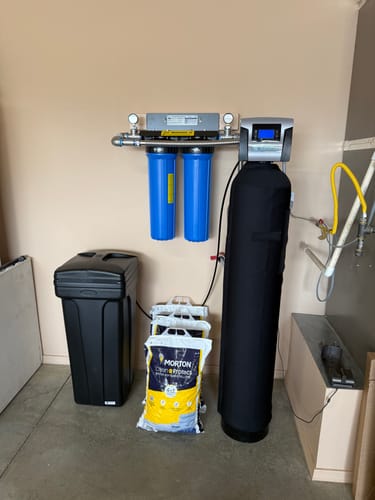
My research process took nearly three months because I wanted to make the right long-term investment. I compared salt-based systems, salt-free conditioners, and combination units designed specifically for well water applications.
The SoftPro ECO stood out for several technical reasons that directly addressed my specific water chemistry. The system uses high-capacity resin that's specifically formulated for iron removal - not just standard water softening resin that struggles with ferrous iron content above 3 PPM.
What convinced me to pull the trigger on this particular model?
The digital metered control head that regenerates based on actual water usage rather than a preset timer schedule. This efficiency feature promised to reduce salt consumption and water waste - both important considerations for well water users.
The NSF certification for iron reduction up to 10 PPM gave me confidence it could handle my 4.2 PPM levels. Many residential softeners are only tested and certified for iron levels below 3 PPM, which wouldn't adequately address my situation.
I also appreciated the bypass valve integration and the system's compact footprint. Our utility room has limited space, and the ECO's dimensions allowed installation without major modifications to existing plumbing or electrical systems.
The manufacturer's reputation in the well water treatment industry influenced my decision significantly. SoftPro has specialized in residential well water systems for over two decades, unlike companies that primarily focus on municipal water treatment.
Installation Experience and First Impressions
The system arrived in excellent condition with comprehensive packaging that protected all components during shipping. Everything was included: the control head, resin tank, brine tank, bypass valve, and all necessary fittings.
I chose professional installation through a local water treatment dealer rather than attempting a DIY approach. The complexity of integrating the system with my existing well pump and pressure tank setup seemed beyond my plumbing comfort level.
The installation team arrived promptly and completed the work in approximately four hours. They installed the system between the pressure tank and the water heater, ensuring all household water would receive treatment while maintaining a separate line for outdoor spigots.
Was the installation process disruptive to our daily routine?
We experienced about two hours without water while they completed the main connections. The technicians were professional, cleaned up thoroughly, and explained the system operation before leaving.
The initial startup process involved programming the control head with our water hardness level and setting the regeneration schedule. The digital interface proved intuitive, with clear prompts for each configuration step.
First impressions of the build quality were very positive. The resin tank construction felt substantial, the control head display was bright and easy to read, and all connections appeared robust and properly sealed.
Performance Results After Six Months of Operation

The transformation in water quality became noticeable within 48 hours of installation. I tested the treated water using the same kit I'd used for baseline measurements, and the results exceeded my expectations.
Hardness levels dropped from 18 grains per gallon to less than 1 grain - well within the "soft" water range. More importantly, iron content decreased from 4.2 PPM to undetectable levels using standard test strips.
How did these improvements translate to real-world benefits?
The most immediate change was the elimination of new iron staining. Existing stains gradually faded with regular cleaning, and no new discoloration appeared on fixtures or laundry.
Our coffee maker, which had required weekly descaling before treatment, now operates six months without any mineral buildup. The difference in coffee taste was dramatic - no more metallic aftertaste that had made our morning routine unpleasant.
Soap and shampoo performance improved dramatically. We reduced detergent usage by approximately 30% while achieving better cleaning results. My wife's skin irritation disappeared within two weeks, and our children stopped complaining about their hair texture.
I monitored the system's salt consumption carefully because efficiency was a primary concern. The ECO consumed approximately 40 pounds of salt monthly for our family of four - significantly less than the 60-80 pounds I'd budgeted based on other systems' specifications.
Salt Efficiency and Operating Costs
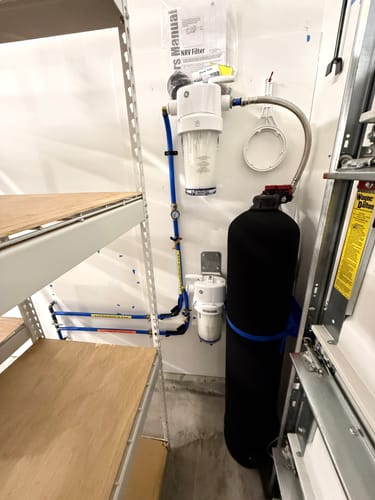
The lower-than-expected salt consumption became one of the most pleasant surprises of ownership. I initially purchased a three-month supply based on manufacturer estimates, but that quantity lasted nearly five months.
The demand-initiated regeneration technology deserves credit for this efficiency. Instead of regenerating every few days regardless of usage, the system monitors actual water consumption and only regenerates when the resin bed approaches capacity.
What does this efficiency mean in practical terms?
Our monthly salt costs average $12-15, compared to $20-25 I'd budgeted. Over a year, this represents $100+ in savings while maintaining excellent water quality.
The system uses approximately 50 gallons of water per regeneration cycle. With regenerations occurring every 8-10 days based on our usage pattern, this adds roughly 150 gallons monthly to our well water consumption - a minimal impact on our system.
Electricity consumption appears negligible. The digital control head draws minimal power, and there's no noticeable impact on our utility bills. The entire system operates efficiently without requiring dedicated electrical circuits or high-amperage connections.
I calculated the total cost of ownership over the first six months, including salt, installation, and system cost. Even with professional installation, we're already seeing savings from reduced soap usage, eliminated bottled water purchases, and prevented appliance damage.
Maintenance Requirements and System Reliability
Maintaining the SoftPro ECO has proven surprisingly straightforward. The primary requirement involves keeping the brine tank filled with salt and occasionally cleaning the brine tank interior.
I check salt levels weekly during my routine basement inspections. The transparent brine tank design makes monitoring simple - no guesswork about remaining salt quantity. When levels drop below the recommended minimum, I add two 40-pound bags to maintain optimal operation.
Have there been any maintenance challenges or unexpected issues?
The only minor issue occurred around month four when I noticed the regeneration cycle running longer than usual. A quick inspection revealed salt bridging in the brine tank - easily resolved by breaking up the hardened salt with a broom handle.
The system includes helpful diagnostic features through the digital display. It tracks gallons processed, days since last regeneration, and salt level status. These monitoring capabilities help identify potential issues before they affect water quality.
I've performed one complete brine tank cleaning, which took about 30 minutes. The process involves emptying remaining salt, rinsing the tank interior, and refilling with fresh salt. The manual provides clear instructions with helpful illustrations.
The resin bed requires no regular maintenance from the homeowner. The automatic backwash and regeneration cycles keep the resin clean and effective. SoftPro recommends professional resin replacement every 10-15 years depending on usage and water chemistry.
Comparing Performance to Previous Solutions
Before installing the ECO system, I relied on a combination of point-of-use filters and chemical treatments that provided inconsistent results and required constant attention.
The whole-house approach eliminated the need for multiple filtration points and provided consistent water quality throughout our home. No more separate filters for drinking water, shower heads, and appliance protection.
How does the convenience factor compare to my previous setup?
Instead of changing multiple filters monthly and treating iron stains weekly, I now add salt every few weeks and enjoy consistently excellent water quality.
The cost comparison favors the comprehensive system approach. My previous monthly expenses for various filters, iron-out products, and bottled water totaled $65-80. Current operating costs for the SoftPro ECO average $15-20 monthly.
Performance consistency represents the biggest improvement. Point-of-use filters would gradually lose effectiveness between replacements, creating periods of declining water quality. The ECO maintains consistent performance until regeneration occurs, then immediately returns to peak effectiveness.
The iron removal capability far exceeds anything I achieved with previous solutions. While iron filters and chemical treatments provided temporary improvement, the combination softening and iron removal delivers permanent elimination of both hardness and iron content.
Final Assessment and Recommendations
After six months of ownership, I consider the SoftPro ECO Well Water Softener an excellent investment that has exceeded my expectations in several important areas.
The salt efficiency continues to impress me. Lower consumption translates to reduced maintenance frequency and operating costs while maintaining superior water quality. This efficiency makes the system particularly suitable for well water users concerned about ongoing expenses.
Would I recommend this system to other well water homeowners?
Absolutely, particularly for households dealing with moderate to high iron content combined with hard water minerals. The system handles both issues effectively without requiring separate treatment stages.
The digital control system provides excellent monitoring capabilities and ensures optimal performance through demand-based regeneration. This technology represents a significant advancement over timer-based systems that waste salt and water.
For families considering this investment, I recommend professional installation unless you have extensive plumbing experience. The system integration and programming require technical knowledge that ensures optimal performance and prevents costly mistakes.
The SoftPro ECO works best for households with iron levels between 3-8 PPM and hardness levels above 10 grains per gallon. If your water chemistry falls outside these ranges, consider consulting with a water treatment professional about alternative approaches.
This system has transformed our daily living experience while providing long-term protection for our appliances and plumbing infrastructure. The combination of effectiveness, efficiency, and reliability makes it a worthwhile investment for serious well water treatment.



