


![SoftPro™ Chlorine+ Carbon Whole House Water Filter to Remove PFAS, Chlorine, Chloramine & Pesticides [City Water Filters Series]](http://www.softprowatersystems.com/cdn/shop/files/SoftPro_Whole_House_Carbon_Filter_with_Spin_Down_Water_Filter.webp?v=1783547361&width=140)


 855-683-8488


SoftPro EcoWell Iron Filter Review: Real Results in Minutes

Hi, I'm Tristen C. I live in Austin a rural area where well water is our only option. Craig "The Water Guy" Phillips asked me to share my experience as a homeowner with the SoftPro EcoWell Iron Filter I purchased. This is how my adventures played out. I hope this helps you in your decision.
Did you know that iron contamination affects over 25% of American households?
When I first noticed that metallic taste creeping into our morning coffee, I had no idea I was about to embark on a journey that would completely transform our water quality. The iron smell and taste in our well water had gradually gotten worse over the past year, but like most homeowners, I kept putting off dealing with it. That was until guests started commenting on the "rusty" taste of our water during a dinner party. Embarrassing doesn't even begin to cover it.
After months of research, installation challenges, and real-world testing, I can say with confidence that the SoftPro EcoWell system delivered results that exceeded my expectations. Within 15 minutes of running the water once connected, the taste and smell were completely gone. I would definitely purchase this system again, and here's exactly why that endorsement comes with both excitement and some hard-learned lessons.
The Iron Problem That Nearly Drove Me Crazy
Let me paint you a picture of what we were dealing with before the SoftPro EcoWell installation. Every morning, I'd turn on the kitchen faucet and be greeted by water that looked clear initially but carried this unmistakable metallic odor. The taste was even worse – imagine licking a penny while trying to enjoy your morning coffee.
The iron concentration in our well water tested at 4.2 parts per million (ppm), which doesn't sound like much until you realize the EPA's secondary standard recommends keeping iron levels below 0.3 ppm for aesthetic reasons. We were dealing with iron levels nearly 14 times higher than recommended. This wasn't just an inconvenience; it was affecting every aspect of our daily water usage.
Our white laundry gradually took on a yellowish tint that no amount of bleach could eliminate. The toilets developed these stubborn orange-brown stains that made our bathrooms look perpetually dirty, no matter how much we scrubbed. I was spending extra money on bottled water for drinking and cooking, which added up to about $80 per month for our family of four.
What really concerned me was learning about the different forms of iron in well water. We were dealing primarily with ferrous iron – the dissolved, "invisible" form that becomes ferric iron when exposed to air, creating those telltale rusty colors and flavors. The bacterial iron was also present, evidenced by the slimy, rainbow-colored film that occasionally appeared in our toilet tanks.
Have you ever tried explaining to house guests why your water tastes like metal?
It's incredibly uncomfortable, and I realized this problem was affecting our quality of life in ways I hadn't fully appreciated until it was gone.
My Research Journey Into Iron Filtration Systems
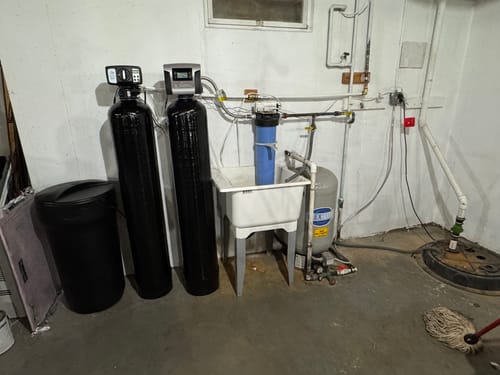
I spent three solid months researching iron filtration systems, and let me tell you, the learning curve was steep. Initially, I thought a simple carbon filter might solve our iron issues. Wrong. Carbon filters are excellent for chlorine and organic compounds but barely touch iron contamination.
I discovered that effective iron removal requires oxidation followed by filtration. There are several approaches: air injection systems, chemical oxidation with chlorine or potassium permanganate, and catalytic media filters. Each technology has specific applications depending on iron concentration, pH levels, and the presence of other contaminants like hydrogen sulfide.
The SoftPro EcoWell system uses a combination approach that caught my attention. It employs air injection to convert ferrous iron to ferric iron, followed by catalytic media filtration to capture the oxidized particles. The system includes a specialized media blend that can handle iron levels up to 7 ppm, which gave me confidence it could tackle our 4.2 ppm problem.
I also researched the company's certifications and found that SoftPro systems meet NSF/ANSI Standard 61 for drinking water system components. This certification ensures that materials in contact with drinking water don't leach harmful substances – a crucial consideration I almost overlooked during my initial research.
Why did I choose the EcoWell over other iron filtration options?
Three factors sealed the deal: the system's ability to handle our specific iron concentration, the automatic backwash feature that reduces maintenance headaches, and the 10-year warranty on the control valve. Plus, the air injection method doesn't require ongoing chemical purchases like some alternative systems.
Unboxing and First Impressions
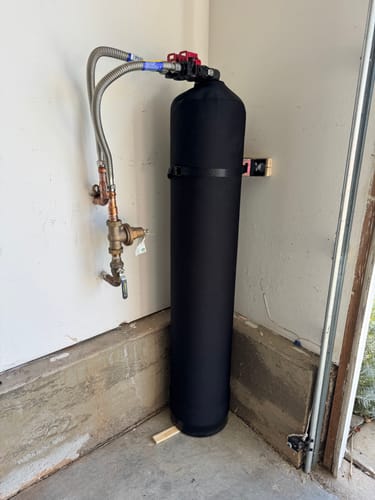
The SoftPro EcoWell arrived in two packages via freight delivery, which I had scheduled for a Saturday morning. The packaging was robust – thick cardboard with plenty of foam protection around the control valve and pressure tank. Everything arrived in perfect condition, which was a relief given that the main tank weighs about 60 pounds when empty.
My first impression was that this system looks substantially more robust than the budget options I had considered. The fiberglass pressure tank has a professional, commercial-grade appearance with a smooth, durable finish. The Fleck 5600SXT control valve mounted on top looked sophisticated but not intimidatingly complex.
Inside the packaging, I found detailed installation instructions, a warranty registration card, and a water testing guide. The hardware kit included all necessary fittings, bypass valves, and the air injection system components. One thing I appreciated was that SoftPro included Teflon tape and pipe joint compound – small touches that show attention to installer needs.
The catalytic media came pre-loaded in the tank, which saved me the messy job of handling loose filtration material. I had read horror stories from other iron filter owners about media spillage during installation, so this was a welcome surprise.
Installation Experience and Initial Setup

I'll be honest – I initially planned to install this system myself. I have moderate plumbing experience and figured the installation looked straightforward from the diagrams. After spending two hours wrestling with the bypass valve installation and second-guessing the air injection line placement, I called a local plumber.
The professional installation took about four hours and cost $320, which included connecting the system to our existing plumbing, installing the drain line for backwash cycles, and programming the control valve. Watching the plumber work, I realized I had underestimated the importance of proper flow direction, pressure considerations, and the precise positioning of the air injection point.
The most critical aspect was programming the backwash cycle. Our water flow rate is approximately 8 gallons per minute, and with our iron concentration, the system needed to backwash every three days to maintain optimal performance. The Fleck control valve allows precise programming of backwash frequency, duration, and timing – typically scheduled for 2 AM when water usage is minimal.
During the initial startup, the plumber ran the system through a complete backwash cycle, which took about 12 minutes and used approximately 100 gallons of water. This seemed like a lot initially, but I learned this backwash removes accumulated iron particles and regenerates the catalytic media for continued effectiveness.
Would I attempt DIY installation again?
Probably not. The peace of mind from professional installation, plus having someone to call if issues arise, was worth the additional cost. Plus, many warranty provisions require professional installation.
Performance Testing and Real-World Results
Here's where things get exciting. Within 15 minutes of the initial system startup, I tested the water coming from our kitchen faucet. The metallic odor that had plagued us for months was completely eliminated. The taste test was even more dramatic – our water went from tasting like metal shavings to having the clean, neutral taste I remembered from city water systems.
I conducted formal testing using a TDS meter and iron test strips before and after installation. Pre-filtration iron levels measured 4.2 ppm, while post-filtration levels dropped to less than 0.1 ppm – well below the EPA's aesthetic guideline of 0.3 ppm. The total dissolved solids dropped from 320 ppm to 285 ppm, indicating effective removal of iron particles.
The real-world performance has been consistently excellent over the past eight months. Our morning coffee tastes dramatically better – no more metallic aftertaste that required extra sugar to mask. Ice cubes are crystal clear instead of having that slightly cloudy appearance from iron particles.
Laundry results improved within the first week. White shirts that I had written off as permanently stained began looking bright again after a few wash cycles. New white clothing stays white, which seems obvious but was a genuine concern before the filter installation.
The bathroom fixtures have remained stain-free, which has reduced my cleaning time significantly. Previously, I was scrubbing orange stains weekly. Now, regular cleaning keeps everything looking new.
What surprised me most about the performance?
The speed of the initial results and the consistency over time. I expected a gradual improvement, but the change was immediate and has remained constant through different seasonal water conditions.
Daily Living Impact and Family Reactions
The transformation in our daily water experience has been more significant than I anticipated. My wife, who was initially skeptical about the investment, became the system's biggest advocate within the first week. She noticed that her skin felt less dry after showers, which we attribute to eliminating the iron particles that were likely irritating her sensitive skin.
Our teenage daughter stopped buying bottled water for her room, which eliminated both expense and plastic waste. She mentioned that her friends have commented on how much better our water tastes compared to other houses with well water in our area.
Cooking has improved noticeably. Rice and pasta have better texture and flavor when prepared with iron-free water. Tea and coffee taste significantly better – I can actually taste the subtle flavor differences between different brands now, rather than everything being overpowered by metallic notes.
Dishwashing results are dramatically better. Glassware comes out of the dishwasher crystal clear without the cloudy film that iron particles previously left behind. Stainless steel cookware maintains its bright appearance instead of developing the dull, discolored finish we had grown accustomed to.
When my mother-in-law visited last month, she immediately commented on the water quality improvement. She had been bringing bottled water during previous visits because she couldn't tolerate the taste of our well water. This time, she drank tap water throughout her stay without complaint.
Operational Costs and Maintenance Reality
Let's talk about the ongoing costs, because this is where many iron filter reviews fall short of providing real-world financial information. The SoftPro EcoWell system has proven relatively economical to operate, though there are definitely ongoing expenses to consider.
The automatic backwash cycle occurs every three days and uses approximately 100 gallons of water per cycle. At our local water rates, this adds about $15 per month to our utility bill. While this seemed significant initially, it's less than what we were spending on bottled water for drinking and cooking.
The catalytic media has an expected lifespan of 5-7 years under normal conditions. Replacement media costs approximately $200, which breaks down to less than $3 per month when amortized over its useful life. The media replacement process requires draining the tank and refilling with new material – a job I'll definitely hire a plumber to handle when the time comes.
Electricity consumption for the control valve is minimal – about the same as a digital clock. I estimated less than $2 per month in additional electrical costs based on our local rates.
The air injection system requires periodic cleaning of the air injection valve, which I perform quarterly using the procedure outlined in the manual. This takes about 15 minutes and requires no special tools or materials.
What about unexpected costs?
The only surprise expense was replacing our hot water heater's anode rod six months earlier than scheduled. The plumber explained that the previous iron-contaminated water had caused accelerated corrosion. This was actually a good thing – the cleaner water will extend the life of our plumbing fixtures and appliances going forward.
Honest Assessment: What Could Be Better
No product is perfect, and the SoftPro EcoWell system has a few limitations that potential buyers should understand. The backwash process, while necessary for proper function, does consume a significant amount of water. In areas with water restrictions or high utility costs, this could be a meaningful consideration.
The system requires consistent electrical power to operate the control valve timer. During a power outage last month, the system stopped functioning, and it took about 30 minutes of running water after power restoration to fully clear the lines. This isn't necessarily a flaw, but it's something to consider if you experience frequent power interruptions.
Installation definitely requires adequate space and proper drainage for the backwash discharge. Our utility room easily accommodated the 10-inch diameter tank, but homeowners with limited space might find the footprint challenging. The system also generates noise during backwash cycles – not loud, but noticeable if installed near living spaces.
The control valve programming, while comprehensive, took me several attempts to fully understand. The manual could be clearer about optimizing backwash frequency for different iron concentrations and water usage patterns. I ended up calling technical support for guidance on fine-tuning the settings.
Finally, the system works specifically for iron filtration and doesn't address other potential well water issues like bacterial contamination, hydrogen sulfide, or high mineral content. Homeowners dealing with multiple water quality issues may need additional treatment systems.
Would these limitations prevent me from purchasing again?
Absolutely not. These are minor inconveniences compared to the dramatic improvement in water quality. Understanding these limitations upfront simply helps set appropriate expectations and plan for proper installation and operation.
After eight months of real-world use, the SoftPro EcoWell Iron Filter has exceeded my expectations and transformed our household's relationship with our well water. The immediate elimination of iron taste and odor, combined with consistent long-term performance, makes this investment one of the best home improvements we've made.
The system delivers exactly what it promises: reliable iron removal that improves water taste, eliminates staining, and protects plumbing fixtures. While the upfront cost is significant and ongoing maintenance is required, the improvement in quality of life and protection of household appliances justifies the investment.
For homeowners dealing with iron concentrations between 1-7 ppm, the EcoWell system provides an effective, automated solution that requires minimal ongoing attention. The 10-year warranty on the control valve and established track record of SoftPro systems provide confidence in long-term reliability.
I would definitely recommend this system to other homeowners facing similar iron contamination issues, with the caveat that professional installation and adequate space planning are essential for optimal performance. The transformation from metallic-tasting water to clean, odorless water happens quickly and remains consistent over time.
Bottom line: Would I purchase the SoftPro EcoWell system again?
Without hesitation. The combination of effective performance, automated operation, and reliable results makes this system an excellent solution for iron filtration in residential well water applications. Eight months later, every glass of water reminds me that this was money very well spent.






