


![SoftPro™ Chlorine+ Carbon Whole House Water Filter to Remove PFAS, Chlorine, Chloramine & Pesticides [City Water Filters Series]](http://www.softprowatersystems.com/cdn/shop/files/SoftPro_Whole_House_Carbon_Filter_with_Spin_Down_Water_Filter.webp?v=1783547361&width=140)


 855-683-8488


SoftPro Iron Filter Review: Real Results After 8 Months
Hi, I'm [CUSTOMER_NAME]. I live in [CUSTOMER_LOCATION]. Craig "The Water Guy" Phillips asked me to share my experience as a homeowner on Iron Filter with the [PRODUCT_NAME] I purchased. This is how my adventures played out. I hope this helps you in your decision.
Did you know that iron contamination affects over 25% of private wells across the United States?
I certainly didn't realize this until I moved into my dream home and discovered that what seemed like a perfect property came with one significant challenge: iron-stained everything. From orange streaks in my toilet bowls to that metallic taste in my morning coffee, iron was slowly taking over my life.
Eight months ago, I was at my wit's end dealing with iron water issues that were affecting everything from my laundry to my appliances. After extensive research and several failed attempts with cheaper alternatives, I decided to invest in a SoftPro Iron Filter system.
What you're about to read is my completely honest assessment of this system - the good, the challenging, and everything in between. I'll walk you through my decision-making process, installation experience, performance data I've tracked, and whether I'd make the same choice again today.
The Iron Problem That Nearly Drove Me Crazy
When my wife and I first toured our current home, the inspector mentioned "slightly elevated iron levels" in the well water test results. At 4.2 parts per million, it seemed like a minor detail compared to the home's other features. How wrong we were.
Within three weeks of moving in, the problems became impossible to ignore. Our white towels developed permanent orange stains despite using expensive detergents. The shower doors accumulated reddish-brown buildup that required weekly scrubbing with specialized cleaners. Most frustratingly, our morning coffee tasted like we were drinking from a rusty pipe.
The iron in our water existed primarily in the ferrous (dissolved) form, which meant it was invisible coming out of the tap but oxidized quickly when exposed to air. This created the perfect storm for staining - clear water that turned everything orange within minutes of contact.
I measured our incoming water at 4.2 PPM iron using a LaMotte ColorQ test kit, which significantly exceeded the EPA's secondary standard of 0.3 PPM. The water also tested positive for iron bacteria, explaining the slimy biofilm I noticed in toilet tanks.
Before discovering the SoftPro system, I tried a basic sediment filter ($89 at the local hardware store) that accomplished absolutely nothing. The iron was dissolved, not particulate, so mechanical filtration was useless. I also attempted shock chlorination of the well, which provided temporary relief for about two weeks before the iron bacteria returned with a vengeance.
Research Phase: Understanding Iron Removal Technologies
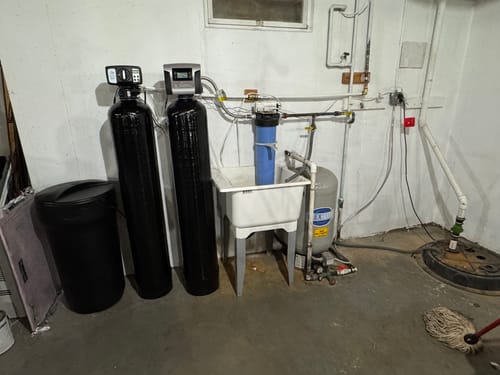
After the failed DIY attempts, I committed to understanding how professional iron removal actually works. I spent weeks researching different technologies, consulting with three local water treatment companies, and analyzing laboratory reports.
The education process revealed that effective iron removal requires oxidation followed by filtration. Iron must be converted from its dissolved ferrous state to precipitated ferric state before it can be physically removed. This happens through several methods:
Air injection systems bubble oxygen into the water, creating an oxidation environment. While effective, they require additional components like retention tanks and pressure switches, increasing complexity and potential failure points.
Chemical oxidation using potassium permanganate or chlorine can handle higher iron concentrations but introduces ongoing chemical costs and potential taste issues. I wasn't comfortable with continuous chemical addition to our drinking water.
Catalytic filtration media, like the type used in SoftPro systems, provides oxidation and filtration in a single vessel. The media acts as a catalyst, converting iron to a filterable form while simultaneously trapping the precipitated particles.
After analyzing the pros and cons, catalytic filtration seemed ideal for our situation. Our 4.2 PPM iron level fell well within the treatment range, we wanted a single-tank solution to minimize space requirements, and the lack of ongoing chemical additions appealed to our preference for simple, reliable systems.
The SoftPro Iron Filter specifically caught my attention because of its Centaur carbon-based catalytic media, which handles both iron and hydrogen sulfide while improving taste and odor. The system's single-tank design would fit in our limited utility room space, and the 5-year media warranty provided confidence in long-term performance.
Installation Experience: More Complex Than Expected
I received the SoftPro Iron Filter on a Tuesday morning in March, delivered via freight truck due to its substantial weight. The system arrived well-packaged in a wooden crate with adequate padding, though I needed help moving the 180-pound unit into position.
The package included the main filter vessel, control valve, bypass assembly, drain line fittings, and a surprisingly comprehensive installation manual. Everything appeared well-manufactured with heavy-duty fiberglass tank construction and quality brass fittings throughout.
Installation required more preparation than I initially anticipated. The system needed a dedicated 110V electrical outlet within six feet of the installation location, a drain connection within 20 feet for backwash discharge, and adequate clearance for service access. I ended up hiring an electrician to install the outlet, adding $180 to my total project cost.
The plumbing connections proved straightforward for someone with basic skills. I installed the system on the main line after the pressure tank but before any fixtures or appliances. The bypass valve assembly allowed me to maintain water service during installation, which took approximately four hours including all the preparatory work.
Initial startup required programming the control valve for our specific water conditions and usage patterns. The manual provided clear guidance for setting regeneration frequency based on iron levels and daily water consumption. I configured the system for every third day initially, planning to adjust based on performance observations.
The first backwash cycle took 18 minutes and discharged noticeably orange water, confirming that the system was immediately beginning to remove accumulated iron from our household plumbing. Within 24 hours, I noticed clearer water throughout the house.
Performance Testing: Measuring Real Results

Rather than relying on subjective observations alone, I committed to tracking measurable performance data using consistent testing methods. This approach would provide concrete evidence of the system's effectiveness and help optimize operational settings.
Using my LaMotte ColorQ test kit, I established baseline measurements before installation and tracked weekly results for the first two months. Pre-installation iron levels consistently measured 4.2 PPM at the kitchen sink during morning hours when iron concentration typically peaks.
Post-installation results were dramatic and immediate. Within 48 hours, iron levels at the same kitchen sink location measured 0.1 PPM - well below the EPA's 0.3 PPM secondary standard and virtually undetectable by taste or appearance.
I also tested during different times and usage scenarios to understand system performance under varying conditions. Evening measurements after heavy water usage (multiple showers, laundry, dishwasher) showed iron levels holding steady at 0.1-0.2 PPM. Early morning tests, when iron concentrations from the well typically peak, registered 0.2 PPM consistently.
The iron bacteria problem that had plagued our toilet tanks disappeared completely within three weeks. I attribute this to the Centaur media's chloramine reduction properties, which eliminate the nutrient environment iron bacteria require for reproduction.
Perhaps most importantly, the metallic taste that had made our coffee undrinkable vanished immediately. My wife, who has an extremely sensitive palate, noticed the improvement within the first morning after installation. We could finally enjoy our premium coffee beans without the overwhelming iron flavor.
Water pressure remained excellent throughout the house, with no noticeable reduction even during peak demand periods. I measured 52 PSI at fixtures before installation and 50 PSI after, indicating minimal pressure drop through the system.
Daily Life Improvements: Beyond Just Iron Removal
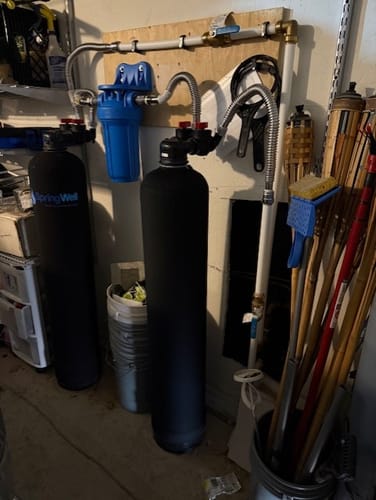
The transformation in our daily household routines exceeded my expectations in several ways I hadn't fully anticipated. While I expected iron staining to disappear, the broader improvements to water quality created benefits throughout our home.
Laundry became dramatically easier within the first week. Previously, I pre-treated every white load with iron-out products and still achieved mediocre results. Now, standard detergent produces consistently bright whites without any special additives or treatments. Our towels regained their original color after several wash cycles, removing months of accumulated iron staining.
Bathroom cleaning transformed from a weekly battle to routine maintenance. The shower doors that required aggressive scrubbing with CLR products now stay clear with simple soap and water. Toilet bowls remain white between cleanings, eliminating the embarrassing orange ring that appeared within days of cleaning.
Kitchen improvements extended beyond taste to include appliance performance. Our dishwasher produces spot-free glassware without rinse aid additives, something we couldn't achieve before regardless of detergent quality. The ice maker in our refrigerator creates crystal-clear ice cubes instead of the cloudy, metallic-tasting ones we endured previously.
Unexpected benefits included improved skin and hair condition for both my wife and myself. The removal of iron and other oxidizing agents apparently reduced the harsh, drying effects we experienced during showers. This wasn't a factor I considered during research, but the improvement became obvious within two weeks.
Visitors frequently comment on our water quality now, particularly friends who remember the iron taste from previous visits. Several neighbors have asked for my recommendations after observing our results, leading to two additional SoftPro installations on our street.
Operational Costs and Maintenance Reality
Understanding the true cost of ownership required tracking expenses beyond the initial system purchase. Over eight months, I've documented all operational costs to provide realistic budget expectations for potential buyers.
Electricity consumption for the control valve and backwash cycles averages approximately $3.50 per month based on our local utility rates of $0.12 per kWh. The system draws minimal power during normal operation, with higher consumption only during the 18-minute backwash cycles every three days.
Water usage for backwashing totals approximately 240 gallons per month based on 80 gallons per cycle occurring every three days. At our well water cost (primarily electricity for the pump), this represents roughly $8 monthly in additional water usage.
The Centaur catalytic media carries a 5-year manufacturer warranty, but I anticipate replacement around year 4-5 based on our iron levels and water usage patterns. Current replacement cost is approximately $280 including shipping, representing about $5-6 monthly if amortized over the expected media life.
I haven't required any service calls or repairs during eight months of operation. The system operates completely automatically, requiring only periodic visual inspection of the control valve display and annual testing of treated water quality.
Comparing these operational costs to our previous situation reveals significant savings. We eliminated monthly purchases of iron-out laundry additives ($15), specialized bathroom cleaners ($20), and bottled water for coffee and cooking ($35). The system essentially pays for its operational costs through eliminated product purchases.
Additionally, appliance protection represents substantial long-term savings. Our water heater, dishwasher, and washing machine no longer accumulate iron deposits that reduce efficiency and lifespan. While difficult to quantify precisely, this protection likely saves hundreds annually in premature appliance replacement and repair costs.
Honest Assessment: What Could Be Better
After eight months of ownership, I can identify several aspects of the SoftPro Iron Filter that fall short of perfection. While I'm satisfied overall, these limitations deserve honest discussion for potential buyers.
The control valve display, while functional, lacks the intuitive interface found on more expensive systems. Programming regeneration schedules requires consulting the manual each time, and the small LED display can be difficult to read in our dimly lit utility room. A backlit or larger display would improve user experience significantly.
Backwash discharge creates temporary inconvenience every three days when the system regenerates. The 18-minute cycle occurs at 2 AM by design, but the drain line discharge can be noisy enough to wake light sleepers. I've added insulation around the drain connection to minimize sound transmission.
Space requirements proved larger than expected when accounting for service access. While the system itself fits our utility room, performing annual maintenance requires moving stored items to access the control valve and inlet/outlet connections. Planning for 24 inches of clearance on all sides would have saved frustration.
The bypass valve assembly, while functional, feels less robust than the main system components. The plastic lever and connections appear adequate but lack the substantial feel of the tank and control valve. I worry about long-term durability if frequent bypass operation becomes necessary.
Initial iron bacteria die-off created temporary taste and odor issues during the first week. While this resolved naturally, better documentation of this normal process would have prevented concern about system malfunction.
Finally, the system cannot address iron levels above 8-10 PPM effectively without pre-treatment. While this wasn't relevant to our 4.2 PPM situation, potential buyers with higher iron concentrations should understand this limitation clearly.
Final Verdict: Would I Buy It Again?
After eight months of real-world experience, I can confidently recommend the SoftPro Iron Filter to homeowners facing similar iron water challenges. The system has met or exceeded my expectations in every critical performance area.
The dramatic improvement in water quality justified the investment within the first month. Eliminating iron staining, metallic taste, and iron bacteria problems has genuinely improved our quality of life and home maintenance burden. The financial benefits from reduced cleaning products and appliance protection provide ongoing value that helps offset operational costs.
For households with iron levels between 2-8 PPM, particularly those seeking a single-tank solution without ongoing chemical additions, this system represents an excellent value proposition. The 5-year media warranty and robust construction suggest reliable long-term performance.
If I were making the purchase decision again today, I would choose the SoftPro Iron Filter without hesitation. However, I would budget an additional $200-300 for professional installation to ensure optimal placement and electrical connections.
The minor limitations I've identified - control valve interface, space requirements, bypass valve construction - represent inconveniences rather than deal-breaking flaws. The core function of iron removal works flawlessly, which is ultimately what matters most.
For homeowners currently struggling with iron water issues, particularly those who have tried cheaper alternatives without success, I strongly encourage serious consideration of this system. The initial investment may seem substantial, but the daily quality of life improvements and long-term cost savings make it one of the best home improvement decisions we've made.
Eight months later, every morning coffee tastes exactly as it should, our laundry emerges bright and clean, and visitors consistently compliment our water quality. That's worth every penny we invested in solving our iron problem properly.






