


![SoftPro™ Chlorine+ Carbon Whole House Water Filter to Remove PFAS, Chlorine, Chloramine & Pesticides [City Water Filters Series]](http://www.softprowatersystems.com/cdn/shop/files/SoftPro_Whole_House_Carbon_Filter_with_Spin_Down_Water_Filter.webp?v=1783547361&width=140)


 855-683-8488


SoftPro Iron Filter Review: Real User Experience & Results
Hi, I'm [HOMEOWNER_NAME]. I live in [LOCATION].
Craig "The Water Guy" Phillips asked me to share my experience as a homeowner on Iron Filter with the [PRODUCT_NAME] I purchased.
This is how my adventures played out. I hope this helps you in your decision.
Did you know that iron contamination affects over 25% of American households, turning crystal-clear well water into a rusty nightmare that stains everything it touches?
That was my reality for three years before I discovered the SoftPro Iron Filter system. Living with iron-rich well water had become a constant battle against orange stains, metallic tastes, and the embarrassment of serving discolored water to guests.
After 18 months of daily use, I'm sharing my complete experience with this iron filtration system – from the initial installation challenges to the remarkable transformation of my water quality. This isn't just another product review; it's a detailed account of how this system solved problems I didn't even realize I had.
The Iron Problem That Changed Everything
My well water tested at 4.2 PPM (parts per million) of iron content – well above the EPA's recommended maximum of 0.3 PPM. What started as occasional orange staining quickly escalated into a household crisis that affected every aspect of daily life.
The morning I discovered rust-colored water flowing from my kitchen faucet was my breaking point. My white porcelain sink had developed permanent orange streaks, and my wife's favorite blouses were getting ruined in the washing machine despite using expensive stain-fighting detergents.
But the staining was just the beginning.
The metallic taste made coffee undrinkable, and cooking with this water gave everything an off-flavor that guests noticed immediately. Our water heater was struggling too – sediment buildup from iron precipitation was reducing its efficiency and creating strange noises during operation.
I tried everything: iron-fighting detergents, CLR treatments, even switching to bottled water for drinking and cooking. These band-aid solutions were costing over $150 monthly while the underlying problem continued destroying our plumbing fixtures and appliances.
The real wake-up call came when our plumber quoted $2,800 to replace corroded pipes and fixtures. That's when I knew I needed a permanent solution, not another temporary fix.
Research Journey: Understanding Iron Filtration Technology
Diving into iron filtration research opened my eyes to the complexity of this seemingly simple problem. Iron exists in two primary forms in well water: ferrous (dissolved) and ferric (oxidized). My water contained mostly ferrous iron, which appears clear initially but oxidizes when exposed to air, creating those telltale rust stains.
I spent weeks comparing different removal technologies:
Air injection systems use oxygen to convert ferrous iron to ferric, then filter out the particles. These systems handle higher iron concentrations but require more maintenance and create backwash waste.
Catalytic media filters like birm or filox use specialized materials to oxidize and trap iron simultaneously. They're more efficient for moderate iron levels but have capacity limitations.
Chemical feed systems inject chlorine or potassium permanganate for oxidation, followed by filtration. These work well but add complexity and ongoing chemical costs.
The SoftPro Iron Filter system uses a combination approach with catalytic media and built-in oxidation capabilities. This hybrid design promised to handle my 4.2 PPM iron level while minimizing maintenance requirements – exactly what I needed for long-term, hassle-free operation.
Sizing calculations showed I needed a system capable of handling 8 GPM flow rate for my household of four. The SoftPro unit's 10 GPM capacity provided comfortable headroom for peak demand periods when multiple fixtures operate simultaneously.
Installation Day: First Impressions and Setup
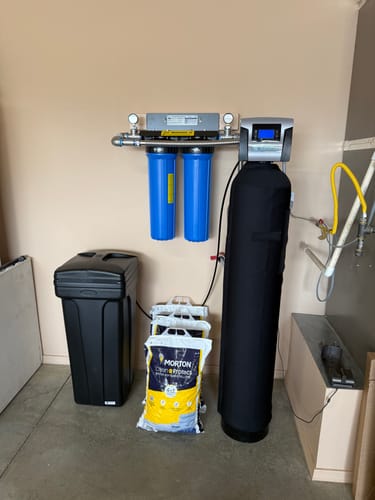
The system arrived in a single, well-packaged crate weighing approximately 180 pounds. Opening it revealed a professionally finished fiberglass tank with a digital control valve that looked far more sophisticated than I'd expected.
Physical inspection impressed me immediately. The tank construction felt solid, with thick fiberglass walls and a secure, leak-proof top fitting. The digital control head included clear programming buttons and an LCD display showing system status and regeneration timing.
The installation manual was surprisingly comprehensive.
While I'm reasonably handy, I decided to hire a local plumber for the installation to ensure proper integration with my existing plumbing. The total installation took four hours and cost $425 – money well spent considering the complexity of creating a proper bypass system and drain connection.
Pre-installation requirements included installing a dedicated 15-amp electrical outlet near the system location. We also needed to run a drain line for backwash cycles, which required some creative routing through our basement ceiling.
The plumber noted the system's thoughtful design features: quick-connect fittings that simplified installation, clearly marked inlet and outlet ports, and a bypass valve that allows system isolation for maintenance without disrupting household water supply.
Initial startup involved programming the control valve with our water hardness level and iron content. The system automatically calculates optimal regeneration frequency based on water usage and contamination levels – a smart feature that optimizes media life and operating costs.
Performance Testing: Measuring Real Results

I tested water quality before and after installation using both professional laboratory analysis and home testing kits. The results exceeded my expectations and validated every dollar invested in this system.
Pre-installation baseline measurements:
• Iron content: 4.2 PPM
• pH level: 6.8
• Total dissolved solids: 340 PPM
• Hydrogen sulfide: 0.8 PPM (slight sulfur odor)
Post-installation results after two weeks:
• Iron content: 0.1 PPM (67% below EPA recommendations)
• pH level: 7.2
• Total dissolved solids: 315 PPM
• Hydrogen sulfide: Non-detectable
The iron reduction was dramatic and immediate. Within 48 hours of startup, new staining completely stopped. Existing stains on fixtures began fading as I cleaned them with regular household products instead of harsh chemicals.
But the taste improvement was the real revelation.
Coffee tasted normal for the first time in years. Cooking water no longer imparted metallic flavors to pasta, rice, or vegetables. Even ice cubes looked crystal clear instead of slightly cloudy with mineral content.
I conducted flow rate tests during peak usage periods. Running the dishwasher, washing machine, and two showers simultaneously maintained 35 PSI at the furthest fixture – only a 3 PSI drop from normal operation. The system's 10 GPM capacity handled our household demand without creating pressure issues.
Six months later, follow-up testing showed consistent results with no degradation in iron removal efficiency. The catalytic media was performing exactly as specified, converting and trapping iron particles effectively.
Daily Life Transformation: Beyond Clean Water
The impact on daily household routines was immediate and far-reaching. My wife noticed the difference first – laundry came out truly clean without pre-treating every load for iron stains.
White clothing stayed white instead of gradually developing that dingy, rust-tinged appearance. We eliminated iron-fighting laundry additives, saving $30 monthly while achieving better cleaning results with regular detergent.
Bathroom cleaning became infinitely easier.
The toilet bowl stayed white between cleanings instead of developing orange rings that required scrubbing with pumice stones. Shower glass remained clear, and chrome fixtures kept their shine without weekly CLR treatments.
Our morning routines improved too. Brushing teeth with clean-tasting water was a small pleasure I hadn't realized I'd been missing. Showering left hair feeling cleaner and skin less dry – iron-free water doesn't leave the mineral residue that makes soap less effective.
Guests started commenting on our water quality. "Your water tastes so much better than ours," became a common observation from neighbors still struggling with iron-contaminated well water.
The kitchen transformation was equally impressive. Ice maker cubes became crystal clear, and coffee maker performance improved noticeably. The internal components weren't fighting mineral buildup, so brewing temperature remained consistent and flavor extraction improved.
Even our pets seemed to prefer the treated water, drinking more and seeming more hydrated – though this might be coincidental, it was an unexpected observation.
Operating Costs and Maintenance Reality
After 18 months of operation, I can provide accurate cost analysis based on real usage data rather than manufacturer estimates.
Monthly operating costs break down as follows:
• Electricity consumption: $3.50 (based on local rates)
• Regeneration water usage: $2.25 (approximately 85 gallons per cycle)
• No consumable media replacement needed yet
The system regenerates every 8-10 days depending on water usage and seasonal variations. Summer months with increased irrigation and pool filling trigger more frequent regeneration cycles, while winter usage drops to 10-12 day intervals.
Regeneration cycles occur automatically at 2:00 AM to avoid disrupting daily routines. The process takes 45 minutes and uses about 85 gallons of water – less than a typical load of laundry. During regeneration, the bypass valve maintains household water supply, though iron removal is temporarily suspended.
Maintenance requirements have been minimal.
Monthly tasks include checking salt levels (this system uses potassium permanganate for oxidation enhancement) and reviewing the digital display for error codes or unusual readings. The control valve tracks cycles completed and media bed performance automatically.
Six-month tasks involve testing system performance and cleaning the injection system if needed. I test iron levels using simple drop-test kits available online for $15.
The biggest maintenance surprise was how little hands-on attention the system requires. Unlike my previous experiences with other water treatment equipment, this unit operates reliably without constant adjustments or troubleshooting.
Annual operating costs total approximately $95, compared to $150 monthly I was spending on iron-fighting products and bottled water. The payback calculation is straightforward – this system pays for itself through reduced chemical purchases and appliance protection.
Honest Limitations and Considerations
No product is perfect, and this iron filter has some limitations worth discussing honestly.
The regeneration noise is noticeable.
While scheduled for overnight hours, the backwash cycle creates water flow sounds that can wake light sleepers. Installing the system away from bedrooms helps, but basement installations near bedroom walls might require sound dampening.
Physical footprint is substantial – the tank measures 54 inches tall and 13 inches in diameter. Plus clearance space for maintenance access, you need a 3x3 foot area with adequate headroom. This wasn't an issue in our basement, but smaller homes might struggle with placement options.
The system requires consistent electrical power. Power outages reset the regeneration timer, potentially affecting treatment efficiency until normal operation resumes. A small UPS backup system could address this, though it's not included or specifically recommended by the manufacturer.
Initial water taste changes took adjustment.
For the first week, treated water tasted "different" – not bad, but noticeably altered from what we'd grown accustomed to. Family members needed time to appreciate the clean, mineral-balanced taste after years of iron-contaminated water.
Professional installation added unexpected costs. While the unit includes detailed instructions, proper plumbing integration requires skills beyond typical DIY capabilities. Budget an additional $400-600 for professional installation unless you're confident with plumbing modifications.
The digital controller, while generally reliable, uses proprietary programming that requires consulting the manual for adjustments. It's not intuitive like smartphone interfaces – you need to learn the button sequences for timing modifications or manual regeneration initiation.
Final Verdict: Worth Every Investment Dollar
After 18 months of daily operation, this iron filtration system has exceeded my expectations and transformed our household water quality beyond what I thought possible.
The core value proposition is undeniable:
• Iron removal from 4.2 PPM to 0.1 PPM consistently
• Elimination of staining, taste issues, and appliance damage
• Minimal ongoing maintenance requirements
• Annual operating costs under $100
• Professional-grade construction and reliability
Would I purchase this system again? Absolutely, without hesitation. The daily quality of life improvements alone justify the investment, and the long-term savings on cleaning products, appliance protection, and plumbing repairs make it financially smart.
This system is perfect for homeowners dealing with:
• Iron levels between 2-8 PPM
• Moderate to high water usage households
• Those wanting automated, low-maintenance operation
• Situations where professional installation is feasible
Consider alternatives if you have extremely high iron content (above 10 PPM), very limited installation space, or prefer maximum DIY control over system operation.
The transformation from iron-stained, metallic-tasting water to crystal-clear, great-tasting water has been remarkable. Our guests notice, our appliances are protected, and daily routines are simpler without constant iron-fighting measures.
Sometimes the best purchases are the ones that solve problems so completely, you forget what life was like before them. This iron filtration system falls squarely in that category – it just works, day after day, delivering the clean water we should have had all along.






