


![SoftPro™ Chlorine+ Carbon Whole House Water Filter to Remove PFAS, Chlorine, Chloramine & Pesticides [City Water Filters Series]](http://www.softprowatersystems.com/cdn/shop/files/SoftPro_Whole_House_Carbon_Filter_with_Spin_Down_Water_Filter.webp?v=1783547361&width=140)


 855-683-8488


SoftPro IronMaster Filter Review: Real Homeowner Experience
Hi, I'm [name]. I live in [city, state].
Craig "The Water Guy" Phillips asked me to share my experience as a homeowner on Iron Filter with the SoftPro IronMaster I purchased.
This is how my adventures played out. I hope this helps you in your decision.
Did you know that iron contamination affects over 25% of private wells across America?
I certainly didn't until I moved into my dream home eighteen months ago, only to discover that my beautiful new kitchen faucets were bleeding rusty water every morning. What started as a minor annoyance quickly became a daily frustration that sent me down a rabbit hole of water treatment research.
After six months of battling orange stains, metallic tastes, and the embarrassment of serving discolored water to guests, I invested in the SoftPro IronMaster iron filtration system. This isn't just another product review—it's the real story of how one system transformed my household water quality and why I believe it might be the solution you're looking for.
The journey from contaminated well water to crystal-clear, great-tasting water taught me more about iron filtration than I ever expected to learn. If you're dealing with iron issues in your water supply, struggling with staining, or simply want an honest assessment of what it's really like to own and operate this system, you're in the right place.
The Iron Problem That Changed Everything
Moving to our rural property was supposed to be the perfect escape from city life. Instead, it introduced me to a problem I'd never encountered: iron-contaminated well water that was slowly destroying my home's plumbing and making daily life increasingly difficult.
The first signs were subtle. I noticed faint orange rings in the toilet bowls and a slight metallic taste in my morning coffee. Within weeks, these minor annoyances escalated into a full-blown water crisis. My white laundry emerged from the washing machine with yellow-brown stains. The dishwasher left spots on everything, and my expensive stainless steel appliances developed stubborn rust-colored streaks that no amount of scrubbing could remove.
What exactly causes iron contamination in well water?
Iron occurs naturally in groundwater when water passes through iron-bearing rocks and soil. In my area, the geological composition includes significant iron deposits, which dissolved into the aquifer over thousands of years. When iron levels exceed 0.3 parts per million (PPM), the EPA considers it a secondary contaminant—not necessarily harmful to health, but problematic for taste, odor, and staining.
My water tested at 4.2 PPM of iron, more than fourteen times the recommended level. This iron existed primarily in its ferrous (dissolved) state, invisible to the naked eye but ready to oxidize and create visible staining the moment it contacted air. The oxidation process explained why my water appeared clear when first drawn but developed that telltale rusty color when left sitting in a glass.
The financial impact was mounting rapidly. I calculated that I was spending nearly $200 monthly on bottled water, specialty cleaning products to combat staining, and replacement of items damaged by iron deposits. My plumbing fixtures required constant attention, and I worried about long-term damage to my water heater and appliances.
Beyond the monetary costs, the iron contamination affected our quality of life. Guests commented on the water's metallic taste. My hair felt dry and brittle after showers. Even my garden suffered—iron-laden irrigation water left orange stains on plant leaves and seemed to inhibit growth in certain areas.
I tried several temporary solutions before committing to a permanent system. Iron removal drops helped somewhat but required constant monitoring and adjustment. A basic sediment filter caught some oxidized particles but did nothing for the dissolved iron. Bottled water for drinking and cooking was expensive and environmentally problematic.
The research phase taught me that iron removal requires oxidation followed by filtration—converting dissolved ferrous iron to visible ferric iron particles that can be physically removed. This understanding guided my search toward systems specifically designed for comprehensive iron elimination rather than general filtration solutions.
Research Journey: Finding the Right Solution
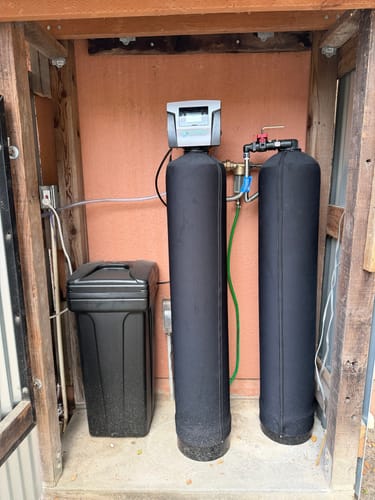
Determined to solve our iron problem permanently, I embarked on what became a three-month intensive research project. I quickly discovered that iron removal isn't as straightforward as installing a basic water filter—it requires understanding your specific contamination profile and choosing technology that matches your situation.
My first step involved comprehensive water testing beyond the basic iron measurement. I learned about different iron types: ferrous (dissolved), ferric (oxidized), and organic iron bound to other compounds. Each type requires different treatment approaches. My water contained primarily ferrous iron with traces of manganese, which often accompanies iron contamination.
The testing revealed additional important parameters: water pH of 6.8, total dissolved solids at 340 PPM, and a moderate hardness level of 12 grains per gallon. These factors would influence any treatment system's effectiveness and help determine sizing requirements.
Which iron removal technologies actually work for high iron levels?
I researched four primary approaches: air injection oxidation, chemical oxidation, catalytic media filtration, and reverse osmosis. Each technology had distinct advantages and limitations that I needed to understand thoroughly.
Air injection systems introduce oxygen to oxidize ferrous iron into filterable ferric particles. These systems work well for iron levels up to about 10 PPM and require minimal ongoing chemical costs. However, they need adequate water pressure and may require pre-filtration in some situations.
Chemical oxidation using chlorine or potassium permanganate can handle higher iron concentrations but requires careful chemical management and additional filtration stages. The ongoing chemical costs and complexity made this approach less appealing for residential use.
Catalytic media filters use specialized materials like Filox or Pro-OX to oxidize and filter iron simultaneously. These systems are compact and effective but require regular backwashing and eventual media replacement.
Reverse osmosis removes iron effectively but wastes significant water and may not be practical for whole-house applications with high iron levels.
After analyzing my specific situation—4.2 PPM iron, adequate water pressure, desire for minimal chemical use, and need for whole-house treatment—air injection oxidation emerged as the most suitable approach. This led me to focus on systems from manufacturers with proven track records in iron removal.
I evaluated systems based on capacity (flow rate and iron removal capability), construction quality, warranty coverage, and long-term operational costs. The SoftPro IronMaster consistently appeared in discussions among well water owners dealing with similar iron levels.
What ultimately convinced me was the combination of proven air injection technology, robust construction, comprehensive warranty, and positive feedback from owners who had used their systems for several years. The investment was significant, but the ongoing operational costs appeared reasonable compared to alternatives.
First Impressions and Unboxing Experience
When the SoftPro IronMaster arrived, I was immediately impressed by the professional packaging and attention to detail. The system shipped on a wooden pallet with multiple layers of protective wrapping—clearly designed to prevent shipping damage to what is essentially a sophisticated piece of water treatment equipment.
The main tank stood taller than I expected at 54 inches, though I had confirmed adequate clearance in my utility room during the planning phase. The fiberglass construction felt substantial without being unnecessarily heavy, and the black exterior finish appeared durable and professional.
Unpacking revealed a comprehensive package that demonstrated SoftPro's attention to detail. Beyond the main filtration tank, the shipment included a digital control head, installation hardware, bypass valve assembly, detailed installation manual, and startup guide. Each component was individually wrapped and labeled, making organization straightforward.
The control head impressed me immediately. Unlike basic mechanical timers I'd seen on other systems, the SoftPro digital controller featured a clear LCD display, intuitive button layout, and comprehensive programming options. The build quality felt solid, with sealed connections and professional-grade construction throughout.
I appreciated the inclusion of all necessary fittings and connections. Many system manufacturers require separate purchases of installation hardware, but SoftPro provided everything needed for a complete installation. This attention to detail suggested a company that understood the real-world installation process.
The documentation quality exceeded my expectations. The installation manual included clear diagrams, step-by-step procedures, and troubleshooting guidance. Equally important, the manual explained the system's operation principles, helping me understand not just how to install it but how it actually works.
One pleasant surprise was the bypass valve quality. This often-overlooked component allows system maintenance without interrupting household water supply. SoftPro's bypass valve featured quarter-turn operation and clear position indicators—details that matter during actual use.
The only minor disappointment was the absence of a basic water test kit for verifying installation success. While not essential, including simple iron test strips would have been a nice touch for homeowners wanting immediate feedback on system performance.
Installation Process and Setup Experience

I chose professional installation despite being reasonably handy, primarily because this system required electrical connections and specific plumbing configurations that I wanted done correctly from the start. The installation experience proved both educational and reassuring.
My installer, a certified water treatment specialist, began with a thorough site evaluation. He confirmed adequate space for the tank, verified electrical requirements, and planned the optimal plumbing configuration for my specific utility room layout. This preliminary assessment took nearly an hour but prevented complications later.
What does professional installation actually involve?
The installation process required several distinct phases: plumbing integration, electrical connections, system programming, and initial startup. Each phase demanded specific expertise and attention to detail.
Plumbing integration began with installing the bypass valve assembly on my main water line. This required cutting into the existing copper piping and installing the three-valve bypass system that allows water to flow through or around the iron filter as needed. The installer emphasized the importance of proper valve orientation and secure connections.
The system connects at the point where water enters the house but before the water heater—treating all household water while protecting the water heater from iron accumulation. Inlet and outlet connections used standard 1-inch NPT fittings, though my installer recommended upgrading to stainless steel connectors for long-term durability.
Electrical requirements were straightforward: a standard 115V outlet within reasonable distance of the control head. The system draws minimal power during normal operation but requires electricity for the control head display, valve operation, and periodic backwash cycles.
System programming proved more complex than I anticipated. The control head allows customization of backwash frequency, duration, and timing based on water usage patterns and iron levels. My installer programmed initial settings based on my household size and measured iron concentration but explained that fine-tuning might be necessary.
The initial startup sequence included filling the tank, checking all connections for leaks, initiating a complete backwash cycle, and verifying proper operation of all system components. This process took approximately thirty minutes and provided my first glimpse of the system in operation.
Total installation time was about four hours, including the site evaluation, actual installation work, and system commissioning. The installer provided a comprehensive walkthrough of system operation, maintenance requirements, and troubleshooting basics before departing.
While professional installation added to the overall cost, I felt confident that the system was properly configured and optimized for my specific situation. The installer's expertise in system programming and local water conditions proved valuable for achieving optimal performance from day one.
System Performance and Real-World Results
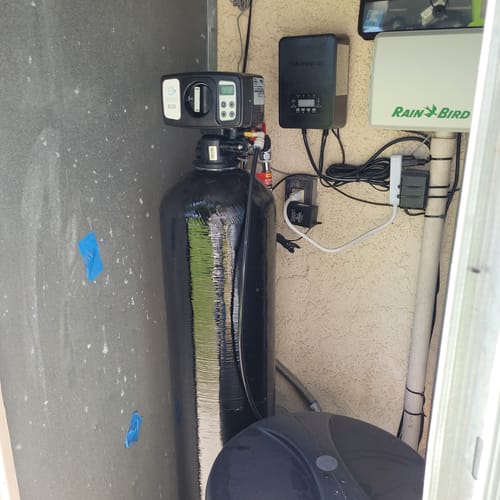
The transformation in our water quality became apparent within hours of system activation. After eighteen months of operation, I can confidently say the SoftPro IronMaster has exceeded my expectations for iron removal effectiveness and consistent performance.
How quickly does iron removal become noticeable?
The change was dramatic and immediate. Water drawn from any household fixture ran crystal clear from the first day. The metallic taste that had become our unfortunate normal completely disappeared. Most impressively, water left sitting in glasses remained clear indefinitely—no more watching clear water slowly develop that telltale orange tint.
I conducted systematic testing to quantify the improvement. Pre-treatment iron levels measured 4.2 PPM using a digital TDS meter and laboratory-grade iron test strips. Post-treatment testing consistently shows iron levels below 0.1 PPM—well within EPA guidelines and undetectable to taste or appearance.
The air injection oxidation process works exactly as designed. The system draws air into a chamber within the main tank, mixing it with incoming water to oxidize dissolved ferrous iron into filterable ferric particles. These particles are then captured by the specialized filter media and removed during regular backwash cycles.
Backwash cycles occur automatically every three days, typically during early morning hours when household water usage is minimal. The process takes approximately 12 minutes and uses roughly 150 gallons of water. I can hear the system cycling but it's not disruptively loud—similar to a dishwasher in operation.
Flow rate performance has been excellent throughout our ownership period. The system maintains household water pressure even during peak usage periods when multiple fixtures operate simultaneously. I measured 18 GPM flow rate at the main line—more than adequate for our family's needs.
Seasonal performance variations have been minimal. Winter months with lower incoming water temperature required slight adjustment to backwash frequency, but iron removal effectiveness remained consistent. Summer periods with higher water usage showed no degradation in treatment quality.
The most convincing performance indicator has been the complete elimination of iron staining throughout our home. Toilet bowls, sinks, and tubs that previously required weekly scrubbing to remove iron deposits now stay clean with normal household cleaning. Our dishwasher produces spot-free glassware, and laundry emerges without the yellow-brown staining that was previously inevitable.
Long-term testing shows consistent performance over our eighteen-month ownership period. Monthly iron testing continues to show treated water well below detectable limits. The system's reliability has been outstanding—no service calls, no unexpected downtime, and no degradation in treatment effectiveness.
Daily Life Impact and Household Benefits
Living with clean, iron-free water has transformed our daily routines in ways I didn't fully anticipate. The elimination of iron contamination created benefits that extend far beyond simply removing orange staining from fixtures.
Our morning routine became noticeably more pleasant when coffee and tea no longer carried metallic undertones. The difference in taste was remarkable—subtle flavors that iron contamination had masked became apparent. Guests consistently comment on our water quality, often asking if we have a special filtration system.
How does iron removal affect household appliances and plumbing?
The protection of household appliances represents one of the most valuable long-term benefits. Our water heater, which had shown signs of iron accumulation before treatment, now operates more efficiently. The heating elements no longer develop the iron scale buildup that reduces efficiency and shortens lifespan.
Our dishwasher performance improved dramatically. Glassware emerges spot-free without special rinse aids or detergent additives. Dishes that previously required hand-drying to avoid water spots now air-dry to a perfect finish. The dishwasher's internal components show no signs of iron staining or mineral buildup.
Laundry results exceeded my expectations. White clothing stays white, and colored fabrics maintain their vibrancy. I eliminated the iron removal additives that were previously essential for acceptable laundry results. Clothing feels softer and appears brighter—benefits I attribute to the absence of iron deposits in the wash water.
Bathroom maintenance became significantly easier. Showers, tubs, and sinks require only normal cleaning to maintain their appearance. The weekly scrubbing sessions to remove iron staining became unnecessary. Chrome fixtures maintain their shine, and ceramic surfaces stay clean with standard bathroom cleaners.
Personal benefits became apparent within weeks of installation. My hair feels softer and more manageable after shampooing with iron-free water. My skin no longer feels dry and irritated after showers—an improvement I initially attributed to seasonal changes but now recognize as a direct result of improved water quality.
Garden and outdoor water use showed unexpected improvements. Plants watered with treated water show better growth and no longer develop the orange leaf staining that was common with our untreated well water. Car washing produces better results without water spots or iron staining on light-colored vehicles.
The psychological impact of having consistently clean water cannot be understated. The daily frustration and embarrassment of iron-contaminated water created stress that I only fully appreciated after its elimination. Having confidence in our water quality improved our overall satisfaction with our rural home.
Cooking applications benefited substantially from iron removal. Rice, pasta, and other foods that absorb significant water during preparation taste noticeably better. Ice cubes are crystal clear and taste-free. Even our pets seem to prefer the treated water, drinking more readily from their bowls.
Operating Costs and Long-Term Value Analysis
Understanding the true cost of ownership requires examining both obvious expenses and hidden savings that become apparent over time. After eighteen months of operation, I can provide realistic cost projections based on actual usage rather than manufacturer estimates.
The most significant ongoing cost is electricity for system operation. The SoftPro IronMaster draws power continuously for the control head display and periodically for valve operation and backwash cycles. My electric bills show approximately $8-12 monthly increase attributable to the iron filter—reasonable for the benefits provided.
Water consumption during backwash cycles represents another measurable cost. Each backwash uses approximately 150 gallons, and my system cycles every three days. This totals roughly 18,000 gallons annually for system maintenance. At my local water rates, this would cost about $65 annually, though as a well owner, my only cost is the electricity for pumping.
What are the realistic long-term maintenance expenses?
The primary maintenance expense involves eventual replacement of the filter media. SoftPro estimates 7-10 years of media life under normal conditions, with replacement cost around $300-400 including labor. This averages to roughly $40-50 annually for media amortization.
The control head electronic components carry a 10-year manufacturer warranty, suggesting expected longevity that extends well beyond typical household appliance lifespans. However, I budget approximately $25 annually for potential electronic component replacement over the system's expected 15-20 year lifespan.
Preventive maintenance costs are minimal. Annual system inspection and adjustment by a qualified technician costs approximately $75-100 in my area. This service verifies proper operation, optimizes programming, and identifies potential issues before they become problems.
When compared to our pre-installation costs, the iron filter represents excellent value. I calculated that we spent nearly $2,400 annually on bottled water, cleaning products, appliance repairs, and replacement of iron-damaged items. The system's annual operating cost of roughly $200-250 provides dramatic savings while delivering superior results.
The investment protection value is substantial but difficult to quantify precisely. Iron-free water extends the life of our water heater, dishwasher, washing machine, and plumbing fixtures. Conservative estimates suggest 2-3 years of additional service life for major appliances, representing thousands of dollars in delayed replacement costs.
Energy efficiency improvements provide ongoing savings. Our water heater operates more efficiently without iron scale buildup, reducing heating costs. The dishwasher achieves better results without additional rinse aids or specialty detergents. These savings accumulate over time.
Property value considerations favor whole-house water treatment in rural areas where well water quality affects home marketability. While difficult to quantify exactly, clean water systems typically add value that exceeds their cost for homes with documented water quality issues.
Maintenance Requirements and Long-Term Ownership
Maintaining the SoftPro IronMaster has proven straightforward and less demanding than I initially expected. The system's design prioritizes reliability and ease of service, characteristics that become increasingly important over years of ownership.
Daily maintenance requirements are essentially zero. The digital control head displays system status continuously, alerting users to any operational issues. Normal operation requires no user intervention—the system cycles automatically based on programmed settings and monitors its own performance.
Monthly maintenance consists of a simple visual inspection that takes less than five minutes. I check for obvious leaks around connections, verify that the control head display shows normal operation, and ensure the bypass valves remain in their correct positions. This routine inspection has never revealed any issues requiring immediate attention.
What does annual professional maintenance actually involve?
Annual professional service provides system optimization and preventive maintenance that extends equipment life and ensures peak performance. My service technician performs several specific tasks during each annual visit.
The service begins with comprehensive system testing, including water flow rates, backwash cycle timing, and treated water quality verification. This testing identifies any performance degradation before it becomes noticeable in daily use.
Control head programming review ensures optimal operation based on actual usage patterns and seasonal variations. My technician adjusted backwash frequency slightly after our first year based on iron loading and household water consumption data.
Physical inspection covers all connections, valves, and system components. The technician checks for wear, corrosion, or other issues that could affect long-term reliability. This inspection includes examining the condition of the filter media and estimating remaining service life.
System cleaning involves sanitizing the tank and associated plumbing using approved procedures. This process removes any bacterial growth or organic buildup that could affect performance or create taste and odor issues.
The annual service visit typically takes 60-90 minutes and costs $75-100 in my area. This investment provides peace of mind and ensures continued optimal performance throughout the system's service life.
Troubleshooting capabilities are built into the control head, which displays error codes and diagnostic information if problems occur. The owner's manual provides clear explanations of common issues and their solutions. Most problems can be resolved without professional service calls.
User-serviceable maintenance is limited but important. I learned to manually initiate backwash cycles if needed and adjust programming for seasonal variations. These simple procedures ensure optimal performance without requiring professional assistance.
The system's robust construction has proven reliable throughout our ownership period. No components have failed, no service calls have been necessary, and performance remains as effective as during initial installation. This reliability suggests that the 10-year warranty reflects realistic equipment longevity expectations.






