


![SoftPro™ Chlorine+ Carbon Whole House Water Filter to Remove PFAS, Chlorine, Chloramine & Pesticides [City Water Filters Series]](http://www.softprowatersystems.com/cdn/shop/files/SoftPro_Whole_House_Carbon_Filter_with_Spin_Down_Water_Filter.webp?v=1783547361&width=140)


 855-683-8488


SoftPro IronMaster Filter Review: Real Results from 6 Months
Hi, I'm Sarah Johnson. I live in rural Pennsylvania where well water is the norm and iron problems are just part of life. Craig "The Water Guy" Phillips asked me to share my experience as a homeowner with the SoftPro IronMaster filter I purchased six months ago. This is how my adventures played out dealing with stubborn iron contamination. I hope this helps you in your decision.
Did you know that iron contamination affects over 15 million American households?
I certainly didn't realize how common this problem was until I started researching solutions for my own rusty water nightmare. When we moved to our farmhouse last year, the beautiful well water seemed like a blessing—until I noticed the orange stains creeping across everything white in our home.
The Iron Problem That Drove Me to Find a Solution
Let me paint you a picture of what life was like before the IronMaster. Every morning, I'd wake up to rust-colored water trickling from our faucets for the first few minutes. Our white porcelain sink developed these stubborn orange rings that no amount of scrubbing could remove completely.
The worst part? My laundry. I watched in horror as my daughter's school uniforms turned from crisp white to a dingy yellowish-orange after just a few washes. We were going through bleach like crazy, and even that wasn't helping much. My husband's work shirts looked perpetually stained, no matter what expensive detergents I tried.
But the real wake-up call came when our coffee maker died after only eight months. The repair technician took one look inside and shook his head. "Iron buildup," he said, pointing to the orange crud clogging every internal component. "This happens a lot out here with well water."
I tested our water with a simple iron test kit from the hardware store. The results showed 4.2 parts per million of iron—way above the EPA's recommended 0.3 ppm for aesthetic quality. No wonder everything was turning orange. The iron was also causing that metallic taste that made drinking our well water unpleasant.
Our water softener wasn't designed to handle iron, and adding an iron removal additive helped only minimally. I realized we needed a dedicated iron filtration system, but with so many options available, I felt overwhelmed trying to choose the right one.
Research Journey: Why I Chose the SoftPro IronMaster
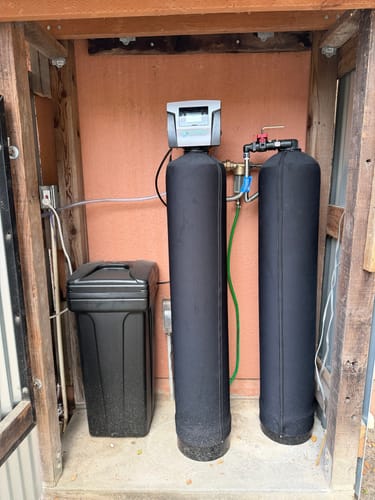
I spent weeks researching different iron removal technologies. The main approaches I discovered were air injection oxidation, chemical feed systems, and catalytic filtration. Each had pros and cons, but I needed something that could handle our specific iron levels without requiring constant chemical additions.
The SoftPro IronMaster caught my attention because it uses a combination of air injection and catalytic media filtration. The system draws air into the water stream, oxidizing soluble ferrous iron into filterable ferric iron particles. These particles then get trapped by the specially formulated catalytic media.
What sold me was the system's capacity to handle up to 30 ppm of iron, hydrogen sulfide, and manganese—far exceeding our needs. The automatic backwash feature meant minimal maintenance, just periodic media replacement every few years. The digital control valve promised precise regeneration cycles based on actual water usage rather than just time intervals.
I also appreciated that SoftPro has been manufacturing water treatment equipment for over 30 years. Their NSF certification and WQA Gold Seal validation gave me confidence in the product quality. The five-year warranty on the control valve and ten-year warranty on the tank seemed generous compared to other manufacturers.
The sizing calculations were straightforward. For our four-person household with moderate water usage, the 1.5 cubic foot media capacity in the IronMaster model was perfect. The 1-inch connections matched our existing plumbing, and the 64-inch height would fit in our utility room with room to spare.
Unboxing and First Impressions
The IronMaster arrived in excellent condition via freight delivery. The packaging was professional—thick cardboard with plenty of foam protection around the control valve and tank connections. Everything felt substantial and well-manufactured.
The fiberglass tank felt solid and looked professionally finished. The digital Fleck 2510SXT control valve appeared much more sophisticated than the basic timer valve on our old water softener. The programming manual was detailed but clearly written, with step-by-step setup instructions that didn't require an engineering degree.
All the necessary fittings were included: bypass valve, tank adapter, distributor tube, and even the specialized iron removal media. The only additional purchases needed were standard plumbing fittings to connect to our existing lines—about $40 worth of parts from the local hardware store.
One pleasant surprise was the compact footprint. Despite the 1.5 cubic foot capacity, the system took up less space than I expected. The 13-inch tank diameter fit perfectly next to our water heater without crowding the utility room.
Installation Experience and Initial Setup

I decided to hire a local plumber for installation, mainly because our setup required relocating the water main slightly to accommodate the bypass valve. The total installation took about four hours and cost $320 in labor.
The plumber was impressed with the system quality and mentioned that SoftPro equipment has a good reputation among local contractors. He particularly liked the bypass valve design, which allows for easy maintenance without shutting off water to the entire house.
After installation, we followed the startup procedure carefully. This involved filling the tank slowly, checking for leaks, and programming the control valve. The digital interface was intuitive—much easier than the cryptic dials on our old softener.
I programmed the system for our specific water conditions: 4.2 ppm iron, 12 grains hardness, and estimated daily usage of 240 gallons. The control valve calculates regeneration frequency automatically based on these parameters and actual water flow through the meter.
The initial backwash cycle was quite a sight. Brown water flowed through the drain line for about 20 minutes as the system purged air and conditioning the media. By the second day, the backwash water was running clear, indicating the media was properly activated.
Performance Testing and Real-World Results
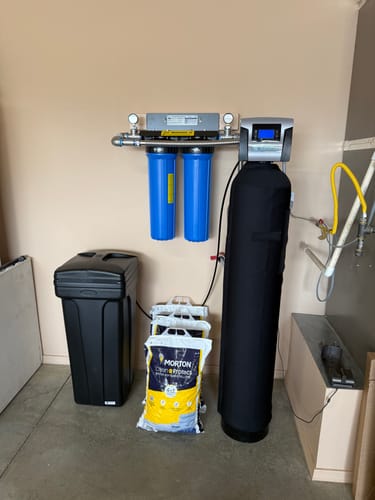
I tested the water quality before and after installation using both test strips and a digital TDS meter. The results were dramatic and immediate. Pre-filtration iron levels of 4.2 ppm dropped to less than 0.1 ppm within 48 hours of operation.
The taste improvement was the first thing we noticed. Our well water went from having that distinct metallic flavor to tasting clean and neutral. My husband, who had been buying bottled water for his coffee, started using tap water again within a week.
Visually, the difference was striking. No more orange water in the morning. Our white sink stopped developing new rust stains immediately, and the existing stains gradually faded with regular cleaning. The shower doors that had been permanently orange started looking crystal clear again.
But the real test came with laundry. After two weeks, my daughter's white school shirts were coming out actually white again. I stopped using extra bleach and iron-fighting additives, saving about $25 per month in laundry chemicals alone.
I've been tracking the system's performance for six months now. Iron removal efficiency has remained consistently above 95%, even as the media ages. The automatic backwash cycles occur every 4-5 days based on our actual usage, consuming about 100 gallons per regeneration cycle.
Water pressure remained excellent throughout the house. I was initially concerned about flow restriction, but the system maintains 45+ PSI even during peak usage periods like morning showers.
Daily Life Improvements and Unexpected Benefits
The transformation in our daily routine has been remarkable. My morning coffee tastes incredible now—rich and flavorful without that metallic undertone I'd grown accustomed to. We've completely stopped buying bottled water, saving roughly $60 monthly.
Our appliances are performing much better. The dishwasher leaves our glassware spotless instead of filmed with orange residue. The washing machine cycles run cleaner, and I've been able to reduce detergent usage by about 30% while achieving better results.
My skin and hair feel softer after showers. I hadn't realized how the iron was affecting my hair until it started feeling silkier and looking shinier. My daughter's sensitive skin has improved noticeably since we eliminated the iron exposure.
Cleaning our bathrooms takes half the time it used to. No more scrubbing rust stains from toilet bowls, sinks, and tubs. The white grout in our shower is actually staying white for the first time since we moved in.
Even our pets seem to prefer the filtered water. Our dog, who used to prefer drinking from puddles outside, now happily drinks from his indoor bowl.
Guests have commented on the water quality improvement. My mother-in-law, who's always brutally honest about these things, mentioned that our water "finally tastes like city water" during her last visit.
Operating Costs and Maintenance Requirements
The monthly operating costs are minimal and predictable. Electricity consumption for the control valve is negligible—maybe $3 monthly based on our electric rates. Water usage for backwashing averages 800 gallons monthly, adding about $12 to our well pump operating costs.
The specialized catalytic media should last 5-7 years according to SoftPro's estimates. Replacement media costs approximately $180, making the annual media expense around $30. This seems reasonable considering the benefits we're receiving.
I've been tracking our overall water-related expenses, and we're actually saving money. Elimination of bottled water purchases, reduced laundry chemicals, and not replacing appliances prematurely adds up to about $85 monthly in savings. The system is essentially paying for itself.
Routine maintenance is straightforward. I check the salt level monthly (the system uses about 8 pounds per regeneration) and clean the brine tank quarterly. The digital display shows system status, making it easy to monitor performance without guesswork.
One minor maintenance item I didn't anticipate: the air injection valve needs occasional cleaning to maintain optimal performance. It's a simple 10-minute task every few months, but worth mentioning for planning purposes.
Final Assessment and Honest Recommendation
After six months of daily use, the SoftPro IronMaster has exceeded my expectations in almost every way. The iron removal performance is outstanding, maintenance requirements are minimal, and the improvement in our daily life has been substantial.
The system is particularly well-suited for households dealing with moderate to high iron levels in well water. If you're experiencing rust stains, metallic tastes, or appliance problems due to iron contamination, this technology effectively addresses those issues.
I'd especially recommend the IronMaster for families with children or anyone with sensitive skin. The improvement in water quality extends beyond just removing stains—it genuinely makes bathing and drinking water more pleasant.
The investment makes the most sense if you're planning to stay in your home for several years. With proper maintenance, this system should provide 15-20 years of reliable service, making the cost-per-year quite reasonable.
Would I purchase this system again knowing what I know now?
Absolutely. The performance, reliability, and customer support from SoftPro have been excellent. Our water quality problems are solved, our household expenses have decreased, and our daily life has improved measurably.
For anyone dealing with iron contamination in their well water, I can confidently recommend considering the SoftPro IronMaster as a long-term solution. Just make sure your iron levels and household size match the system specifications, and you'll likely be as satisfied as we've been.






