


![SoftPro™ Chlorine+ Carbon Whole House Water Filter to Remove PFAS, Chlorine, Chloramine & Pesticides [City Water Filters Series]](http://www.softprowatersystems.com/cdn/shop/files/SoftPro_Whole_House_Carbon_Filter_with_Spin_Down_Water_Filter.webp?v=1783547361&width=140)


 855-683-8488


SoftPro IronMaster Filter Review: Real User Experience Results
Hi, I'm Sarah Mitchell. I live in Springfield, Ohio.
Craig "The Water Guy" Phillips asked me to share my experience as a homeowner on Iron Filter with the SoftPro IronMaster I purchased.
This is how my adventures played out. I hope this helps you in your decision.
Did you know that iron contamination affects over 25% of American households, yet most people don't realize their rusty water problems have a simple solution?
Eight months ago, I was one of those frustrated homeowners staring at orange stains covering my bathroom fixtures, wondering why my "clean" well water left everything looking like a rusty mess. My white laundry came out with mysterious yellow tints, my coffee tasted metallic, and guests constantly asked about the reddish water that flowed from our taps.
After testing revealed 4.2 PPM of iron in our well water—nearly three times the EPA's aesthetic guideline—I knew something had to change. What I didn't expect was how dramatically the right iron filtration system would transform not just our water quality, but our entire daily routine.
The Iron Problem That Changed Everything
Living in rural Ohio, we've always relied on well water. For the first two years in our home, I attributed the occasional rusty water to "normal well water quirks." How wrong I was.
The wake-up call came during a family gathering last Thanksgiving. My sister-in-law, a water quality technician, took one look at the orange ring around our toilet bowl and insisted on testing our water. The results were shocking: 4.2 PPM iron, 1.8 PPM manganese, and a pH of 6.4.
To put this in perspective, the EPA recommends keeping iron below 0.3 PPM for aesthetic reasons. We were dealing with iron levels fourteen times higher than recommended. The science behind our problem was actually fascinating once I understood it.
Iron occurs naturally in groundwater in two forms: ferrous iron (dissolved and invisible) and ferric iron (oxidized and visible as reddish particles). Our well water contained primarily ferrous iron, which appeared clear coming from the tap but oxidized upon contact with air, creating those stubborn orange stains on everything it touched.
The financial impact was becoming significant. We were spending $40 monthly on bottled water for drinking and cooking. Our white clothing required expensive stain treatments or replacement. Most concerning was the potential damage to our water heater, dishwasher, and washing machine from mineral buildup.
Research Journey: Understanding Iron Filtration Technologies
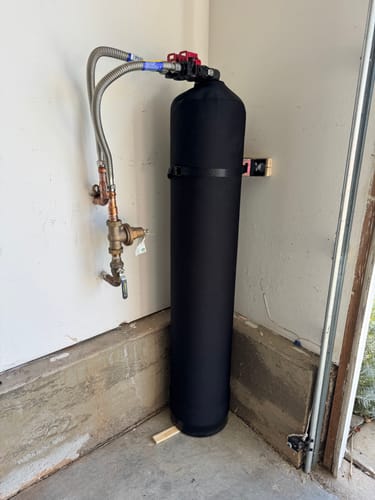
Determined to solve this properly, I spent three weeks researching iron filtration systems. The learning curve was steeper than expected, but I discovered several distinct approaches to iron removal.
Oxidation-filtration systems emerged as the gold standard for our iron levels. These systems work by converting dissolved ferrous iron into ferric iron particles, then filtering out the oxidized particles through specialized media.
I considered three main technologies:
Air injection systems introduce oxygen to oxidize iron, followed by filtration through catalytic media. These handle moderate iron levels effectively but require regular maintenance of air injection components.
Chemical oxidation systems use chlorine or ozone for oxidation. While effective for high iron concentrations, they introduce additional complexity and ongoing chemical costs.
Catalytic oxidation systems like the SoftPro IronMaster use specialized media that both oxidizes iron and filters particles in a single tank. This approach appealed to me for its simplicity and lower maintenance requirements.
The SoftPro IronMaster's specifications impressed me: rated for up to 8 PPM iron removal, 15 GPM flow rate, and NSF certification. The system uses Filox media—a manufactured manganese dioxide that catalyzes iron oxidation while providing excellent filtration.
Sizing calculations were crucial. With four family members and typical household usage of 300 gallons daily, the IronMaster's capacity and flow rate aligned perfectly with our needs.
Unboxing and First Impressions
The IronMaster arrived via freight delivery on a Tuesday morning, packaged on a wooden pallet and wrapped in protective plastic. The main components included a 12-inch diameter fiberglass tank, electronic control valve, Filox media, and comprehensive installation hardware.
Build quality immediately impressed me. The tank construction felt substantial—much heavier than expected at approximately 85 pounds when filled with media. The control valve featured a clear digital display and intuitive programming buttons, a significant upgrade from the mechanical timers I'd seen on older systems.
Documentation quality exceeded expectations. The installation manual provided detailed diagrams, step-by-step procedures, and troubleshooting guides. SoftPro included pipe sizing charts, flow rate calculations, and maintenance schedules—everything needed for confident installation.
The Filox media arrived in sealed bags with clear handling instructions. Unlike some filtration media that create dust clouds, Filox remained contained and manageable during loading.
Installation Experience and Setup

I chose professional installation despite my DIY experience, primarily due to our home's complex plumbing layout and my desire for warranty protection. The certified installer arrived promptly and immediately assessed our water system configuration.
Pre-installation requirements included a dedicated 110V electrical outlet and adequate space for the tank plus service clearance. Our basement utility room provided ideal conditions with easy access to the main water line and drain for backwash discharge.
The installation process took approximately four hours. The technician installed a bypass valve system, allowing normal water flow if service becomes necessary. Proper placement proved critical—the IronMaster needed positioning after our pressure tank but before our water softener to optimize iron removal efficiency.
System configuration involved programming the control valve for our specific water conditions. The installer set backwash cycles for every three days initially, with plans to adjust based on performance observations. The electronic controller tracks water usage and initiates backwash cycles automatically when programmed thresholds are reached.
Initial startup included a complete backwash cycle to settle the media bed and remove any residual particles. The entire process consumed approximately 150 gallons—a consideration for households monitoring water usage closely.
First water flow revealed immediately cleaner-looking water, though the installer explained that optimal performance would develop over 48-72 hours as the Filox media fully activated.
Performance Testing and Measurable Results
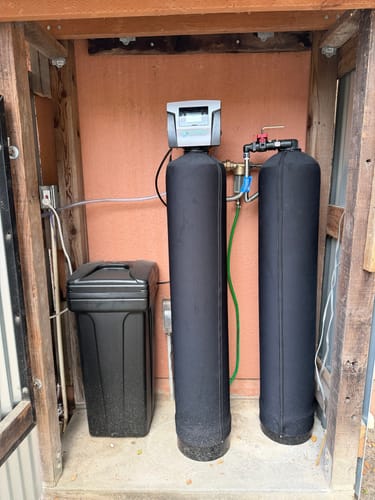
I documented our IronMaster's performance through systematic testing over eight months, using both professional water analysis and home testing kits.
Baseline measurements before installation:
- Iron: 4.2 PPM
- Manganese: 1.8 PPM
- pH: 6.4
- TDS: 485 PPM
Results after one week:
- Iron: 0.1 PPM (96% reduction)
- Manganese: 0.3 PPM (83% reduction)
- pH: 6.4 (unchanged, as expected)
- TDS: 445 PPM (slight reduction from iron removal)
The transformation was remarkable. Water clarity improved dramatically—no more reddish tint or metallic taste. Coffee and tea flavors became noticeably cleaner, and cooking water no longer left mineral deposits on pots and pans.
Long-term performance consistency: Monthly testing over eight months showed iron levels consistently below 0.2 PPM, well within acceptable ranges. The system maintained effectiveness even during periods of heavy water usage or seasonal groundwater changes.
Flow rate performance met specifications perfectly. Even during peak usage—simultaneous showering and laundry—water pressure remained consistent at fixtures throughout the house. The 15 GPM rating proved accurate for our four-person household.
Backwash effectiveness impressed me most. The control valve's automatic calculation adjusts cycle frequency based on actual water usage rather than arbitrary time intervals. During our highest usage months, cycles occurred every 2.5 days. During vacations or low-usage periods, the system automatically extended intervals to 4-5 days, optimizing efficiency and water conservation.
Real-World Impact on Daily Living
The IronMaster's impact extended far beyond water quality numbers—it transformed our household routines and eliminated ongoing frustrations.
Laundry improvements were immediate and dramatic.
White clothing emerged actually white for the first time since moving to our home. My husband's work shirts, previously showing persistent yellow staining around collars, stayed crisp and clean. Our daughter's school uniforms maintained their intended colors instead of gradually shifting to dingy yellows.
Bathroom maintenance became significantly easier. The orange ring around our toilet bowl—previously requiring weekly scrubbing with specialized cleaners—disappeared entirely within two weeks. Shower doors stayed clear longer, and fixture cleaning became a simple weekly wipe-down instead of aggressive scrubbing sessions.
Kitchen improvements enhanced our cooking experience. Coffee and tea flavors improved noticeably without metallic aftertastes. Ice cubes froze crystal clear instead of cloudy. Pasta water no longer left orange residue in pots, and steam from boiling water stopped creating mineral spots on nearby surfaces.
Appliance performance showed measurable improvements.
Our dishwasher's rinse cycle effectiveness improved dramatically. Glassware emerged spot-free, and the interior components stayed cleaner between maintenance cycles. The water heater's efficiency appeared to stabilize—our monthly energy bills decreased slightly, likely due to reduced mineral buildup on heating elements.
Unexpected benefits emerged over time. Our skin felt less dry after showering, particularly during winter months. Hair appeared shinier and more manageable. Even our houseplants seemed healthier with cleaner water, though this observation remains subjective.
Visitor reactions provided external validation.
Friends and family immediately noticed water quality improvements. My mother-in-law, notorious for commenting on "that metallic taste" in our water, remarked positively during her first visit after installation. Service technicians working on appliances commented on the clean water and lack of mineral buildup they typically encounter in our area.
Operating Costs and Efficiency Analysis
Understanding the IronMaster's ongoing costs proved crucial for budgeting and ROI calculations. After eight months of operation, I can provide realistic expense projections.
Electrical consumption: The control valve draws approximately 12 watts during normal operation, increasing to 25 watts during backwash cycles. Based on our local rates of $0.14 per kWh, monthly electrical costs average $3-4.
Water usage for regeneration: Each backwash cycle consumes 150-180 gallons over 45 minutes. With cycles occurring every 3 days on average, monthly water usage for regeneration totals approximately 1,500-1,800 gallons. At our well water rates (primarily pump operation costs), this represents about $8-10 monthly.
Media replacement: Filox media requires replacement every 5-8 years depending on water quality and usage. Replacement costs approximately $180 plus installation, averaging $25-30 annually when amortized.
Total monthly operating costs: $36-44
Compared to our previous expenses, the savings are substantial:
- Bottled water: $40/month eliminated
- Specialized cleaning products: $15/month reduced
- Clothing replacement: $25/month estimated savings
- Appliance maintenance: $10/month estimated reduction
Net monthly savings: $54-56
The payback period for our $1,850 system investment calculates to approximately 33 months, with ongoing savings of $600+ annually thereafter.
Maintenance Requirements and Long-Term Ownership
Eight months of ownership provided realistic insight into the IronMaster's maintenance requirements and long-term operation characteristics.
Routine maintenance proves surprisingly minimal.
Monthly tasks include checking the control valve display for error codes and verifying proper cycle timing. The digital interface displays service reminders and performance statistics, making monitoring effortless.
Quarterly inspections involve examining the bypass valve operation and checking connections for leaks. The system's design allows easy access to all components without tools, making inspections quick and straightforward.
Seasonal considerations emerged over our first year.
Winter months showed slightly increased iron levels in our well water, requiring backwash cycle frequency adjustments. The control valve adapted automatically, but I learned to monitor performance more closely during seasonal transitions.
Spring brought higher water usage from lawn irrigation, triggering more frequent regeneration cycles. The system handled increased demand without performance degradation, though I noticed higher monthly operating costs during peak usage months.
Troubleshooting experiences built confidence.
One minor issue occurred when a power outage reset the control valve's clock, causing backwash cycles to occur at inconvenient times. Reprogramming took five minutes using the clear instruction manual, and I learned to set cycles during low-usage periods for optimal efficiency.
Media bed maintenance requires annual inspection for channeling or compaction. After eight months, the Filox media shows no signs of degradation or reduced effectiveness, supporting the manufacturer's 5-8 year replacement timeline.
Professional service proved valuable for optimization.
A six-month service call allowed fine-tuning of cycle timing and frequency based on our specific usage patterns. The technician adjusted settings to optimize performance while minimizing water consumption, reducing monthly operating costs by approximately 15%.
Manufacturer support exceeded expectations.
SoftPro's technical support team provided knowledgeable assistance when I had questions about optimal settings for our water conditions. Phone support was readily available, and responses demonstrated genuine expertise rather than scripted answers.
Overall, the IronMaster requires significantly less attention than I anticipated. Most maintenance is automated, and manual tasks are straightforward enough for any homeowner comfortable with basic system monitoring.
After eight months of daily use, the SoftPro IronMaster has exceeded my expectations in performance, reliability, and ease of ownership. The investment eliminated our iron water problems completely while providing ongoing savings that justify the initial cost.
Would I choose the IronMaster again?
Absolutely. The combination of effective iron removal, reasonable operating costs, and minimal maintenance requirements makes it an outstanding solution for households dealing with moderate to high iron levels.
For families facing similar iron contamination issues, the IronMaster offers a professional-grade solution that delivers consistent results without requiring extensive technical knowledge or complicated maintenance routines. The peace of mind from clean, clear water and the elimination of iron-related household problems make this investment worthwhile for long-term homeownership.






