


![SoftPro™ Chlorine+ Carbon Whole House Water Filter to Remove PFAS, Chlorine, Chloramine & Pesticides [City Water Filters Series]](http://www.softprowatersystems.com/cdn/shop/files/SoftPro_Whole_House_Carbon_Filter_with_Spin_Down_Water_Filter.webp?v=1783547361&width=140)


 855-683-8488


SoftPro Upflow Carbon Filter Review: Iron and Sulfur Solution

Hey there, I'm Jacob F. I live in New Hampshire cottage country where well water challenges are just part of life. Craig "The Water Guy" Phillips asked me to share my real-world experience with the SoftPro Chlorine+ Carbon Whole House Water Filter to Remove PFAS, Chlorine, Chloramine & Pesticides [City Water Filters Series] that I installed. This is my honest take on how everything unfolded, and I hope it helps guide your decision-making process.
The Iron Stain Nightmare That Started It All
When we bought our cottage up north in early 2016, I thought we'd hit the jackpot with water quality. The initial testing came back clean for drinking, and knowing we had a deep artesian well 300 feet down gave me confidence we were set.
But boy, was I wrong about what "clean" actually meant for daily living.
Within weeks, I started noticing this persistent orange-red buildup creeping into our sinks, toilets, and shower fixtures. The shower head became particularly gross, developing thick mineral deposits that reduced water flow to a trickle.
Then came the real frustration: random orange iron stains appearing on our white sheets and towels. Nothing ruins the peaceful cottage vibe like pulling "clean" laundry from the washer only to find it looks like someone wiped rust all over your favorite linens.
Have you ever tried explaining to guests why your bathroom fixtures look perpetually dirty despite constant cleaning?
It's embarrassing and exhausting. I was scrubbing with CLR and other harsh chemicals weekly, but the stains just kept returning.
The water had significant mineral content typical of deep well systems, making it extremely hard. Along with the iron issues, there was also a mild but noticeable sulfur smell that became more pronounced during certain weather conditions.
Why Standard Solutions Failed Us
Before diving into whole house filtration, I tried several band-aid approaches that seemed logical at the time.
Iron-out products helped temporarily, but I was going through bottles monthly and still dealing with new stains constantly appearing. The chemical smell from these treatments was almost as bad as the original sulfur odor.
I installed new shower heads thinking mineral deposits were the main issue. While they helped with water pressure temporarily, the orange buildup returned within weeks.
Did you know that iron in well water exists primarily in two forms - ferrous (dissolved) and ferric (oxidized)?
Our water contained high levels of ferrous iron, which is invisible until it contacts air and oxidizes into the rust-colored ferric iron that creates those stubborn stains.
Traditional water softeners can handle some iron, but they're not designed for the levels we were dealing with. The iron fouls the resin beds and reduces efficiency over time.
I realized we needed a system specifically engineered to address iron oxidation and removal before water reached our fixtures and appliances.
Research Phase: Understanding Catalytic Carbon Technology
After months of frustration, I started researching whole house iron filtration systems seriously. The learning curve was steep, but I discovered that catalytic carbon offers unique advantages over traditional iron filters.
Most iron filters use air injection or chemical oxidation to convert ferrous iron to ferric iron, then trap it in filter media. These systems require regular backwashing, chemical regeneration, and frequent media replacement.
Catalytic carbon takes a different approach. The specially treated carbon surface promotes oxidation reactions that convert dissolved iron and sulfur compounds into forms that can be easily filtered out.
What made the SoftPro upflow design particularly appealing was its self-cleaning capability.
The upflow configuration ensures trapped contaminants are continuously lifted away from the media bed, preventing channeling and extending media life. This means less maintenance and more consistent performance compared to downflow systems.
I also learned about contact time - how long water stays in contact with the catalytic carbon. The SoftPro system's design maximizes this contact time while maintaining adequate flow rates for whole house applications.
Certification was another key factor. I wanted NSF-certified components and media that met industry standards for iron and sulfur reduction.
Installation Experience and First Impressions

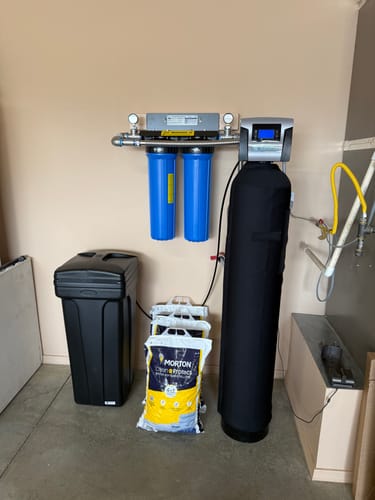
My plumber handled the installation, which took approximately 1.5 hours from start to finish. The system installed cleanly off our main well line with proper bypass valving for future maintenance.
What impressed me immediately was the build quality.
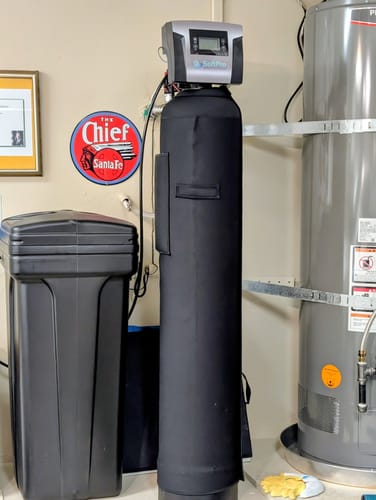
The control valve felt substantial, not like the flimsy plastic components I'd seen on some competitors. The tank construction was clearly designed for long-term durability with proper corrosion resistance.
The installation required basic plumbing connections and electrical for the control head. My plumber mentioned how straightforward the process was compared to some other systems he'd installed.
Initial startup involved flushing the system to remove any carbon fines and programming the control head for our specific water conditions and household size.
Were you aware that proper system sizing depends on both flow rate requirements and contact time calculations?
The SoftPro sizing chart made this clear, ensuring we had adequate capacity for our cottage's needs without over-sizing and wasting money.
First impressions during checkout were positive. Water flow felt strong throughout the house, and I could immediately detect a reduction in the sulfur odor.
Performance Testing: The Proof Is in the Laundry
I'll be honest - I was skeptical that any system could completely eliminate our iron staining issues. Too many failed attempts had made me cautious about expectations.
But I wanted to test this properly, so I bought all new white towels specifically for before-and-after comparison. This gave me a clean baseline to evaluate the system's effectiveness.
The results after the first few wash cycles were remarkable.
Those bright white towels stayed bright white. No orange streaks, no rust-colored spots, no mysterious discoloration that had plagued our laundry for months.
I ran multiple test loads over the first few weeks, deliberately using white fabrics that would show any iron staining immediately. Every load came out clean.
But what about the fixtures and that persistent orange buildup?
Within two weeks, I noticed the orange-red deposits in our sinks and toilets weren't returning like before. The shower head stayed cleaner longer, and that weekly scrubbing routine became unnecessary.
The sulfur smell reduction was noticeable within days. While not completely eliminated, it dropped to barely perceptible levels that didn't affect our enjoyment of the cottage.
Water taste improved as well. We'd been buying bottled water for drinking, but the filtered well water became quite pleasant for consumption and cooking.
Three Months In: Long-Term Performance Assessment
Now, three months after installation, I can confidently say this system has exceeded my expectations in every meaningful way.
The newer towels I bought for testing still look pristine.
More importantly, I've gradually reintroduced our older white linens, and they're staying clean too. No new stains, and some of the existing light staining has actually faded with regular washing.
Bathroom fixtures require normal cleaning now instead of the aggressive scrubbing sessions I'd grown accustomed to. The orange-red buildup simply isn't happening anymore.
Have you ever experienced the relief of not dreading laundry day?
That's genuinely how I feel now. No more inspecting every white item for new stains or explaining to guests why our bathroom looks dingy despite constant maintenance.
The system has been completely hands-off during these three months. No maintenance required yet, no performance degradation, no unexpected issues or service calls.
Water pressure throughout the house remains strong. I was initially concerned about pressure drops, but the upflow design maintains excellent flow characteristics.
Seasonal weather changes haven't affected performance. We've experienced everything from dry spells to heavy rains that typically influence well water characteristics, but the system has handled variations consistently.
Operational Costs and Practical Considerations
One aspect I appreciated during my research was understanding the true cost of ownership beyond the initial purchase price.
Catalytic carbon media typically lasts 3-5 years depending on contamination levels and water usage.
Replacement media costs are reasonable, especially compared to the ongoing expense of iron-removal chemicals, CLR, damaged linens, and premature appliance replacement from mineral buildup.
The system uses minimal electricity for the control valve operation. I haven't noticed any meaningful increase in our cottage electrical costs.
What about water usage for backwashing and regeneration?
The upflow design requires periodic backwashing to remove accumulated debris, but this happens automatically based on programmed cycles. Water usage is modest compared to salt-based softener regeneration.
I've calculated that eliminating bottled water purchases, reducing cleaning chemical needs, and protecting our appliances from mineral damage will likely pay for the system within two years.
The time savings alone - not constantly scrubbing fixtures and re-washing stained laundry - has been worth the investment.
Final Thoughts: Is This the Right Solution for You?
After three months of real-world testing, I'm completely satisfied and genuinely happy with these results.
This system solved our specific iron and sulfur issues effectively without the maintenance headaches or ongoing chemical costs of alternative approaches.
Who would benefit most from a similar setup?
Anyone dealing with iron staining, sulfur odors, or mineral buildup from well water will likely see dramatic improvements. The technology is particularly effective for ferrous iron levels that overwhelm traditional softeners.
If you're in a situation similar to ours - frustrated with constant cleaning, embarrassed by fixture staining, and tired of ruined laundry - this type of catalytic carbon system addresses the root cause rather than just masking symptoms.
The upflow design and quality construction suggest this will be a long-term solution rather than another temporary fix. Based on my experience so far, I'd confidently recommend this approach to other cottage owners or homeowners facing similar well water challenges.
Would I purchase this system again knowing what I know now?
Absolutely. The transformation in our water quality and the elimination of daily frustrations has made our cottage experience so much more enjoyable.






