


![SoftPro™ Chlorine+ Carbon Whole House Water Filter to Remove PFAS, Chlorine, Chloramine & Pesticides [City Water Filters Series]](http://www.softprowatersystems.com/cdn/shop/files/SoftPro_Whole_House_Carbon_Filter_with_Spin_Down_Water_Filter.webp?v=1783547361&width=140)


 855-683-8488


SoftPro Upflow Catalytic Carbon Filter Review: Real Results

Hi, I'm Chen Luxin. I live in . Craig "The Water Guy" Phillips asked me to share my experience as a homeowner on Iron Filter with the SoftPro Chlorine+ Carbon Whole House Water Filter to Remove PFAS, Chlorine, Chloramine & Pesticides [City Water Filters Series] I purchased.
This is how my adventures played out. I hope this helps you in your decision.
Why I Started Looking for a Whole House Water Solution
Did you know that municipal water treatment, while making water safe to drink, often leaves behind chemical residues that can affect taste, smell, and even long-term health?
I didn't realize this until last spring when I started noticing a persistent chlorine smell every time I turned on our kitchen faucet. At first, I thought it was just a temporary issue with our city's water treatment, but weeks went by and the problem only seemed to get worse.
The real wake-up call came when my wife mentioned that her skin felt dry and itchy after showers, despite using moisturizing body wash. Our morning coffee also had this strange, almost medicinal aftertaste that no amount of premium beans could mask. I found myself buying bottled water just to enjoy a decent cup of coffee at home.
After doing some research, I learned that chlorine, while effective at killing bacteria in municipal water supplies, can react with organic matter to form chloramines and other disinfection byproducts. These compounds not only affect taste and odor but have been linked to respiratory irritation and skin sensitivity in some people.
That's when I started researching whole house filtration systems. I wanted something that would address the chlorine issue at the source, protecting not just our drinking water but also the water we use for cooking, bathing, and cleaning.
My Research Journey: Understanding Catalytic Carbon Technology
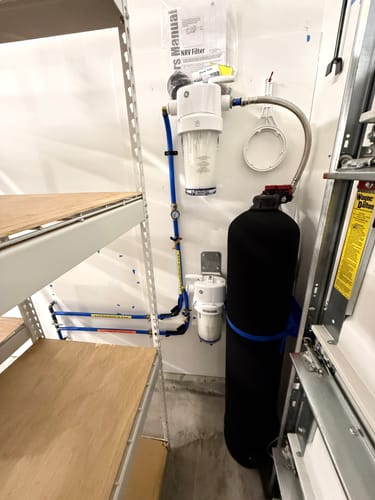
I'll be honest – before this experience, I thought carbon filtration was just about removing bad tastes. I had no idea there was a difference between regular activated carbon and catalytic carbon, or why that difference would matter for my specific water issues.
Through my research, I discovered that catalytic carbon is specially treated activated carbon that's designed to handle chloramines more effectively than standard carbon filters. Regular activated carbon works great for chlorine, but chloramines – which many municipalities use because they're more stable – require a different approach.
The catalytic carbon media creates a catalytic reaction that breaks down chloramines into harmless components, while also removing chlorine, certain organic compounds, and even some emerging contaminants like PFAS (per- and polyfluoroalkyl substances). This was particularly important to me because our city had recently switched to chloramine disinfection.
I also learned about the importance of contact time – the longer water stays in contact with the carbon media, the more effective the filtration. This led me to look for systems with adequate media volume and slower flow rates that would ensure proper contact time without sacrificing water pressure.
The upflow design caught my attention because it prevents channeling (where water finds the path of least resistance through the media) and ensures more even distribution of water through the entire carbon bed. This translates to better filtration efficiency and longer media life.
Why I Chose the SoftPro Upflow Catalytic Carbon System
After comparing several systems, the SoftPro upflow catalytic carbon filter stood out for several practical reasons. First, the upflow design made sense from an engineering perspective – water enters at the bottom and flows upward through the media bed, which prevents compaction and ensures more consistent filtration performance.
The system uses coconut shell-based catalytic carbon, which I learned has superior adsorption properties compared to coal-based alternatives. Coconut shell carbon has a more favorable pore structure for removing the specific contaminants I was targeting, and it's generally considered more environmentally sustainable.
Size-wise, the system was perfect for our home's needs. With a household of four people and typical water usage patterns, the flow rate of 15 gallons per minute would easily handle peak demand periods like morning showers and evening dishwashing without pressure drops.
I also appreciated that SoftPro provided clear specifications about media volume, contact time, and expected contaminant reduction percentages. Many manufacturers are vague about these details, but SoftPro's technical documentation showed reduction rates of 95%+ for chlorine and 85%+ for chloramines.
The automatic backwash feature was another deciding factor. The system automatically reverses flow periodically to clean the media bed and extend its life. This maintenance automation appealed to me because I travel frequently for work and didn't want to worry about manual maintenance schedules.
Installation Experience: Easier Than Expected

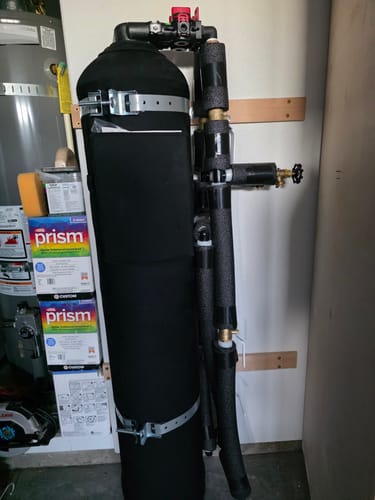
I decided to hire a local plumber for installation, mainly because our main water line required some reconfiguration to accommodate the bypass valve and proper spacing. The whole process took about four hours, including the time needed to install the necessary electrical outlet for the control valve.
The SoftPro system arrived well-packaged with clear installation instructions. My plumber, who had worked with various whole house systems before, commented that the components felt substantial and well-manufactured. The control head is built by Fleck, which is apparently a respected name in water treatment controls.
One thing that impressed both of us was the quality of the bypass valve assembly. It's a true three-valve setup that allows complete isolation of the system for maintenance without shutting off water to the house. This turned out to be valuable during the initial startup and commissioning process.
The electrical connection was straightforward – just a standard 110V outlet. The control valve draws minimal power, similar to a digital clock, so there's no noticeable impact on our electric bill.
After installation, we ran the initial backwash cycle, which took about 20 minutes and used approximately 50 gallons of water to properly clean and settle the media bed. The water ran clear after this process, and we were ready to put the system into service.
First Weeks: Immediate Improvements and Observations
The difference was noticeable within the first day. That persistent chlorine smell that had been bothering me for months was completely gone. When I filled a glass of water, there was no chemical odor whatsoever – just clean, neutral-smelling water.
My wife noticed the change immediately when showering. She said her skin felt less dry and itchy, and her hair seemed softer and more manageable. We hadn't realized how much the chlorine was affecting these daily experiences until it was gone.
The coffee test was probably the most dramatic improvement. Using the same beans and brewing method, our morning coffee tasted noticeably cleaner and more flavorful. The medicinal aftertaste was completely eliminated, and I could actually taste the subtle flavor notes that were being masked before.
I also tested the water with chlorine test strips before and after installation. Our municipal water typically shows 2-3 ppm of total chlorine, but post-filtration readings were consistently at or below the detection limit of 0.1 ppm.
One unexpected benefit was with our ice maker. The ice cubes from our refrigerator dispenser were clearer and had no chemical taste. I hadn't even thought about this application, but it makes sense since the ice maker connects to the same water line.
Long-Term Performance: 8 Months of Real-World Use
After eight months of daily use, I can say the system has maintained consistent performance. The automatic backwash cycles occur every few days (the frequency depends on water usage), and I can hear the system cycling briefly, usually during early morning hours when water usage is low.
I've continued testing chlorine levels periodically, and the removal efficiency has remained excellent. Even during summer months when our municipality increases chlorine levels due to higher demand and warmer temperatures, the SoftPro system has maintained effective removal.
Water pressure throughout the house has remained strong. We haven't experienced any noticeable pressure drops, even during peak usage periods. The 15 GPM flow rate specification appears to be accurate based on our real-world experience.
The control valve display shows useful information including days since last regeneration, gallons processed, and current operating status. This gives me confidence that the system is working properly and helps me track when media replacement might be needed.
Our appliances seem to be benefiting as well. Our dishwasher produces cleaner, spot-free dishes, and our clothes washer doesn't require as much detergent to achieve the same cleaning results. These weren't primary considerations when I purchased the system, but they're welcome side benefits.
Operating Costs and Maintenance Reality
The ongoing costs are quite reasonable. The automatic backwash cycles use approximately 50 gallons of water each time, which happens every 3-4 days in our household. At our local water rates, this adds about $3-4 per month to our water bill.
Electricity consumption is minimal – the control valve uses about the same power as a digital alarm clock. I estimate less than $2 per month in additional electrical costs.
The catalytic carbon media is expected to last 3-5 years depending on water quality and usage. Replacement media costs approximately $200-250, which works out to roughly $4-7 per month when amortized over the media life. This is significantly less than we were spending on bottled water for drinking and cooking.
SoftPro provides clear guidance on when media replacement is needed. The main indicators are decreased chlorine removal efficiency (which can be tested with simple test strips) and shorter intervals between automatic regeneration cycles.
The system requires no other regular maintenance from me. The automatic operation handles all the cleaning and regeneration functions, and the bypass valve setup makes media replacement straightforward when the time comes.
Final Thoughts: Would I Choose This System Again?
Absolutely. The SoftPro upflow catalytic carbon filter has consistently delivered on its promises over the past eight months. The improvement in water quality throughout our home has been substantial and sustained.
What I appreciate most:
• Complete elimination of chlorine taste and odor
• Noticeable improvements in skin and hair condition
• Set-and-forget operation with automatic backwashing
• Solid construction and reliable performance
• Clear technical specifications and honest performance claims
Minor considerations:
• Initial investment is significant (though justified by performance)
• Requires adequate space for installation
• Periodic backwash cycles use additional water
This system works exactly as advertised and has improved our daily water experience in ways I didn't fully anticipate. The combination of effective contaminant removal, automated operation, and solid construction makes it a worthwhile investment for any household dealing with chlorine or chloramine in their municipal water supply.
If you're experiencing similar water quality issues and want a comprehensive, low-maintenance solution, the SoftPro upflow catalytic carbon system deserves serious consideration. It's been a reliable performer that has delivered real, measurable improvements to our home's water quality.






