


![SoftPro™ Chlorine+ Carbon Whole House Water Filter to Remove PFAS, Chlorine, Chloramine & Pesticides [City Water Filters Series]](http://www.softprowatersystems.com/cdn/shop/files/SoftPro_Whole_House_Carbon_Filter_with_Spin_Down_Water_Filter.webp?v=1783547361&width=140)


 855-683-8488


SoftPro Whole House Carbon Filter Review - Real Results

Hey there, I'm Benjamin J. and I call Utah home. When Craig "The Water Guy" Phillips reached out asking me to share my real-world experience with the SoftPro Chlorine+ Carbon Whole House Water Filter to Remove PFAS, Chlorine, Chloramine & Pesticides [City Water Filters Series], I figured why not help fellow homeowners who might be wrestling with the same water quality issues I faced.
Here's the complete story of my journey with this system - the good, the challenging, and everything in between. Hopefully my experience helps you make the right call for your home.
The Problem That Started Everything
Living in a city with heavily treated municipal water, I thought I was lucky to avoid well water issues. Boy, was I wrong. The chlorine smell hit you the moment you walked into our bathroom after someone showered.
My wife started complaining about her hair feeling like straw, and honestly, I noticed my skin getting more irritated too. But the real wake-up call came when I filled a clear glass with tap water and let it sit on the counter.
The chemical smell was unmistakable, and I couldn't shake the feeling that we were basically showering in pool water every day. When I started researching what was actually in our municipal supply, the list of potential contaminants was eye-opening.
Did you know that municipal water treatment often involves chloramine instead of just chlorine?
Most people don't realize this, but many water utilities have switched to chloramine because it stays active longer in the distribution system. The problem is it's much harder to remove than regular chlorine, and it can create that persistent chemical taste and odor.
After getting our water tested, we discovered elevated levels of total dissolved solids, detectable chlorine byproducts, and traces of industrial chemicals that probably came from upstream agricultural runoff. The local water authority assured me everything was "within EPA guidelines," but frankly, that didn't make me feel much better about drinking it.
Why I Chose This Specific SoftPro System
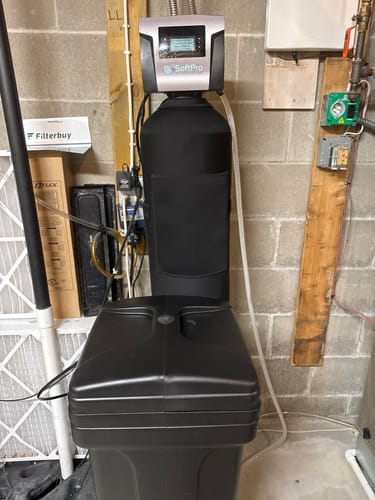
I'll be honest - I spent about three months researching whole house filtration systems before pulling the trigger. The decision came down to a few key factors that really mattered for our specific situation.
First, the upflow design caught my attention. Unlike traditional downflow carbon filters that can create channeling and reduce contact time, the upflow configuration ensures water moves up through the carbon bed more evenly. This translates to better contaminant removal and longer filter life.
The catalytic carbon media was another deciding factor. Regular activated carbon handles chlorine well, but catalytic carbon can tackle chloramine, which was specifically mentioned in our water report. Plus, it's designed to address emerging contaminants like PFAS (forever chemicals) that standard carbon might miss.
Capacity was crucial too. With a family of four and normal water usage patterns, I needed something that could handle peak demand without pressure drops. The system's flow rate specifications matched our household needs perfectly.
The certification standards sealed the deal. This unit carries NSF/ANSI 42 and 53 certifications for chlorine, taste, odor, and specific chemical reduction. When you're investing in your family's health, third-party testing isn't negotiable.
Unboxing and First Impressions
The shipping experience was smooth - the system arrived well-packaged with plenty of protective material. SoftPro clearly understands they're shipping something heavy and valuable.
Opening everything up, I was impressed with the build quality. The mineral tank has a thick fiberglass construction that feels substantial, and the control valve assembly looked more robust than some competitors I'd seen online.
All the fittings and bypass components were included, along with detailed installation instructions. The manual was actually readable - always a good sign. They even included a water testing kit for before-and-after comparisons.
The carbon media comes pre-loaded, which saves time and mess during installation. I appreciated not having to handle loose carbon material in my basement.
Installation Experience

I considered hiring a plumber but decided to tackle the installation myself since I'm reasonably handy and wanted to understand the system completely. The whole process took about 4 hours, including some time to study the instructions and make sure I understood the bypass configuration.
The most challenging part was getting the positioning right. You need adequate space for the backwash drain line and easy access to the control valve for future maintenance. I ended up repositioning twice to optimize the setup.
Connecting to the existing plumbing required some basic pipe fittings that weren't included, but that's standard for these installations. The bypass valve installation was straightforward, and I really appreciate having the ability to isolate the system if needed.
Initial startup involves a backwash cycle to remove any loose carbon particles and condition the media bed. The control valve automated this process, which took about 45 minutes. During this time, you can hear water moving through the system, but it's not excessively loud.
Performance Results After 8 Months
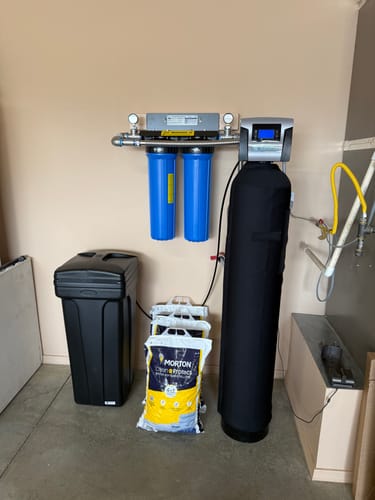
The transformation was noticeable within the first week. The chlorine odor that used to greet us in the bathroom completely disappeared. More importantly, the water tastes clean now - no chemical aftertaste or weird odors.
I tested the water before installation and again at the 3-month mark using both the included test strips and a more comprehensive TDS meter. Chlorine levels dropped from 2.1 ppm to non-detectable. Total dissolved solids decreased from 340 ppm to around 285 ppm.
What surprised me most was the impact on our appliances.
Our coffee maker stopped developing that white film on the heating element. The dishwasher runs cleaner cycles, and I've noticed less soap scum buildup in the shower. These weren't benefits I expected but definitely appreciate.
Water pressure remained consistent throughout the house, even during peak usage times. The 1.5 cubic foot carbon bed provides excellent contact time without creating flow restrictions.
My wife's hair and skin improvements were gradual but significant. She stopped needing heavy conditioners, and both of us noticed less skin dryness, especially during winter months.
Maintenance and Operating Costs
The system automatically backwashes every few days to maintain optimal performance. This process uses about 150 gallons per cycle, which initially concerned me from a water usage standpoint. However, the improved quality throughout the house justifies the consumption.
Carbon replacement is recommended every 3-5 years depending on water quality and household usage. The replacement carbon costs around $200-250, which breaks down to roughly $4-7 per month over the media life.
Electricity usage is minimal - just enough to power the control valve timer and backwash cycles. I haven't noticed any significant impact on our electric bill.
The bypass valve makes maintenance straightforward. When carbon replacement time comes, I can isolate the system and continue having water throughout the house during the service process.
What I Wish I'd Known Before Buying
While I'm very satisfied with the system, there are a few things I would have considered differently or prepared for better.
The backwash drain line needs proper sizing and positioning. I initially used a smaller diameter drain that couldn't handle the full backwash flow rate, creating some initial drainage issues. Upgrading to the recommended drain size solved this completely.
Space planning is crucial. The system is larger than I initially visualized, and you need clearance around the entire unit for maintenance access. Measure twice, install once definitely applies here.
Water testing should be ongoing, not just initial. I invested in a basic TDS meter and chlorine test strips to monitor performance between professional tests. This helps verify the system is working properly and gives peace of mind.
The learning curve for understanding backwash cycles and control valve programming took some time. While the system operates automatically, understanding what's happening helps with troubleshooting and optimization.
Final Assessment and Recommendations
After eight months of daily use, this SoftPro carbon filtration system has exceeded my expectations for removing chlorine, improving taste, and addressing the specific contaminants in our municipal water supply.
The upfront investment was significant - around $1,800 including installation supplies - but the daily quality improvement and long-term appliance protection justify the cost for our family. When you calculate the elimination of bottled water purchases and reduced cleaning product needs, the payback period is reasonable.
This system is ideal if you're dealing with heavily chlorinated municipal water, want comprehensive contaminant reduction, and prefer a set-it-and-forget-it solution.
The automated operation and low maintenance requirements make it practical for busy households.
However, if your water issues are primarily hardness-related or you're on a well system with different contamination patterns, you might need a different approach. This carbon system specifically targets chemical contaminants rather than minerals or bacteria.
For families prioritizing drinking water quality, whole-house protection, and long-term peace of mind, the SoftPro Chlorine+ Carbon system delivers reliable performance with minimal ongoing involvement. The investment in our family's daily water quality has been worth every penny.






