


![SoftPro™ Chlorine+ Carbon Whole House Water Filter to Remove PFAS, Chlorine, Chloramine & Pesticides [City Water Filters Series]](http://www.softprowatersystems.com/cdn/shop/files/SoftPro_Whole_House_Carbon_Filter_with_Spin_Down_Water_Filter.webp?v=1783547361&width=140)


 855-683-8488


SoftPro Whole House Carbon Filter Review: Sulfur Smell Gone!

Hi, I'm Luca C. I live in Saskatchewan a rural area with challenging well water. Craig "The Water Guy" Phillips reached out asking me to document my real-world experience as a homeowner dealing with water quality issues, specifically with the SoftPro Whole House Upflow Catalytic Carbon Filter I installed six months ago. What started as a frustrating battle against smelly, discolored water turned into a complete transformation of our home's water quality. Here's exactly how my journey unfolded, and I genuinely hope this detailed account helps guide your decision-making process.
The Nightmare That Was Our Well Water Problem
Have you ever walked into your kitchen and been hit with the unmistakable smell of rotten eggs coming from your faucet?
That was my daily reality for three years before I finally took action.
Living on well water in our rural community, I thought sulfurous smells and yellow-tinted water were just facts of life. The hydrogen sulfide gas created that distinctive rotten egg odor every time we turned on a tap, and the iron content left everything with an unpleasant metallic taste and rusty stains.
The problems went far beyond just offensive smells and taste. Our white laundry came out dingy and yellow-stained. Coffee tasted terrible, no matter what premium beans we used. Guests would wrinkle their noses when using our bathroom or kitchen sinks. The iron was destroying our appliances—our dishwasher had rust stains, the washing machine was developing brown residue, and our water heater was aging prematurely.
I tested our well water and found iron levels at 4.2 parts per million and hydrogen sulfide at 0.8 ppm—well above the EPA's recommended aesthetic guidelines. The total dissolved solids measured 340 ppm, indicating significant mineral content that was affecting everything from soap effectiveness to appliance longevity.
Before discovering the SoftPro system, I tried cheaper solutions. We installed a basic sediment filter that did nothing for the smell or taste. I bought a countertop carbon pitcher, but it couldn't handle the volume our family needed and required constant filter changes. We even tried chlorine injection, but that created its own chemical taste and required ongoing maintenance I wasn't comfortable handling.
Why I Chose SoftPro's Upflow Catalytic Carbon Technology
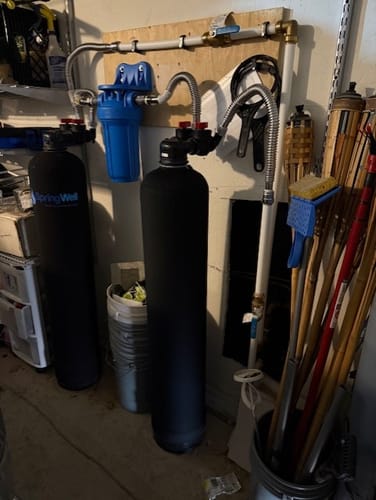
After months of research, I learned that hydrogen sulfide and iron removal requires specific treatment approaches that basic filtration can't handle. Standard carbon filters work through adsorption, but catalytic carbon actually converts hydrogen sulfide into harmless sulfur particles that can be filtered out.
The SoftPro Whole House Upflow Catalytic Carbon Filter uses a specialized coconut shell carbon that's been treated to enhance its catalytic properties. Unlike traditional downflow systems, the upflow design prevents channeling and ensures maximum contact time between water and the carbon media.
What convinced me was the system's capacity to handle both our iron and hydrogen sulfide issues simultaneously. The catalytic carbon converts hydrogen sulfide gas into sulfur particles, while also removing the iron through oxidation and filtration. The system is rated for iron levels up to 5 ppm and hydrogen sulfide up to 1 ppm—perfect for our well conditions.
I also appreciated the backwash feature. Every few days, the system automatically reverses flow direction, flushing accumulated contaminants down the drain. This self-cleaning mechanism prevents the carbon bed from becoming fouled and maintains consistent performance without manual intervention.
The 1.5 cubic feet of catalytic carbon media provides excellent contact time even at our peak flow rate of 12 gallons per minute. Most importantly, the system doesn't require chemicals, salt, or complicated maintenance schedules.
Installation Experience and First Impressions
The SoftPro system arrived in a heavy-duty cardboard crate weighing about 180 pounds. The fiberglass tank appeared robust and professional-grade, measuring 10 inches in diameter by 54 inches tall. The Fleck 5600SXT control valve looked sophisticated but not intimidatingly complex.
All components were well-packaged with protective foam. The installation manual was comprehensive, with clear diagrams and specifications. However, I decided to hire a local plumber for installation since it required cutting into our main water line and adding a bypass valve.
Installation took about four hours and cost $320 for labor. We needed to install the system after our pressure tank but before our water heater. The plumber added a bypass valve so we could service the unit without shutting off our entire water supply. We also installed a separate electrical outlet for the control valve.
The most challenging aspect was finding adequate space in our basement utility room. The system requires at least 6 feet of vertical clearance for the tank plus additional space for the control valve. We also needed access to a drain for the backwash discharge.
Initial programming was straightforward. The Fleck control valve allows you to set backwash frequency based on water usage or time intervals. I programmed it for every three days initially, then adjusted to every five days based on our actual usage patterns.
Immediate Results That Exceeded My Expectations

The transformation was literally instant—no exaggeration needed.
The moment we turned the system back online after installation, the sulfur smell was completely gone.
I ran the cold water taps throughout the house for about ten minutes to flush the lines, then filled a glass from our kitchen sink. Crystal clear water with no odor, no taste issues, and no yellow tinting. My wife walked into the kitchen and immediately commented that something was different—she couldn't smell the usual sulfur when running water.
We tested the system thoroughly that first week. Morning showers no longer greeted us with egg-smell. Coffee tasted dramatically better—clean and crisp without the metallic aftertaste we'd grown accustomed to. Ice cubes from our refrigerator were clear instead of cloudy.
I retested our treated water after one week. Iron levels dropped from 4.2 ppm to 0.1 ppm. Hydrogen sulfide was undetectable. The water pH remained stable at 7.2, and total dissolved solids decreased slightly to 290 ppm—expected since the system removes some mineral content along with contaminants.
The flow rate remained strong throughout our house. Even with multiple fixtures running simultaneously, we experienced no pressure drops or reduced flow. The 1-inch inlet and outlet connections ensure adequate flow capacity for our household needs.
Six-Month Performance and Real-World Testing
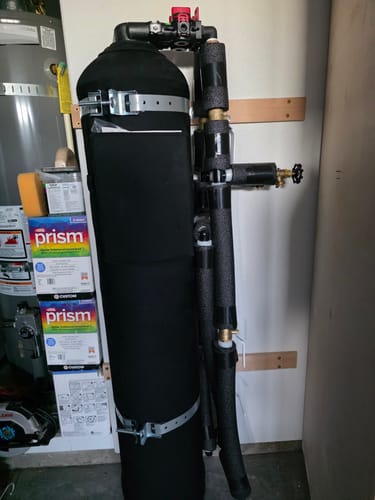
Six months later, the system continues performing exactly as it did on day one. The hydrogen sulfide removal remains 100% effective, and iron levels consistently test below 0.2 ppm—well within acceptable ranges for taste and staining prevention.
I've tested the system under various conditions. During heavy rain periods when our well water becomes more turbid, the system handles the increased particulate load without performance degradation. Summer months when our iron content typically increases haven't affected the removal efficiency.
The automatic backwash cycle works flawlessly. Every five days at 2:00 AM, the system runs through a 12-minute backwash sequence. I've watched the process during daylight hours—the initial backwash water runs brown with collected iron particles, then gradually clears as the carbon bed is cleaned.
Water usage during backwash averages 45 gallons per cycle, which translates to about 270 gallons per month. Since we're on well water, this isn't a significant cost concern, but city water users should factor this into operating expenses.
Our appliances have shown noticeable improvement. The dishwasher no longer develops rust stains, and our white dishes come out actually white. The washing machine rinses cleaner, and we've reduced detergent usage by about 30% while achieving better cleaning results.
I've also noticed our soap and shampoo lather better. While this isn't a water softener, removing iron improves the effectiveness of cleaning products significantly.
Operating Costs and Maintenance Reality
The SoftPro system's operating costs are refreshingly minimal. No salt, no chemicals, no filter cartridges to replace monthly. The primary ongoing expense is electricity for the control valve, which costs approximately $3 monthly based on our local rates.
The catalytic carbon media should last 3-5 years depending on water conditions and usage. Replacement media costs around $180, and the process involves disconnecting the control valve, removing the old carbon, and adding new media—a job most homeowners can handle or have done professionally for $150-200.
I perform minimal maintenance. Monthly, I check the bypass valve and inspect the drain line for proper flow. Every three months, I manually run a backwash cycle and observe the discharge water to ensure the system is cleaning effectively.
The control valve requires no regular maintenance, though SoftPro recommends annual inspection of seals and moving parts. The fiberglass tank should last 15-20 years with normal use.
Compared to our previous bottled water purchases—we were buying 4-5 cases weekly at $25 per week—the system paid for itself in about 18 months. Factor in the appliance protection and improved cleaning effectiveness, and the return on investment is compelling.
What I'd Do Differently and Minor Limitations
If I were installing again, I'd plan better for the space requirements. The system is taller than I initially anticipated, and we had to rearrange our utility room layout. Measuring twice would have saved some hassle.
The backwash discharge creates a brief brown water flow that initially concerned me. Understanding this is normal and indicates the system is working properly would have prevented some early anxiety. The discharge water is safe and actually beneficial for watering plants due to the iron content.
During power outages, the control valve doesn't function, so the system operates in bypass mode. This isn't problematic for short outages, but extended power loss means temporary return to untreated water. A battery backup for the control valve would be a nice option.
The system handles our iron and hydrogen sulfide perfectly but doesn't address water hardness. We still deal with calcium and magnesium deposits on fixtures and in appliances. Adding a water softener downstream would create a complete treatment solution, but that wasn't our primary concern.
Installation costs can vary significantly depending on your plumbing configuration. Our straightforward basement installation cost $320, but complex installations requiring extensive re-plumbing could cost substantially more.
My Final Verdict After Six Months of Real Use
The SoftPro Whole House Upflow Catalytic Carbon Filter has completely transformed our water quality and daily living experience. The instant elimination of sulfur odors and iron staining was exactly what we needed, and the system has maintained consistent performance without any issues.
Would I buy this system again?
Absolutely, without hesitation.
The build quality is excellent, the technology is appropriate for our water conditions, and the minimal maintenance requirements make it perfect for busy homeowners. At $1,247 plus installation, it's a significant investment, but the immediate improvement in water quality and long-term appliance protection justify the cost.
This system is ideal for well water users dealing with hydrogen sulfide and iron issues. If your water tests show iron levels between 1-5 ppm and detectable hydrogen sulfide, this technology will solve your problems effectively. The upflow design and catalytic carbon media handle these specific contaminants better than any other single system I researched.
For city water users or those dealing primarily with chlorine, sediment, or hardness issues, other SoftPro systems might be more appropriate. But for iron and hydrogen sulfide removal, this catalytic carbon system is exactly the right tool for the job.
Six months later, every glass of water reminds me why this was one of the best home improvements we've ever made. Clean, odorless, great-tasting water from every tap in our house—that's worth every penny we invested.






