


![SoftPro™ Chlorine+ Carbon Whole House Water Filter to Remove PFAS, Chlorine, Chloramine & Pesticides [City Water Filters Series]](http://www.softprowatersystems.com/cdn/shop/files/SoftPro_Whole_House_Carbon_Filter_with_Spin_Down_Water_Filter.webp?v=1783547361&width=140)


 855-683-8488


Stop Paying for Iron Stain Products: The Case for Filtration

If you're tired of buying iron stain removers, you're solving the wrong problem. Those products only hide the symptoms while high iron levels keep damaging your pipes, appliances, and laundry. Meanwhile, repair bills and appliance replacements can cost you over $1,000 annually. An iron filtration system addresses the issue at the source, eliminating stains permanently without chemicals. Stick with us, and we'll show you exactly how to break the cycle for good.
Key Takeaways
- Iron stain removers only mask symptoms, leaving the root cause unresolved and leading to repetitive, unnecessary expenses.
- High iron levels damage plumbing and appliances, causing premature failures that cost homeowners up to $1,000 annually.
- Iron filtration systems address the problem at the source, eliminating stains without chemicals or ongoing product purchases.
- Ignoring iron filtration leads to higher utility bills, emergency repairs, and appliance replacements exceeding $1,000 yearly.
- Water testing determines iron levels and type, ensuring the right filtration system is chosen for optimal results.
Why Iron Stain Products Never Fix the Real Problem

When iron stains keep coming back no matter how many products you use, that's your water telling you something important.
Those stain removers aren't solving anything—they're just masking a deeper problem. High iron levels in your water supply are the root cause, and no amount of scrubbing changes that.
Here's what's actually happening: you're treating symptoms while the real issue flows right through your pipes untouched.
Every bottle you buy is money spent on a temporary fix that guarantees you'll need another one soon. Meanwhile, iron deposits are quietly damaging your plumbing and appliances, setting you up for expensive replacements down the road.
The cycle doesn't break until you address what's actually in your water—and that requires proper testing and filtration, not another cleaning product.
What Iron Is Actually Doing to Your Pipes and Appliances
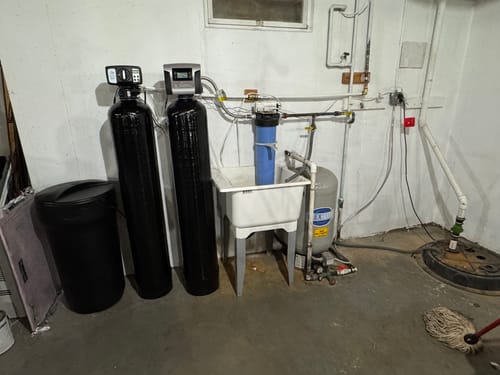
Those stain removers can't touch what's happening inside your pipes and appliances—and that's where the real damage adds up.
Iron deposits quietly accumulate inside your dishwasher, washing machine, and plumbing, steadily choking efficiency and shortening lifespans. Clogged pipes reduce water pressure and set the stage for expensive emergencies. When things finally fail, you're looking at $300 to $1,000 per emergency service call—and that's just one incident.
Premature appliance replacements can run up to $1,000 annually. That's money leaving your pocket because iron went unaddressed at the source.
Meanwhile, your clothes come out dingy, and your fixtures stay stained no matter how much you scrub. The pattern is clear: surface treatments cost more over time than simply removing iron before it enters your home.
How an Iron Filtration System Eliminates the Problem for Good
Iron filtration systems tackle the problem where it starts—at the water source—so rust stains, scale buildup, and appliance damage never get a foothold in your home. Through oxidation and filtration, dissolved iron gets neutralized before it ever reaches your fixtures, clothes, or pipes.
That means we're not managing symptoms anymore—we're eliminating the cause.
Here's what consistent iron filtration actually delivers:
- Stain-free fixtures and laundry without ongoing chemical treatments
- Hundreds saved annually by eliminating iron stain removal products
- Extended appliance lifespan by preventing iron deposit accumulation
- Lower utility bills through maintained system efficiency
- Fewer emergency repairs with regular filter maintenance keeping performance steady
We stop reacting and start preventing—and that shift changes everything about how we maintain our homes.
What an Iron Filter Costs Versus What Ignoring It Costs You
Choosing to ignore an iron filter's maintenance needs isn't free—it just delays the bill. Neglected systems can spike utility bills by $100 monthly, and backwashing systems alone add $10–$30 in energy costs.
Ignoring iron filter maintenance doesn't save money—it simply postpones a much larger, unavoidable bill.
Skip media replacement—typically $300–$500 every 3–5 years—and you're inviting emergency service calls ranging from $300 to $1,000 annually. Let iron deposits accumulate unchecked, and appliance replacements push yearly expenses well past $1,000. Specialty media like Katalox Light costs $300–$400 and isn't covered by most homeowners insurance.
Compare that against proactive maintenance: regular testing, timely replacements, and consistent monitoring. The math isn't complicated. Preventive care costs a fraction of reactive repairs.
We're not just protecting our water quality—we're protecting our wallets from compounding, avoidable damage.
How to Choose the Right Iron Filter for Your Home
Finding the right iron filter starts with knowing exactly what's in your water. Test first—always.
Ferrous iron below 3 ppm? A softener might handle it. Above that, you'll need dedicated filtration.
Here's what to evaluate before you commit:
- Iron type and concentration: Test results determine your entire filtration strategy
- pH levels: Keep it below 7.0 to maintain dissolved ferrous iron and maximize system efficiency
- Co-contaminants: Manganese and hydrogen sulfide demand specific treatment approaches alongside iron removal
- Filtration technology: Air-injection systems offer chemical-free oxidation; backwashing filters suit different maintenance preferences
- Post-installation retesting: Verify your system's performing—adjust schedules based on real data, not assumptions
We choose smarter when we grasp our water completely. Start there.
Frequently Asked Questions
Is Iron Remover Necessary for a Water Purifier?
Yes, if your iron levels exceed 3-5 ppm, we'd strongly recommend adding a dedicated iron remover. Without one, you'll risk clogged systems, stained surfaces, and costly appliance damage that standard purifiers can't prevent.
What Is the Cheapest Way to Remove Iron From Well Water?
For ferrous iron under 5 ppm, we'd recommend a basic water softener—it's your most affordable starting point. It tackles hardness and light iron simultaneously, keeping upfront costs minimal while delivering reliable, cleaner water throughout your home.
What Water Filter Gets Rid of Iron?
We've found that air-injection oxidation filters and dedicated iron filters work best. They convert soluble ferrous iron into filterable ferric iron, effectively tackling both iron and manganese contaminants in your well water supply.
Do Air Injection Iron Filters Work?
Yes, they work! We convert soluble ferrous iron into insoluble ferric iron through air oxidation, then filter it out—effectively eliminating iron stains, hydrogen sulfide odors, and restoring your water's clarity without salt.






