


![SoftPro™ Chlorine+ Carbon Whole House Water Filter to Remove PFAS, Chlorine, Chloramine & Pesticides [City Water Filters Series]](http://www.softprowatersystems.com/cdn/shop/files/SoftPro_Whole_House_Carbon_Filter_with_Spin_Down_Water_Filter.webp?v=1783547361&width=140)


 855-683-8488


Sulfur Odor Breakthrough Despite Having an Iron Filter: When Your AIO System Is Simply Not Enough

When your AIO filter stops blocking sulfur odor, it's usually pointing to one of a few specific problems — a clogged injector cutting off airflow, pH levels dropping below 6.5, hydrogen sulfide levels overwhelming the system, or aging media that's simply worn out. We can help you pinpoint exactly what's failing. Stick with us and we'll walk you through every cause, every fix, and how to know when your system just isn't built for the job.
Key Takeaways
- Sulfur odors persisting despite a functioning AIO filter often signal hydrogen sulfide levels exceeding the system's 10 ppm treatment capacity.
- A clogged injector restricts airflow, preventing proper hydrogen sulfide oxidation and allowing sulfur odors to reach your tap.
- pH levels below 6.5 undermine the oxidation process, enabling sulfur odors to break through regardless of filter condition.
- Aging filter media between 8–10 years old loses effectiveness, making sulfur and iron treatment increasingly unreliable over time.
- If mechanical components check out but odors persist, professional evaluation may reveal the system is simply undersized for your water chemistry.
Why Your AIO Filter Stops Blocking Sulfur Odor

When an AIO filter starts letting sulfur odor slip through, there's almost always a specific reason — and tracking it down saves you from guessing.
First, check your hydrogen sulfide levels. If they're exceeding 10 ppm, your system's simply outmatched — it's built for lower concentrations.
Next, test your pH. Anything below 6.5 undermines the oxidation process, letting odors slip past untreated.
Don't overlook your injector. A malfunctioning injector cuts air supply, which means hydrogen sulfide isn't getting oxidized properly.
And if your media is approaching that 8-10 year lifespan, it's losing its ability to treat both iron and sulfur effectively.
We've seen each of these failures firsthand. Knowing which one you're dealing with makes the fix straightforward rather than frustrating.
Diagnose Your AIO System in 10 Minutes
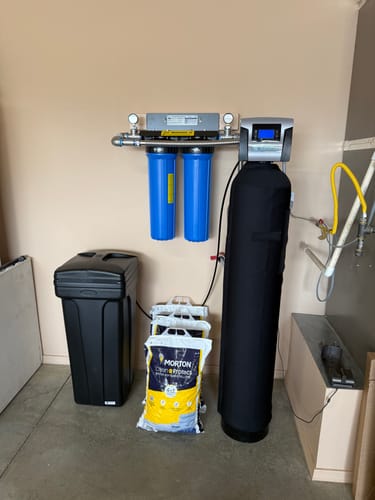
Most AIO problems reveal themselves quickly if you know where to look. Start with a visual and sensory check, then move into mechanical verification.
Here's your rapid diagnostic checklist:
- Check for iron staining and rotten egg odors — both signal the system's losing ground against contamination
- Test your pH — anything below 6.5 compromises treatment effectiveness and may require adding an acid neutralizer downstream
- Listen during the air draw cycle — gurgling means air's flowing correctly; silence suggests an injector clog blocking hydrogen sulfide removal
If sulfur odors return after cleaning the injector, don't guess. Monitor closely post-adjustment.
Persistent issues usually point toward media exhaustion. We recommend consulting dedicated troubleshooting resources before committing to a full media replacement.
Why a Clogged Injector Stops Your AIO Filter's Air Draw
If your AIO filter's passing the visual and pH checks but you're still catching that rotten egg smell, the injector's likely your culprit. That tiny hole controls the air draw your system needs to oxidize iron and hydrogen sulfide. When iron deposits clog it, airflow stops, and your filter's practically flying blind.
Here's what we've learned: don't grab a toothpick. You'll risk damaging that delicate opening and compounding the problem. Replace the injector instead—it's faster, cleaner, and eliminates guesswork.
Listen for gurgling during regeneration cycles. That sound confirms your air draw's working. Silence means trouble.
Regular inspections keep you ahead of odor breakthroughs before they reach your tap. A functioning injector isn't optional—it's the heartbeat of your entire AIO system.
Clean or Replace the AIO Injector to Restore Air Draw
Replacing the injector beats cleaning it almost every time. Sure, you can poke a wooden toothpick through that tiny hole, but iron deposits are stubborn, and one wrong move damages the opening permanently.
We've seen well-intentioned cleaning attempts make things worse.
Here's what we recommend instead:
- Identify the clog first — confirm air draw failure before assuming sulfur odor breakthrough stems elsewhere
- Source a replacement injector — e-commerce platforms carry these affordably, so there's no reason to delay
- Swap it out immediately — a fresh injector restores proper air injection, letting your iron filter do its actual job
Restoring air draw isn't complicated once you stop fighting a compromised part. Replace it, confirm suction returns, and your system handles sulfur again effectively.
When Troubleshooting Fails: Signs Your AIO Filter Is Undersized for Sulfur
Sometimes troubleshooting leads you to an uncomfortable conclusion: the filter itself isn't the problem — it's just too small for the job. If sulfur odors keep returning despite a clean injector and proper backwash cycles, your water's hydrogen sulfide levels likely exceed 10 ppm — the upper limit of what a Fleck 2510AIO can reliably handle.
We've seen this pattern repeatedly: everything checks out mechanically, yet the smell never fully disappears. That's the system telling you it's overwhelmed, not malfunctioning.
Also check your pH. Levels below 6.5 actively undermine the oxidation process, making even a properly sized AIO struggle.
At this point, a professional evaluation isn't optional — it's the only way to match your treatment solution to your actual water chemistry.
Frequently Asked Questions
Will an Iron Filter Remove Sulfur Smell?
Yes, an iron filter can remove sulfur smell—but only up to 10 ppm when your pH stays at 6.5 or higher. Exceed those limits, and we'll need a stronger solution.
What Kind of Filter Gets Rid of Sulfur Smell?
We recommend air injection filters for lower sulfur levels, but if you're exceeding 10 ppm, you'll need a stronger oxidation system or Katalox Light media for complete, chemical-free sulfur elimination.
What Neutralizes the Smell of Sulfur?
We neutralize sulfur's rotten egg smell using oxidizing agents like chlorine or potassium permanganate. Our AIO system can also eliminate it naturally—without chemicals—when we maintain proper pH levels above 6.5.
Should I Be Worried if I Smell Sulfur?
Yes, we should take a sulfur smell seriously. It often signals hydrogen sulfide levels overwhelming your filtration system or a pH issue below 6.5 reducing filter effectiveness. Let's test our water immediately to pinpoint the problem.






