


![SoftPro™ Chlorine+ Carbon Whole House Water Filter to Remove PFAS, Chlorine, Chloramine & Pesticides [City Water Filters Series]](http://www.softprowatersystems.com/cdn/shop/files/SoftPro_Whole_House_Carbon_Filter_with_Spin_Down_Water_Filter.webp?v=1783547361&width=140)


 855-683-8488


The Science Behind Manganese Dioxide Iron Filter Media — And Why That Maintenance Step Actually Matters

Manganese dioxide filter media doesn't just catch iron — it chemically transforms it. When dissolved ferrous iron hits the media, it oxidizes into solid ferric iron and gets trapped before it ever reaches your tap. That process is catalytic, meaning the media drives the reaction without wearing itself out. But it only works if the filter stays clean. Skip backwashing and the whole chain breaks down. Stick with us and we'll show you exactly how to keep it running right.
Key Takeaways
- Manganese dioxide media oxidizes dissolved ferrous iron (Fe²⁺) into solid ferric iron (Fe³⁺), which is then trapped and removed within the filter bed.
- The media regenerates catalytically, meaning it continuously oxidizes iron without being consumed, maintaining long-term filtration effectiveness.
- pH levels directly impact filtration efficiency; solid media performs best between pH 6–9, while coated media requires pH above 8.2.
- Solid manganese dioxide media contains 85%+ active material, offering broader pH flexibility and less chemical dependency than coated alternatives.
- Regular backwashing—once or twice weekly—dislodges trapped debris, restores flow rates, and extends media lifespan, preventing costly system repairs.
Why Iron and Manganese Wreck Well Water

Iron and manganese are two of the most common well water contaminants, and they're notorious for turning a perfectly good water supply into a frustrating, smelly mess.
Iron above 0.3 ppm leaves reddish-brown stains on fixtures and laundry. Manganese kicks in at just 0.05 ppm, producing dark brown or black stains alongside unpleasant odors.
Iron stains at 0.3 ppm. Manganese causes dark stains and foul odors at just 0.05 ppm.
Neither poses a significant health threat at typical concentrations, but they create serious nuisance problems — bad taste, foul odors, and beverages like coffee or tea that turn an unappetizing dark color.
Worse, both minerals build up as sludge inside plumbing systems, gradually reducing water pressure and setting the stage for expensive repairs.
Understanding what these contaminants actually do helps us make smarter decisions about treating them effectively.
How Manganese Dioxide Filters Iron From Well Water
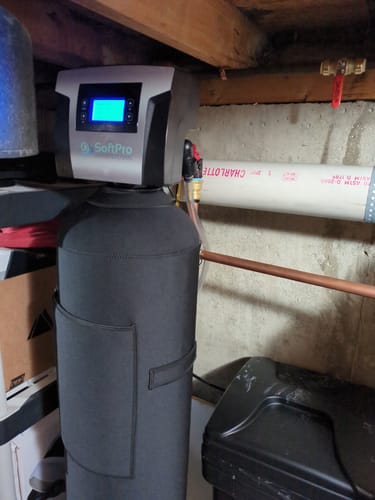
Here's how the process works:
- Dissolved ferrous iron (Fe²⁺) contacts the manganese dioxide media, triggering an oxidation reaction that converts it into solid ferric iron (Fe³⁺).
- Those solid particles get trapped within the filter bed, physically removed from your water supply.
- The media regenerates catalytically, meaning it keeps oxidizing iron without consuming itself — a self-sustaining process requiring no constant chemical input.
This isn't passive filtration.
It's an active, continuous chemical transformation happening silently inside your system.
How pH and Oxidation Levels Determine Which Media Works
Although manganese dioxide is a powerful filtration tool, it won't perform at its best unless your water's pH and oxidation levels are dialed in.
pH directly affects how efficiently ferrous iron oxidizes into its solid form — drop below 7.5, and that conversion slows down considerably. At lower pH, iron stays dissolved longer, making it harder for the media to trap and remove it.
Media type matters here, too. Coated manganese dioxide variants need pH above 8.2 to function properly, while standard media operates best between 7.5 and 8.0.
Not all manganese dioxide media is equal — coated variants demand pH above 8.2, while standard media thrives between 7.5 and 8.0.
Beyond pH, insufficient oxidizing agents compound the problem — under-oxidized iron simply passes through. Understanding these thresholds lets you select the right media and set the right conditions before fouling ever becomes an issue.
Solid vs. Coated Manganese Dioxide Media: Which One Lasts
When choosing between solid and coated manganese dioxide media, longevity is where the real difference shows up. Solid media contains 85%+ manganese dioxide — coated media holds just 1–10%. That gap matters more than you'd think.
Here's what that difference means practically:
- Coated media exhausts faster, especially under high flow rates, meaning you're replacing it more often and spending more.
- Solid media works across a broader pH range (6–9), while coated media struggles below 8.2 — limiting your flexibility.
- Coated media often needs external oxidizers like chlorine or ozone; solid media relies on its own catalytic properties, cutting your chemical dependency.
We see this consistently — solid media simply outperforms coated media over time.
Why Backwashing Is the Maintenance Step You Can't Skip
Solid media won't do its job if you neglect one thing — backwashing. Without it, oxidized iron and manganese particles accumulate inside the bed, choking flow rates and forcing your pump to work harder than it should.
We recommend backwashing once or twice weekly, depending on your water quality and contaminant load — it's not arbitrary. That reverse-flow flush physically dislodges trapped debris, restoring the media's filtration capacity before buildup becomes a real problem.
Here's what most people miss: consistent backwashing doesn't just protect water quality — it extends the media's lifespan, pushing back the timeline on costly replacements. Skip it regularly, and you're accelerating deterioration.
Treat it as non-negotiable maintenance, and your system performs exactly as engineered — efficiently, reliably, and long-term.
Frequently Asked Questions
Do Iron Manganese Filters Work?
Yes, they work remarkably well! We've seen manganese dioxide filters effectively remove iron above 0.3 ppm and manganese above 0.05 ppm, eliminating staining, odors, and even hydrogen sulfide from your water supply.
What Is the Best Media for Manganese Filter?
We recommend solid manganese dioxide media—like Pro-OX, Filox, or Pyrolox—for peak performance. It's highly pure, long-lasting, and efficiently oxidizes iron without chemical regeneration, making it the smartest investment for serious filtration results.
Can a Brita Filter Remove Manganese?
Brita filters can't effectively remove manganese. They're designed for chlorine and sediment, not dissolved manganese ions. For real manganese reduction, we'd recommend a specialized manganese dioxide media filter instead—it's built specifically for that challenge.
Do Reverse Osmosis Filters Remove Manganese?
Yes, reverse osmosis filters remove manganese effectively — we're talking 90%+ rejection rates. They force water through a semi-permeable membrane, trapping manganese ions while letting clean water pass through.






