


![SoftPro™ Chlorine+ Carbon Whole House Water Filter to Remove PFAS, Chlorine, Chloramine & Pesticides [City Water Filters Series]](http://www.softprowatersystems.com/cdn/shop/files/SoftPro_Whole_House_Carbon_Filter_with_Spin_Down_Water_Filter.webp?v=1783547361&width=140)


 855-683-8488


The Science of Media Exhaustion When Iron Filter Backwash Is Skipped Too Long

When you skip backwash cycles, your iron filter media doesn't just get dirty — it breaks down permanently. Iron and manganese accumulate layer by layer, compacting the media and spiking differential pressure until filtration fails completely. Bacteria colonize the saturated bed, producing hydrogen sulfide and foul odors. Within 14 days, recovery becomes unlikely. Beyond five years of neglect, media designed to last two decades can fail entirely. Keep exploring to understand exactly how this damage unfolds — and when it's already too late.
Key Takeaways
- Skipping backwash causes iron deposits to accumulate layer by layer, rapidly saturating filter media and spiking differential pressure beyond recovery thresholds.
- Without regular backwashing every 4–14 days, media becomes permanently compacted, reducing its ability to capture contaminants effectively.
- Beyond 14 days without backwashing, pressure drops spike significantly, making full media recovery increasingly unlikely.
- Saturated, neglected media fosters iron bacteria colonization, triggering anaerobic conditions that produce hydrogen sulfide and foul odors.
- Yearly neglect degrades media depth by up to one inch annually, potentially causing premature failure within five years.
What Skipping Backwash Does to Your Iron Filter Media

When we skip backwashing our iron filter, the consequences hit fast and compound quickly. Iron and contaminants saturate the media, spiking differential pressure across the filter—a clear signal that clogging is strangling efficiency.
Without that regular hydraulic agitation, media compacts and fouls, losing its ability to capture particles effectively.
Here's where it gets worse. Mudballs form. Bacteria colonize. What was once high-performing filtration media becomes a liability rather than an asset.
Consider the lifespan math: properly backwashed media lasts 10–20 years. Neglect that 4–14 day schedule, and we're looking at replacement within a few years.
Skipping backwash isn't saving time—it's accelerating attrition, inviting media loss, and quietly dismantling the filtration system we depend on.
How Iron and Manganese Build Up Until Filtration Fails
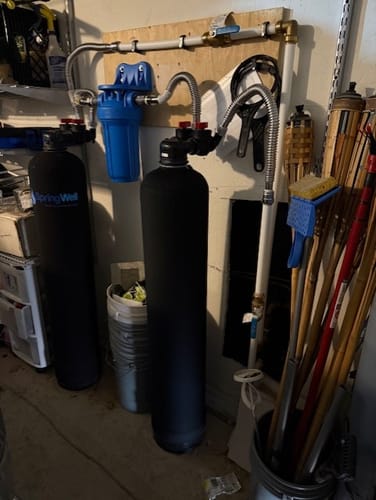
Iron and manganese are patient adversaries. They don't overwhelm your filter overnight—they accumulate gradually, layer by layer, until the media reaches complete saturation.
Once that happens, head loss climbs, pressure differentials spike, and your system's telling you it's exhausted.
Here's what makes this dangerous: those pressure drops aren't just performance warnings—they're signals that contaminants are overpowering your media's capacity entirely.
Without intervention, filtration doesn't just weaken; it fails completely.
That's why we recommend backwashing every 4-14 days. Regular cycles flush accumulated iron and manganese before they colonize your media permanently.
Miss that window consistently, and you're not just compromising water quality—you're creating genuine health risks and shortening your media's lifespan unnecessarily.
Understanding the buildup process gives you the power to stop it.
How Long Before a Skipped Backwash Cycle Causes Permanent Damage?
How quickly does a skipped backwash cycle cross the line from recoverable to permanent damage? Faster than most people expect.
Here's what the timeline actually looks like:
- Day 1–14: Iron deposits accumulate, but backwashing can still recover the media fully.
- Beyond 14 days: Pressure drops spike rapidly, signaling saturation that may never reverse.
- Yearly neglect: Media depth deteriorates up to 1 inch annually, compressing filtration capacity permanently.
- Five-year threshold: Without consistent backwashing, media requiring 10–20 years of service fails within five years.
We're talking about compaction, fouled pores, and irreversible clogging—damage no backwash cycle can undo once it sets in.
Understanding this timeline isn't just helpful; it's the difference between maintaining your system and replacing it prematurely.
Bacterial Growth, Foul Odors, and Flow Loss From Saturated Media
Skipping backwash cycles doesn't just clog your media—it turns your filter into a breeding ground for iron bacteria. Saturated media creates anaerobic conditions where bacteria thrive, producing hydrogen sulfide and that unmistakable rotten-egg odor. Meanwhile, compacted particulates strangle your flow rate and spike pressure drops.
| Warning Sign | Cause | Consequence |
|---|---|---|
| Foul odor | Hydrogen sulfide production | Compromised water quality |
| Pressure increase (0.5–1.0 MPa+) | Saturated, compacted media | Contaminant breakthrough |
| Reduced flow rate | Particulate accumulation | System inefficiency |
These aren't minor inconveniences—they're system-wide failures unfolding in stages. Once bacterial colonies establish themselves inside exhausted media, odor and contamination problems escalate quickly. Staying ahead of your backwash schedule isn't optional; it's how you protect both media integrity and water quality.
Signs Your Iron Filter Media Is Already Past Recovery
Some warning signs don't just hint at trouble—they confirm your media is already beyond saving.
Recognizing these signals early prevents costly water damage and health risks.
- Pressure spikes — A noticeable differential pressure increase across the filter bed signals saturated, exhausted media.
- Rapid backwash cycling — Frequent pressure drops within short timeframes mean your media can't remove contaminants anymore.
- Tinted water and metallic odors — Rotten egg smells and discoloration confirm the media's failing at a fundamental level.
- Core sample evidence — Mudballs or excessive bacterial colonies discovered during sampling indicate media that's completely unrecoverable.
When post-filtration testing shows zero water quality improvement, that's your definitive answer—replacement isn't optional anymore.
It's overdue.
Frequently Asked Questions
How Long Should an Iron Filter Backwash?
We recommend running your iron filter backwash for 10-20 minutes per cycle. This duration creates enough hydraulic agitation to effectively lift and flush out trapped iron particles, keeping your filter performing at peak efficiency.
What Problem Is Created by Insufficient Backwash Rates?
Insufficient backwash rates cause rapid media compaction, clogging your filter's pores and slashing filtration efficiency. We're talking rising pressure differentials, shorter filter runs, and iron breakthrough—problems that'll snowball into costly, time-consuming maintenance interventions you'll want to avoid.
How Long Does Iron Filter Media Last?
Iron filter media typically lasts 10 to 20 years, but here's what most people miss: your maintenance habits and water quality determine which end of that spectrum you'll actually reach.
What Are Common Problems With Iron Filters?
We've seen iron filters struggle with media saturation, pressure drops, metallic tastes, mudball formation, and bacterial growth—all typically triggered when backwashing's neglected too long, letting contaminants breakthrough and compromise your water quality considerably.






