


![SoftPro™ Chlorine+ Carbon Whole House Water Filter to Remove PFAS, Chlorine, Chloramine & Pesticides [City Water Filters Series]](http://www.softprowatersystems.com/cdn/shop/files/SoftPro_Whole_House_Carbon_Filter_with_Spin_Down_Water_Filter.webp?v=1783547361&width=140)


 855-683-8488


Undersized Iron Filter vs. Correctly Sized System: A Side-by-Side Performance Comparison

When you're dealing with an undersized iron filter, you're not just getting weaker water pressure — you're setting yourself up for reddish-brown stains, metallic-tasting water, and salt bills that keep climbing. A correctly sized system handles up to 12 ppm of iron at consistent flow rates without constant regeneration cycles draining your wallet. The difference between the two isn't minor — it's night and day. Stick with us, and we'll show you exactly how to fix it.
Key Takeaways
- Undersized iron filters cause flow rates to drop from 60+ LPM to 20 LPM during peak usage, disrupting daily household activities.
- Correctly sized systems effectively handle up to 12 ppm of iron, while undersized filters leave reddish-brown staining and metallic taste.
- Undersized filters regenerate 2-3 times more frequently, increasing salt consumption by 20-40% compared to properly sized systems.
- Properly sized systems maintain consistent water pressure, while undersized units create 20-30% pressure drops during normal operation.
- Increased mechanical stress from undersized filters shortens equipment lifespan and drives up long-term maintenance and replacement costs.
Why Your Iron Filter Is Starving Your Home's Water Pressure

When an iron filter is too small for your home's demand, it doesn't just underperform — it actively fights against your water pressure.
Think of it like breathing through a straw during a sprint. We've seen flow rates plummet from a healthy 60+ LPM down to a frustrating 20 LPM simply because the filter couldn't handle peak demand.
That resistance isn't passive. An undersized or clogged cartridge creates excessive backpressure, and you'll feel it — weak showers, slow-filling appliances, and disappointing performance exactly when you need it most.
Pressure drops of 20-30% aren't anomalies; they're predictable consequences of a mismatched system.
The fix starts with proper sizing, targeting at least 7-12 GPM to keep your household running without compromise.
Signs You Have an Undersized Iron Filter
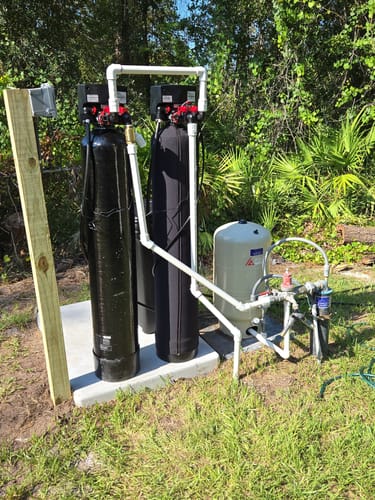
If your iron filter is undersized, the symptoms show up fast and hard to ignore.
We're not talking subtle hints — we're talking clear, disruptive warning signs that affect your daily life.
Watch for these red flags:
- Pressure drops — flow rates cratering from 60 LPM down to 20 LPM during peak usage
- Reddish-brown staining on fixtures and sinks, signaling iron slipping through untreated
- Metallic taste and odorous water that no amount of flushing seems to fix
Beyond the obvious, you'll notice your system regenerating constantly — burning through 20–40% more salt annually than a correctly sized unit would ever need.
That's wasted money and wasted time.
Recognizing these signs early puts you back in control before the damage compounds.
Undersized vs. Correctly Sized: Real Performance Differences
Those warning signs aren't just inconveniences — they're the measurable gap between a system working against you and one working for you.
An undersized filter drops pressure by 20-30%, dragging flow rates from 60+ LPM down to 20 LPM. During peak usage, you need 7-12 GPM — a correctly sized system delivers exactly that.
The regeneration cycle tells an equally stark story. Undersized systems regenerate 2-3 times more frequently, burning through 20-40% more salt and driving up annual costs.
Meanwhile, a properly sized system handles iron concentrations up to 12 ppm without flinching.
Long-term, excessive mechanical stress quietly kills undersized filters ahead of their time.
Correctly sized systems reduce that stress entirely, protecting your investment and keeping water quality consistently high.
The Hidden Costs of Running an Undersized Iron Filter
Running an undersized iron filter doesn't just underperform — it actively costs you more with every passing month. Those hidden expenses accumulate faster than most homeowners expect.
Here's where your budget takes the hit:
- Salt consumption: Undersized filters regenerate 20–40% more frequently, inflating your salt costs continuously.
- Maintenance calls: Expect up to three times more service interventions compared to a correctly sized unit — that's real money leaving your pocket.
- Secondary filtration: Inadequate iron removal means persistent staining and taste problems, forcing you to invest in additional solutions.
We've seen flow rates drop to just 20 LPM, disrupting daily household routines entirely.
A correctly sized system eliminates these compounding expenses, delivering consistent performance and protecting your long-term investment.
How to Choose the Right Iron Filter Size for Well Water
Choosing the right iron filter size comes down to three things: your water's iron concentration, your household's peak flow rate, and your daily water demands.
If your iron levels reach up to 12 ppm, you'll need a larger system to maintain consistent pressure and flow.
Start with a 5-gallon bucket test to measure your flow rate—you're targeting 7-12 GPM for peak performance.
Then factor in your bathroom count and daily usage patterns to determine true capacity needs.
We strongly recommend getting a professional water chemistry test before purchasing anything.
An undersized filter won't just underperform; it'll drain your wallet through excessive maintenance and 20-40% higher annual salt consumption.
Getting the sizing right the first time pays for itself.
Frequently Asked Questions
How Big of an Iron Filter Do I Need?
We recommend sizing your iron filter based on household size—16,000-24,000 grains for 1-2 people, scaling to 40,000+ grains for larger families. Always test your water chemistry first to nail the perfect fit.
What Is Better, 5 Microns or 40 Microns?
For iron filtration, we recommend 5 microns—it captures finer contaminants and improves water clarity considerably. However, you'll need to maintain it more frequently since it experiences higher pressure drops than a 40-micron filter.
What Micron Filter Is Best for Iron?
We've found that a 5 to 10-micron filter works best for iron removal. For ferric iron specifically, we'd recommend staying at 10 microns or finer to capture those rust-colored particles effectively.
How Often Should an Iron Filter Run?
We recommend running your iron filter on a biweekly regeneration cycle. Correctly sized systems maintain ideal flow and pressure while minimizing wear, whereas undersized systems can regenerate three times more often, increasing salt usage and mechanical stress.






