


![SoftPro™ Chlorine+ Carbon Whole House Water Filter to Remove PFAS, Chlorine, Chloramine & Pesticides [City Water Filters Series]](http://www.softprowatersystems.com/cdn/shop/files/SoftPro_Whole_House_Carbon_Filter_with_Spin_Down_Water_Filter.webp?v=1783547361&width=140)


 855-683-8488


Undersized vs. Oversized Iron Filters: Why Getting Your Well Pump GPM Right Is Non-Negotiable

Getting your well pump's GPM wrong can silently wreck your iron filter's performance. An undersized filter can't keep up with peak demand, causing pressure drops and inconsistent filtration. But an oversized filter rushes water through too quickly, reducing contact time and washing out media. Neither extreme protects your water the way it should. Match your filter to your actual GPM, and everything changes—stick with us to find out exactly how.
Key Takeaways
- Incorrect GPM sizing causes pressure drops, inconsistent filtration, and unexpected failures that compromise your iron filter's ability to remove contaminants effectively.
- Undersized filters struggle under peak demand, losing pressure and failing to adequately filter iron when multiple fixtures run simultaneously.
- Oversized filters rush water through too quickly, reducing contact time with filter media and allowing impurities to pass through untreated.
- Most 3–4 bedroom homes require filters handling 10–12 GPM; falling below this threshold causes noticeable pressure drops during normal usage.
- Testing peak flow demand before purchasing ensures your filter handles real-world household usage without costly inefficiencies or frequent maintenance issues.
What GPM Really Means for Iron Filter Performance

When it comes to iron filters, GPM isn't just a spec on a label — it's the heartbeat of your entire filtration system.
Think of it this way: if your filter can't keep pace with your household's peak demand, you're not just losing pressure — you're losing protection.
Undersized filters buckle under high-demand moments, letting contaminants slip through. Oversized ones? They rush water past the media too quickly, sacrificing the contact time your filtration actually needs.
Too small and your filter fails under pressure. Too large and water races through before filtration can do its job.
We've seen oxidizing filters advertise impressive performance, then underdeliver because the GPM wasn't matched correctly, creating unexpected pressure drops.
Getting GPM right means your system works with your water demands, not against them — delivering consistent, efficient removal every time the tap opens.
Calculate Your Well Pump GPM Before You Buy
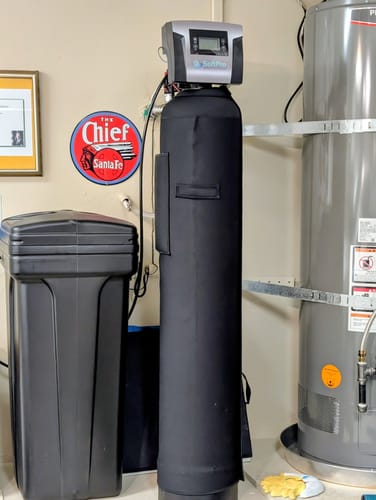
Don't guess — test. Run water simultaneously from multiple fixtures and watch for inconsistencies. Pressure drops during concurrent use often signal an undersized pump, not just a treatment problem.
Why does this matter before buying an iron filter? Because accurate GPM directly determines proper system sizing.
Get it wrong, and you've bought yourself inefficiency, frequent maintenance, and a filter that can't keep up.
How Low GPM Exposes Undersized Iron Filters
Low GPM doesn't just slow your water down — it exposes every weakness in an undersized iron filter. When flow drops below 20 LPM, pressure falters, filtration becomes inconsistent, and your system struggles to keep up during peak usage.
Run multiple fixtures simultaneously, and you'll feel it immediately.
Here's what most people miss: low GPM also cripples backwash cycles. Without adequate flow, the filter media can't lift properly, leading to clogging and accelerating maintenance problems you didn't budget for.
Worse, backwashing already diverts 2-4 GPM from household use — an undersized system compounds that loss.
We recommend evaluating your household's peak flow demands against the 8-20 GPM range before purchasing.
Matching your filter to actual demand isn't optional — it's the foundation of consistent, long-term performance.
Why Oversized Iron Filters Wash Out Media and Underperform
Bigger isn't always better — and with iron filters, it can actually make things worse. Oversizing creates a cascade of problems that quietly erode your system's performance:
- Media washout — High backwash flow rates physically displace filtration media, stripping away the very material removing contaminants.
- Retention failure — Excessive flow exceeds the media's capacity to capture impurities, letting them slip through untreated.
- Pressure drop — Oversized systems reduce contact time between water and media, compromising filtration quality.
- Rapid cycling — Frequent, unnecessary regeneration cycles waste water and accelerate component wear.
We see this pattern consistently: oversized filters don't just underperform — they actively degrade.
Matching your filter to your household's 8–20 GPM range isn't optional; it's what protects your media and your water quality long-term.
Match Your Iron Filter Size to Peak Household Demand
Sizing your iron filter to match peak household demand comes down to one practical benchmark: a typical 3–4 bedroom home needs a filter that handles 10–12 GPM without breaking a sweat.
Fall below that threshold—say, you're pushing flow through a unit capped at 5.3 GPM—and you'll feel it immediately in pressure drops during simultaneous usage.
We also recommend thinking beyond today's needs. Your household's water usage patterns will shift, and your filter should accommodate that growth without forcing premature upgrades.
Here's our honest advice: consult a water treatment professional before purchasing.
They'll analyze your peak demand data and match you to a filter that performs efficiently now and scales with your needs—no guesswork, no costly mistakes.
Frequently Asked Questions
Is It Bad to Oversize a Well Pump?
Yes, oversizing your well pump's a costly mistake. It'll drain your wallet through higher energy bills, risk running dry, cause short-cycling, and create turbulent flow—all of which shorten your system's lifespan dramatically.
How Many Gpm Should My Well Pump Be?
For a typical 3-4 bedroom home, you'll want your well pump rated at 10-12 GPM. That range meets peak household demand without causing pressure drops during simultaneous usage throughout your home.
Which Is Better, a 30/50 or 40-60 Pressure Switch?
Neither's universally better—it depends on your household's needs. We recommend 30/50 for lower energy costs and pump longevity, but if you've got high simultaneous water demands, 40/60 delivers the stronger pressure you'll need.
Is 4.3 Gpm on My Well Bad?
Yes, 4.3 GPM is considered low for a 3-4 bedroom home. We'd recommend upgrading your pump, as you'll likely experience pressure drops and insufficient water supply when multiple fixtures run simultaneously.






