


![SoftPro™ Chlorine+ Carbon Whole House Water Filter to Remove PFAS, Chlorine, Chloramine & Pesticides [City Water Filters Series]](http://www.softprowatersystems.com/cdn/shop/files/SoftPro_Whole_House_Carbon_Filter_with_Spin_Down_Water_Filter.webp?v=1783547361&width=140)


 855-683-8488


UV Water Sterilizer After Iron Filter: Complete Setup, Flow Rate Requirements, and Maintenance Guide

When setting up a UV water sterilizer after an iron filter, sequence matters more than most people realize. Iron and sediment must be removed first, because excess particles block UV light and foul the quartz sleeve. Your system needs at least 75% UV transmittance to disinfect effectively. Sizing by peak flow rate — not just average use — prevents pathogens from slipping through. And regular lamp and sleeve maintenance keeps everything working. Stick with us, and we'll walk you through every step.
Key Takeaways
- Always position the UV sterilizer after the iron filter to prevent lamp fouling and ensure clean water enters the sterilization stage.
- Water must achieve at least 75% UV transmittance post-filtration for the UV system to effectively inactivate harmful microorganisms.
- Size your UV sterilizer based on peak flow demand; a 3-bathroom home may require 12 gpm capacity.
- UV lamps must be replaced every 12 months, and quartz sleeves cleaned every 6–12 months to maintain performance.
- Minimum UV dosage of 30 mJ/cm² at the specified flow rate is required for reliable pathogen elimination.
Why Place a UV Water Sterilizer After an Iron Filter?

Think of it this way: UV treatment needs a clean "canvas." When iron's already been removed, your UV system can consistently hit that critical 30 mJ/cm² dosage threshold, inactivating up to 99.99% of harmful microorganisms.
Without that sequential setup—sediment filtration, iron filtering, then UV—you’re fundamentally asking your UV lamp to fight through contamination it was never designed to handle. Proper sequencing isn't optional; it's what makes the entire system work.
What Water Conditions Require Pretreatment Before UV Disinfection?
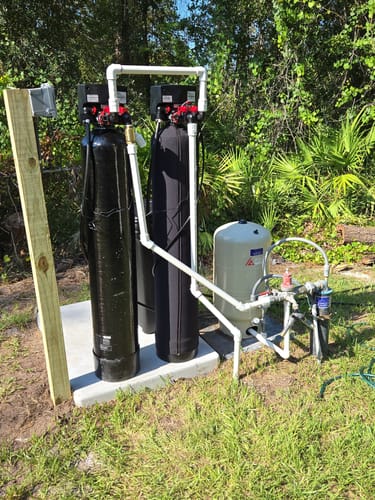
Before running water through a UV system, we need to understand what's actually in it—because certain conditions will sabotage disinfection before it even begins.
High turbidity blocks UV light from reaching pathogens. Excess iron and manganese foul the lamp, choking its output over time. Hard water deposits scale directly onto the quartz sleeve, cutting UV transmission dramatically.
Here's the threshold that matters: your water needs a minimum 75% UV transmittance. Drop below that, and you're not disinfecting—you're running expensive equipment for nothing.
This is why testing first isn't optional. Measure turbidity, iron, manganese, and hardness before designing your system.
Each contaminant demands a specific pretreatment solution—sediment filters, iron filters, water softeners—so your UV unit actually delivers the protection you're counting on.
How to Size Your UV Water Sterilizer by Flow Rate
Once we recognize our water is ready for UV treatment, we need to match the system to our actual demand—because an undersized unit means pathogens slip through during peak usage.
Under-sink systems typically handle 1–9 gpm, while whole-house systems run 8–10 gpm.
Here's where most people miscalculate: they size for average use, not peak demand. A 3-bathroom home needs simultaneous coverage—showers, sinks, appliances running together. That's why we recommend a 12 gpm unit instead of 9 gpm.
Each bathroom adds roughly 6–18 gpm to your sizing equation.
Whatever figure we land on, the system must deliver at least 30 mJ/cm² UV dosage at that flow rate—otherwise we're achieving incomplete disinfection and false confidence.
Where and How to Connect a UV Sterilizer After an Iron Filter
Once filtered water enters the UV chamber, we're protecting the quartz sleeve from iron scale buildup and ensuring consistent UV light transmission.
We recommend confirming your water meets at least 75% UVT after pre-treatment—that's your green light for reliable sterilization.
Connect the UV sterilizer inline, post-filtration, matching your system's flow rate—typically 8–10 gpm for whole-house setups.
Install the UV sterilizer inline, after filtration, sized to match your whole-house flow rate.
Get this sequence right, and the UV system performs exactly as engineered: clean, protected, and effective.
How Often Should You Replace the UV Sterilizer Lamp and Clean the Quartz Sleeve?
Maintenance is the unsung hero of UV sterilization—skip it, and even the best system starts letting you down. Replace your UV lamp every 12 months, no exceptions. Even if it's still glowing, its germicidal punch has faded. Age kills efficacy before it kills the bulb.
Clean the quartz sleeve every 6 to 12 months. Mineral buildup acts like sunscreen on your lamp—blocking UV light before it ever reaches the water. A cloudy sleeve quietly kills your system's performance while you assume everything's fine.
If your unit has an alarm feature, use it as your backup reminder, not your primary one. Stay proactive. Consistent lamp replacements and sleeve cleanings aren't optional upkeep—they're what separate a system that protects you from one that only appears to.
Frequently Asked Questions
What Is the Flow Rate for a UV Sterilizer?
We recommend sizing your UV sterilizer's flow rate based on your home's needs: 6 gpm for one bathroom, scaling up to 18 gpm for five bathrooms, ensuring you're covered during peak demand times.
How Do I Maintain an UV Sterilizer?
We recommend replacing the UV lamp annually, cleaning the quartz sleeve every 6-12 months, and swapping the sediment pre-filter as needed. We'll also want to test water's UV transmittance periodically, ensuring it stays above 75%.
What Is the Correct Order for Water Treatment?
We recommend starting with a sediment filter to catch larger particles, then an iron filter to tackle iron and manganese, and finishing with a UV sterilizer to eliminate harmful microorganisms effectively.
Does an UV Light Go Before or After the Filter?
We recommend placing the UV light after the iron filter. This guarantees sediment and iron particles are removed first, preventing them from blocking UV rays and keeping your quartz sleeve clean for maximum disinfection effectiveness.






