


![SoftPro™ Chlorine+ Carbon Whole House Water Filter to Remove PFAS, Chlorine, Chloramine & Pesticides [City Water Filters Series]](http://www.softprowatersystems.com/cdn/shop/files/SoftPro_Whole_House_Carbon_Filter_with_Spin_Down_Water_Filter.webp?v=1783547361&width=140)


 855-683-8488


Water Pressure Drop After Iron Filter Installation: Understanding the Normal Range vs. a Real Problem

After installing an iron filter, expect your water pressure to drop around 20-30%. That typically means inlet pressure falls from roughly 4.0 bar to 3.2 bar, or about 0.8 bar of resistance during normal operation. That's completely normal. But if you're losing more than that, something's wrong, whether it's clogged media, inconsistent backwashing, or an undersized system. Knowing the difference protects your home's water flow, and we'll show you exactly how to spot it.
Key Takeaways
- A 20-30% pressure drop after iron filter installation is normal, with inlet pressure typically falling from 4.0 bar to 3.2 bar.
- Pressure below 50 psi before Stage 1 or a drop greater than 10 psi between stages signals a potential problem.
- Clogged filter media, inconsistent backwashing, and undersized systems are common causes of excessive pressure loss.
- Multi-stage setups cause an additional 7-15% flow reduction beyond the standard 20-30% loss from iron filters alone.
- Solutions include inspecting Venturi injectors, tightening backwash schedules, checking pipe sizing, or upgrading to less restrictive filter models.
What a Normal Iron Filter Pressure Drop Actually Looks Like

When we install an iron filter, a small pressure drop is completely normal — and honestly, it's nothing to worry about.
Typical iron filters reduce inlet pressure by 20-30%, dropping roughly from 4.0 bar down to around 3.2 bar. That's approximately a 0.8 bar loss during both standby and active flow.
In PSI terms, standard operational resistance usually amounts to just 2-3 PSI — barely noticeable in everyday household use.
If you're running a multi-stage system, expect an additional 7-15% flow rate reduction due to the increased resistance from oxidation and contaminant removal processes.
You'll also notice brief pressure dips during backwashing cycles. That's completely normal.
As long as your overall flow rate stays consistent, those temporary fluctuations aren't signaling a problem.
How to Read Your Iron Filter Pressure Gauges the Right Way
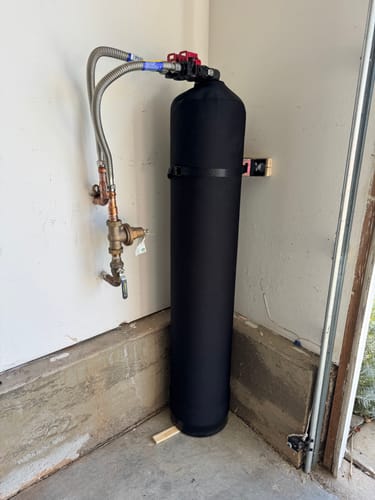
There are 3 key gauge positions you'll want to nail down for accurate pressure monitoring: before the first stage, between stages, and after the final stage. We recommend maintaining inlet pressure between 50-60 psi for peak efficiency.
| Gauge Position | Ideal Reading | Warning Sign |
|---|---|---|
| Before Stage 1 | 50-60 psi | Below 50 psi |
| Between Stages | 35-48 psi | Drop >10 psi |
| After Final Stage | 35-45 psi | Drop >30% |
When you're consistently seeing drops greater than 10 psi between readings, that's your system signaling trouble—clogs, saturation, or filter failure. Think of these three gauges as your iron filter's essential signs. Read them together, not individually, and you'll catch problems before they escalate.
Why Your Iron Filter Is Losing More Pressure Than It Should
Losing pressure beyond that 20-30% normal range isn't just an inconvenience—it's your system telling you something's wrong.
The usual culprits? Clogged filter media, neglected backwashing, or a system that was undersized from the start.
When backwashing doesn't happen consistently, media compacts over time, strangling your flow and pushing pressure drops well past that acceptable threshold.
We've seen systems lose over 10 PSI simply because the backwash schedule slipped for a few months.
Undersized filtration is another silent killer. If your system can't handle your household's actual demand, pressure instability becomes your daily reality—not just during air injection cycles.
The fix starts with honest diagnostics: check your gauges, audit your backwash frequency, and verify your system was properly sized for your flow rate.
Do Iron Filters Drop More Pressure Than Other Whole-House Systems?
Iron filters do carry a heavier pressure burden than most whole-house systems—and that's worth understanding before you assume something's broken.
Standard sediment filters typically cause a 20–30% pressure loss, and iron filters land in that same range—but they're rarely lighter.
Add a multi-stage setup, and you're looking at an additional 7–15% flow reduction compared to simpler configurations. That resistance isn't arbitrary. It comes directly from the oxidation process and the specialized media required to pull iron from your water.
Real-world testing confirms a consistent 0.8 bar drop during operation, even with multiple taps running.
Real-world testing shows a steady 0.8 bar pressure drop during operation—even with multiple taps running simultaneously.
The takeaway? Iron filtration demands more from your system by design. Proper sizing and installation aren't optional—they're what keep that necessary pressure loss from becoming a real problem.
How to Fix Excessive Pressure Loss From Your Iron Filter
When pressure loss crosses the 10 PSI threshold, it's time to stop guessing and start diagnosing. First, check your Venturi injectors and media for clogs—these are the usual suspects behind severe drops.
If backwashing intervals have slipped, compaction and channeling have likely set in, so tighten that maintenance schedule immediately.
Next, examine your piping. Undersized pipes amplify pressure problems that even a perfect filter can't overcome. Match your tank size and pipe diameter to your actual flow demands.
If the filter itself is the bottleneck, consider upsizing or switching to a less restrictive model. Sometimes the original installation simply wasn't sized correctly.
Monitoring gauges before and after the filter turns guesswork into a precise, solvable problem every time.
Frequently Asked Questions
Why Is My Water Pressure Low After Installing a Water Filter?
After installing an iron filter, we'll typically see a 20-30% pressure drop—that's completely normal. However, if we're losing more than 10 PSI, we've likely got clogged media or undersized plumbing needing immediate attention.
Is 30 Psi Too Low for Water Pressure?
Yes, 30 psi is too low. We'd consider it below the ideal 40-60 psi range most households need. You'll likely notice weak faucet flow and sluggish showers, signaling it's time to investigate your system.
How Much Water Does an Iron Filter Discharge?
Iron filters typically discharge between 20–25 liters per minute, though heavy iron loads can drop output to 20 L/min. Multi-stage systems reduce flow by 7–15%, so we'll want consistent maintenance to keep discharge rates at their best.
Can a Whole House Filter Cause Low Water Pressure?
Yes, a whole house filter can cause low water pressure. We're talking a 20-30% pressure drop — that's normal. But if it's worse, we've likely got a maintenance issue that needs addressing fast.






