


![SoftPro™ Chlorine+ Carbon Whole House Water Filter to Remove PFAS, Chlorine, Chloramine & Pesticides [City Water Filters Series]](http://www.softprowatersystems.com/cdn/shop/files/SoftPro_Whole_House_Carbon_Filter_with_Spin_Down_Water_Filter.webp?v=1783547361&width=140)


 855-683-8488


Water Softener Resin Life and Iron Well Water Contamination: The Direct Connection You Must Understand

When iron-laden well water flows through your softener, it's quietly wrecking your resin beads. Dissolved iron oxidizes into rust, coating the beads and blocking them from capturing hardness minerals. Iron bacteria make things worse by forming biofilms that clog the resin bed entirely. Once iron levels exceed 3 ppm, your system starts losing the battle fast. Understanding exactly how this damage unfolds — and how to stop it — is what we're covering next.
Key Takeaways
- Iron in well water coats resin beads with rust, blocking their ability to capture hardness minerals and drastically shortening resin life.
- Ferrous iron oxidizes into ferric iron upon air exposure, accelerating resin fouling and reducing softener performance significantly.
- Standard resin tolerates only 3 ppm of iron; exceeding this threshold demands more frequent regeneration cycles and maintenance.
- Iron bacteria form biofilms inside resin beds, compounding contamination damage and causing rapid, costly resin failure.
- Installing an iron pre-filter before your softener protects resin beads, extending their lifespan and reducing long-term maintenance costs.
How Iron Actually Destroys Water Softener Resin

When iron-laden well water flows through your softener, it's quietly staging a hostile takeover of your resin beads.
Iron-laden well water isn't just passing through your softener — it's orchestrating a silent, creeping takeover of your resin beads.
Here's the mechanism: dissolved ferrous iron (Fe²⁺) enters your system, then oxidizes into ferric iron (Fe³⁺) upon air exposure, depositing rust directly onto your resin.
That rust coating isn't just cosmetic damage. It physically blocks resin beads from capturing hardness minerals, gutting your softener's effectiveness from the inside out.
Once iron levels exceed 3 ppm, your system struggles to keep pace, demanding increasingly frequent regeneration cycles.
Iron bacteria compound the destruction further, forming biofilms that clog resin beds entirely.
Without acid-based resin cleaners deployed regularly, you're not maintaining equipment — you're watching an expensive replacement countdown timer tick toward zero.
Salt-Based vs. Salt-Free: Which System Protects Resin From Iron?
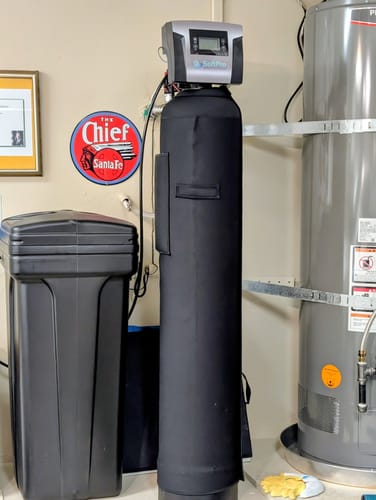
Salt-based and salt-free systems aren't interchangeable when iron's in the picture — and choosing wrong means you're accelerating exactly the resin damage we just described.
Salt-based softeners handle ferrous iron up to 10 ppm through ion exchange, making them the clear winner for iron-contaminated well water. When iron exceeds 3 ppm, they become essential — not optional.
Salt-free systems simply can't compete here. They struggle with iron contamination, leading to resin fouling, staining, and degraded water quality that compounds over time.
Customer data backs this up consistently: salt-based systems preserve resin functionality far longer in iron-heavy conditions.
But here's what separates informed decisions from expensive mistakes — test your water first. Knowing your exact iron levels determines which system actually protects your resin investment.
How Much Iron Is Too Much for Your Resin Tank?
Now that we've established salt-based systems as the go-to for iron-heavy well water, the next question is obvious — exactly how much iron can your resin tank actually handle before things go sideways?
Here's what you need to know:
- Standard resin tolerates up to 3 ppm — exceed that, and fouling begins silently destroying your investment.
- Fine mesh resin buys you breathing room up to 10 ppm — but it's not bulletproof without proper maintenance.
- Above 7 ppm demands a two-stage system — an iron filter plus a softener, no exceptions.
Ignoring these thresholds means metallic-tasting water, degraded softening capacity, and expensive resin tank replacements.
Test regularly for both ferrous and ferric iron — what you don't measure will cost you.
How an Iron Pre-Filter Stops Resin Damage Before It Starts
If your iron levels are creeping above 3 ppm, an iron pre-filter is the first line of defense that keeps your resin tank from quietly paying the price.
By intercepting iron before it ever reaches your softener, you're protecting those resin beads from the coating and fouling that silently destroys their effectiveness.
Systems like Katalox Light go further—they don't just strip out iron, they also neutralize iron bacteria that form biofilm inside resin tanks.
That's two threats eliminated in one stage.
When we combine a well-maintained iron pre-filter with a water softener, we create a two-stage system that handles both iron and hardness simultaneously.
The result? Longer resin life, stronger softener performance, and meaningfully lower long-term maintenance costs.
Maintenance Habits That Extend Resin Life in Iron-Heavy Water
Even with an iron pre-filter in place, what you do on a maintenance schedule determines how long your resin actually lasts. Iron doesn't forgive neglect, and neither does fouled resin.
Iron doesn't forgive neglect. Your maintenance schedule determines whether your resin lasts — or fails prematurely.
Here's what we've found works:
- Run citric or phosphoric acid-based resin cleaners every 6 weeks — more frequently (weekly) when iron exceeds 3 ppm, because fouling compounds faster than most people realize.
- Align regeneration cycles with accurate water testing — guessing your iron levels means gambling with resin life you can't get back.
- Watch for iron bacteria — their biofilms accelerate fouling aggressively, demanding tighter cleaning intervals before irreversible damage sets in.
Consistent habits here aren't optional maintenance. They're the difference between resin that lasts and resin that fails prematurely.
Frequently Asked Questions
How Much Does It Cost to Replace Resin in a Water Softener?
We're looking at $250–$500 to replace water softener resin, but heavy iron fouling can push costs to $600+. Fine mesh resin costs more upfront, yet it's worth it for high-iron well water.
Does a Water Softener Remove Iron From Well Water?
Water softeners can remove small amounts of ferrous iron—up to 3 ppm—but they're not designed for it. High iron levels foul resin beads, slashing efficiency and driving up your maintenance costs considerably.
What Is the Life Expectancy of a Resin Tank on a Water Softener?
A resin tank typically lasts 10 to 15 years, but here's what we've learned—water quality and maintenance practices are the real deciding factors that'll either extend or dramatically shorten that lifespan.
Can a Water Softener Contaminate Water?
Water softeners don't directly contaminate water, but when iron fouls the resin beads, they lose effectiveness—letting metallic tastes and residual contaminants slip through. Iron bacteria worsen this, creating biofilms that compromise your water quality markedly.






