


![SoftPro™ Chlorine+ Carbon Whole House Water Filter to Remove PFAS, Chlorine, Chloramine & Pesticides [City Water Filters Series]](http://www.softprowatersystems.com/cdn/shop/files/SoftPro_Whole_House_Carbon_Filter_with_Spin_Down_Water_Filter.webp?v=1783547361&width=140)


 855-683-8488


Water Is Still Rusty After Iron Filter Backwash Cycle — Here's the Real Explanation

If your water's still rusty after a backwash cycle, the filter didn't fully do its job — and that points to a specific failure, not just bad luck. Incomplete oxidation, a malfunctioning control valve, or overloaded filter media are the most common culprits. Each one lets dissolved iron slip through undetected. We'll walk you through exactly where the breakdown happens and what you can do to stop rusty water from coming back.
Key Takeaways
- Rusty water after backwash often results from incomplete oxidation, where ferrous iron remains dissolved and passes through the filtration system.
- Clogged air injectors or venturi systems restrict airflow, preventing effective conversion of ferrous iron into filterable ferric form.
- Malfunctioning control valves, such as modified Fleck 5600 models, can fail to expel accumulated iron during settling rinse cycles.
- Iron concentrations exceeding 0.3 ppm overload filter media, causing breakdown, biofilm development, and reduced contaminant removal effectiveness.
- Systematic troubleshooting, including water testing, inspecting injectors, and verifying backwash cycle frequency, is essential for resolving persistent rusty water.
Why Rusty Water Persists After an Iron Filter Backwash

If your iron filter just completed a backwash cycle and the water's still coming out rusty, something's clearly not working the way it should.
The backwash process isn't magic — it depends on several interconnected systems functioning correctly. When one fails, iron slips through.
We're typically looking at a few culprits: insufficient oxidation from a struggling air injector, a malfunctioning control valve that's restricting proper flow, or filter media that's simply exhausted and can no longer trap iron particles effectively.
Backwash frequency matters too — if cycles aren't happening often enough or running long enough, accumulated contaminants never fully clear.
Understanding which failure point you're dealing with is the difference between a quick fix and months of frustrating rusty water.
Let's break each one down.
How Incomplete Oxidation Lets Iron Pass Through After Backwash
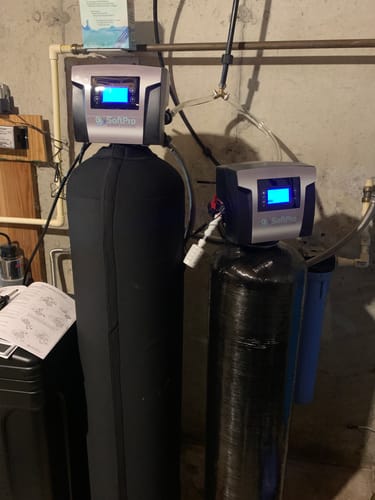
Oxidation is the first domino in iron filtration — when it falls short, everything downstream fails.
If your system isn't drawing enough air, dissolved ferrous iron never converts into the solid ferric form your filter can actually capture. It stays invisible, slips past the media, and turns your water rusty again post-backwash.
Without enough air, ferrous iron stays dissolved — invisible, unconverted, and impossible for your filter to catch.
Clogged air injectors and venturi systems are common culprits — they strangle the air supply your oxidation process depends on. Insufficient retention time in the contact or disinfection tank compounds the problem further, leaving iron unconverted before it reaches filtration.
Here's the critical takeaway: backwashing can't fix what oxidation didn't finish. If iron's entering the filter unconverted, no backwash cycle, regardless of programming, will stop it from reaching your tap.
Control Valve Flow Problems That Leave Iron Behind
Even when oxidation does its job, a faulty control valve can undo all of it. Modified Fleck 5600 valves—like the WaterSoft 2092—often can't deliver sufficient flow during settling rinses, which is exactly when iron removal depends on precision.
If the valve fails to move all accumulated iron and sediment out of the filter media, that residue resurfaces as rusty water after backwashing.
Low flow also kills retention time inside the pressure tank, meaning dissolved iron slips through before disinfection finishes its work.
Some systems respond by bypassing the carbon filter entirely—a workaround that signals the real problem: the control valve isn't performing.
Understanding this connection stops you from chasing symptoms while the actual culprit quietly continues undermining your filtration cycle.
How Iron Overload Breaks Down Your Filter Media Over Time
High iron concentrations—anything above 0.3 ppm—don't just pass through your filter media; they steadily destroy it. Clogging triggers more frequent backwashing, iron bacteria build biofilm that chokes performance, and regeneration cycles accelerate structural breakdown. Here's what that actually costs you:
| Iron Impact | What Happens | Your Reality |
|---|---|---|
| Clogged media | Backwashing frequency spikes | Higher maintenance bills |
| Iron bacteria biofilm | Media performance collapses | Specialized cleaning required |
| Constant regeneration | Media lifespan drops below 5 years | Early replacement costs |
We've seen systems fail in under three years because owners didn't realize their iron load had quietly outpaced their filter's capacity. Once media degrades, no backwash cycle recovers it—you're replacing components and paying the price.
Steps to Fix Rusty Water After a Backwash Cycle
Once your media's compromised, replacing it only solves half the problem—if the root causes stay unaddressed, you'll be back in the same situation within years.
Start by testing your water; anything above 0.3 ppm demands immediate system adjustments.
Water testing is non-negotiable—levels above 0.3 ppm mean your system needs immediate adjustments, no exceptions.
Next, inspect your air injectors for blockages—clogged injectors sabotage oxidation, leaving iron free to slip through and rust your water post-backwash.
Check your programming settings and verify backwash cycles run every 2-4 weeks; irregular cycles let media foul faster than you'd expect.
Don't overlook your brine tank—salt bridges quietly obstruct regeneration, creating iron breakthrough without obvious warning signs.
Address each variable systematically, and you'll stop chasing symptoms and actually fix what's driving the problem.
Frequently Asked Questions
Why Is My Water Rusty After Softener Regenerates?
Rusty water after regeneration often means your injector's clogged, there's a salt bridge in the brine tank, or the backwash cycle isn't programmed correctly—all letting iron slip through untreated into your taps.
How Long Should an Iron Filter Backwash?
We recommend running your iron filter's backwash cycle for 10 to 15 minutes. That duration guarantees we're fully flushing accumulated iron and sediment from the media, maximizing filtration efficiency and preventing those frustrating rusty water issues afterward.
Does Filtered Water Cause Rust?
Filtered water doesn't cause rust—it's actually the opposite. When we see rusty filtered water, it signals our iron filter's failing, allowing iron bypass, clogged media, or iron bacteria to compromise water quality instead.
Why Is Water Dirty After Changing the Filter?
When we change a filter, residual iron and sediment dislodge from the media during backwashing, temporarily clouding your water. Trapped air also releases particles until fully flushed — it's completely normal and resolves quickly.






