


![SoftPro™ Chlorine+ Carbon Whole House Water Filter to Remove PFAS, Chlorine, Chloramine & Pesticides [City Water Filters Series]](http://www.softprowatersystems.com/cdn/shop/files/SoftPro_Whole_House_Carbon_Filter_with_Spin_Down_Water_Filter.webp?v=1783547361&width=140)


 855-683-8488


Well Pump Capacity and Iron Filter Compatibility: What You Must Know Before You Buy

Before you buy an iron filter, you need to know if your well pump can keep up. Your pump must deliver at least 5–10 GPM to backwash effectively—fall short, and you'll deal with persistent staining, poor filtration, and costly wear. Your water test results also matter, since iron concentration directly determines the filter size you need. Get these two factors wrong, and no filter will perform the way you expect. Keep going, and we'll show you exactly how to get it right.
Key Takeaways
- Iron filters require a minimum flow rate of 5-10 GPM, so confirm your well pump meets this threshold before purchasing.
- Water test results showing iron concentration in ppm determine which filter size correctly handles your household's daily iron load.
- Undersized pumps cause inadequate backwashing, leading to persistent staining, poor water quality, and accelerated wear on equipment.
- Backwash cycles occur every 2-3 days and demand sustained 5-10 GPM, making pump-filter compatibility non-negotiable for effective filtration.
- Households larger than two people typically need pumps outputting 8+ GPM to reliably support both daily use and backwashing.
Why Undersized Pumps Cause Iron Filter Failure

When a well pump is undersized, it simply can't deliver the flow rates an iron filter needs to work properly—and that's where problems start. Effective backwashing demands 5-10 GPM minimum—anything less, and your filter can't flush accumulated iron from its media. The result? Persistent staining, foul odors, and water quality that keeps declining.
It gets worse during peak usage. When multiple fixtures run simultaneously, an undersized pump becomes overwhelmed, compromising filtration entirely.
Meanwhile, the system keeps triggering backwash cycles without adequate flow, accelerating wear on both the pump and filter components—shortening their lifespan considerably.
We can't stress this enough: matching your pump's capacity to your iron filter's specific flow rate requirements isn't optional. It's the foundation everything else depends on.
What Your Water Test Results Reveal About Filter Sizing
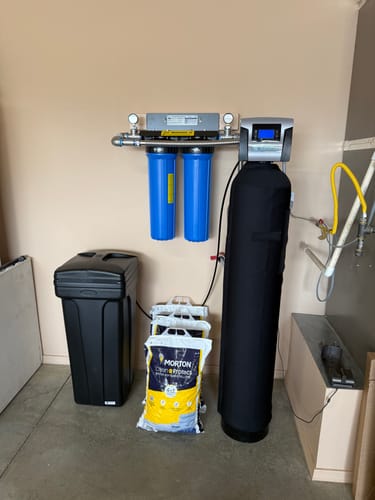
Your water test results are the roadmap to getting filter sizing right. They reveal your iron concentration in parts per million (ppm), and that number drives every sizing decision you'll make.
Filters must reliably remove at least 7-10 ppm, so knowing exactly what you're dealing with prevents costly mismatches.
Here's where it gets critical: multiply your iron concentration by your daily water usage to calculate your total iron load. That figure tells you whether a filter will saturate prematurely under your household's demands.
Don't test once and forget it. Seasonal fluctuations shift iron levels notably, so we recommend regular retesting to keep your sizing accurate year-round.
Use professional sizing calculators combining test results with peak flow rates—that combination guarantees you're never guessing.
How to Match Iron Filter Flow Rates to Your Pump Output
Matching your iron filter's flow rate to your pump output comes down to two numbers you need to know cold: your pump's GPM and your household's peak demand.
Get these right, and your system runs flawlessly. Miss them, and you'll fight poor filtration and failed backwashes constantly.
Get the numbers right and your system runs flawlessly. Get them wrong and you'll battle filtration failures constantly.
Here's what we need to nail down:
- Minimum pump output: 5 GPM for 1-2 people, 8+ GPM for larger households
- Filter compatibility range: Your iron filter requires 5-10 GPM to function properly
- Peak demand calculation: Account for simultaneous fixture usage during high-demand periods
- Backwash requirements: Every 2-3 days, your pump must sustain 5-10 GPM
- Regular testing: Verify pump output and iron levels together to confirm ongoing compatibility
Backwash Cycles: Does Your Pump Meet Iron Filter Demands?
Backwash cycles are where most pump-filter compatibility problems reveal themselves. During backwashing, your iron filter demands 5–10 GPM consistently — and if your pump can't deliver that range, you're not just reducing filtration efficiency, you're accelerating wear on both systems.
Here's what we've seen happen: undersized pumps strain against backwash demands, maintenance costs climb, and filter lifespan drops. It's an expensive mismatch that's entirely preventable.
We recommend scheduling backwash cycles every 2–3 days, adjusted for your iron concentration and household usage. But scheduling means nothing if your pump physically can't meet the flow requirement during those cycles.
Before purchasing any iron filter, cross-reference its backwash flow specifications against your pump's verified output. That single step protects your investment and your water quality.
What to Do When Your Pump and Iron Filter Are Incompatible
When your well pump and iron filter aren't compatible, you've got a few practical paths forward — and choosing the right one depends on your specific flow rates, iron levels, and budget.
Here's what we recommend exploring:
- Upgrade your pump to one sustaining 5–10 GPM, matching your filter's backwash demands
- Schedule backwashing every 2–3 days to maintain filtration efficiency without overtaxing your current system
- Install a staging system pairing your pump and filter complementarily to handle high iron loads
- Monitor peak flow rates consistently to catch performance gaps before staining occurs
- Consult water treatment professionals for a tailored compatibility assessment and precise system recommendations
Don't guess — mismatched systems cost you more in repairs and water quality than upgrading ever will.
Frequently Asked Questions
How Big of an Iron Filter Do I Need?
We'll need to match your filter to your household's daily usage—multiply residents by 50-100 gallons—while ensuring it handles 7-10 ppm iron removal and maintains 5-10 GPM peak flow rates.
What Is Better, 5 Micron or 10 Micron?
We recommend a 5-micron filter for better contaminant removal and clearer water. It captures finer particles, reducing rust stains effectively. Just know it'll need more frequent maintenance due to faster clogging than a 10-micron option.
What Is the Best Iron Filter for Well Water?
We recommend the Fleck 2510AIO Katalox Light filter—it's a powerhouse, tackling up to 30 ppm of iron. It uses air injection oxidation, ensuring your well water stays consistently clean and safe for your household.
What Is the Correct Order for Water Treatment?
We recommend starting with a sediment filter, then an iron filter, followed by a water softener, a carbon filter, and finally a UV purifier—ensuring each stage maximizes the next's efficiency for truly clean water.






