


![SoftPro™ Chlorine+ Carbon Whole House Water Filter to Remove PFAS, Chlorine, Chloramine & Pesticides [City Water Filters Series]](http://www.softprowatersystems.com/cdn/shop/files/SoftPro_Whole_House_Carbon_Filter_with_Spin_Down_Water_Filter.webp?v=1783547361&width=140)


 855-683-8488


Well Pump Flow Rate Test for Water Filter Sizing: The Simple DIY Method Anyone Can Do

Testing your well pump's flow rate before sizing a water filter can save you from costly mistakes — like buying a filter that's too big or too small. All you need is a 5-gallon bucket, a timer, and about five minutes. Simply divide the gallons collected by the seconds timed, then multiply by 60 to get your GPM. Get this number right, and everything else falls into place — we'll show you exactly how.
Key Takeaways
- Close all faucets, locate the hose bib nearest to the pump, and use a 5-gallon bucket and timer for testing.
- Allow the pump to reach full pressure before opening the hose bib fully to begin your flow rate test.
- Record how many gallons fill the bucket, then apply the formula: (Gallons ÷ Seconds) × 60 to calculate GPM.
- Conduct multiple tests to get an accurate average, as well output can fluctuate between measurements.
- Match your GPM result to a filter sized for peak household demand, ensuring backwash flow doubles the service rate.
Why Your Well Pump Flow Rate Matters for Filter Sizing

When sizing a water filter for your well system, the pump's flow rate—measured in gallons per minute (GPM)—is the single most important number we need to get right.
Get it wrong, and you'll either oversize your filter, wasting money, or undersize it, leaving your water inadequately treated.
Size it wrong and you'll either waste money on oversized equipment or leave your water dangerously undertreated.
Here's what most homeowners don't realize: your filter's backwash flow rate must be at least double its service flow rate.
That means your GPM measurement directly determines whether your system cleans itself effectively or slowly degrades.
Flow rate also tells us whether you'll need supplementary equipment—like a storage tank or booster pump—to maintain adequate pressure throughout your home.
Knowing this upfront prevents costly mistakes and positions you to build a system that genuinely performs.
Tools and Conditions You Need Before Testing Well Flow Rate
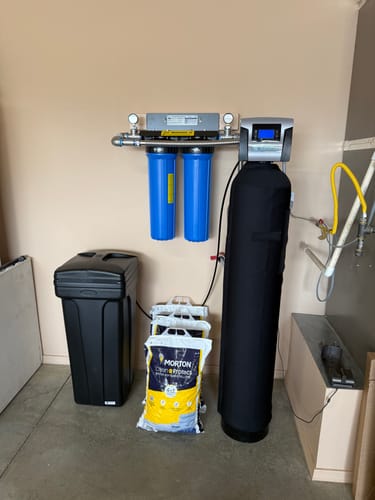
Before we take a single measurement, we need the right setup—because even a good pump will give us bad numbers if the conditions aren't controlled.
First, close every faucet and fixture in the house. Any open draw skews the results immediately.
Next, grab a 5-gallon bucket and a timer. Skip the garden spigot—it restricts flow and kills accuracy.
Find a hose bib closest to the pump instead.
Here's the step most people miss: let the pump reach full pressure before you start. Run water until the pump kicks on, then close the fixture and wait.
Once pressure stabilizes, you're ready. Eliminate all competing water use during the test, and you'll get numbers you can actually trust for filter sizing.
How to Test Your Well Pump Flow Rate
Crack open that hose bib fully and let the pump run until it hits full pressure—that's your starting gun. Stop all other fixtures, then let that water flow into your 5-gallon bucket. Track every gallon drawn and every second timed.
Here's the formula that changes everything: (Gallons ÷ Seconds) × 60 = GPM
| Gallons Drawn | Seconds Timed | Flow Rate (GPM) |
|---|---|---|
| 10 | 120 | 5 GPM |
| 20 | 120 | 10 GPM |
| 30 | 120 | 15 GPM |
That middle row? That's the sweet spot most households hit. Knowing your exact number means you'll never over-stress a filter system or under-size one again. Test regularly—your water quality depends on it.
How to Turn Your Test Results Into a GPM Reading
Once you've got your numbers—gallons collected and seconds timed—turning them into a GPM reading takes about five seconds of math.
Here's the formula: (Gallons drawn ÷ Seconds timed) × 60.
Say you collected 10 gallons in 120 seconds. That's (10 ÷ 120) × 60 = 5 GPM. Simple.
That single number tells you exactly what water filtration equipment your system can support without bottlenecking flow. Oversize the filter, and you'll see pressure drops. Undersize it, and you're leaving capacity on the table.
One more thing—don't treat a single test as gospel. Run it a few times, at different times of day or across seasons. Wells fluctuate, and you want a reliable average before committing to any filtration system investment.
Which Water Filter Matches Your Flow Rate?
Now that we've got a reliable GPM number in hand, it's time to put it to work.
Matching your flow rate to the right filter isn't guesswork—it's engineering.
Here's what your GPM reading tells you:
- Service flow rate — Your filter must handle your household's peak demand (typically 6–12 GPM).
- Backwash flow rate — Your system needs at least double your service rate for effective regeneration.
- Undersizing risks — Too small means pressure drops and poor contaminant removal.
- Oversizing risks — Too large means inadequate contact time and wasted water.
Iron filters and treatment systems are especially sensitive to these numbers.
Get the sizing right, and your system performs exactly as designed—protecting your water quality consistently.
Frequently Asked Questions
How to Test GPM at Home?
We'll start by activating the well pump until it reaches full pressure, then close all fixtures. Fill a 5-gallon bucket from a hose bib, time it, and divide gallons by seconds, multiplying by 60.
How to Test Well Pump Flow Rate?
We'll run a faucet until the pump shuts off, then drain water into a 5-gallon bucket until it restarts. Divide gallons collected by seconds, multiply by 60—that's your GPM.
Is a 30/50 or 40-60 Pressure Switch Better?
We recommend the 40/60 switch for most homes—it delivers stronger water pressure, handles multiple appliances simultaneously, and prevents short cycling, which extends your pump's lifespan considerably. It's simply the better performer under real household demands.
How Much Does a Well Flow Test Cost?
We can do it ourselves for free with just a bucket and timer, or hire a pro for $100–$300. Some water treatment companies'll even test it free when we're buying a filtration system.






