


![SoftPro™ Chlorine+ Carbon Whole House Water Filter to Remove PFAS, Chlorine, Chloramine & Pesticides [City Water Filters Series]](http://www.softprowatersystems.com/cdn/shop/files/SoftPro_Whole_House_Carbon_Filter_with_Spin_Down_Water_Filter.webp?v=1783547361&width=140)


 855-683-8488


What Happens to Your Water Quality When Your Iron Filter Is Too Small for Your Household?

When your iron filter's too small for your household, your water quality breaks down quickly. You'll notice rust stains spreading across sinks, toilets, and laundry. That metallic taste in your drinking water? It means iron's slipping through unfiltered. Pressure drops signal a filter struggling to keep up with daily demand. Constant regeneration cycles and persistent clogs only make things worse. Stick with us, and we'll walk you through everything you need to know.
Key Takeaways
- An undersized iron filter fails to remove enough iron, causing rust stains on sinks, toilets, and laundry throughout your home.
- Insufficient filtration allows iron to pass through, producing an unpleasant metallic taste in your drinking water.
- Overwhelmed filters struggle to maintain adequate water pressure, resulting in noticeable pressure drops throughout the house.
- Frequent clogging during peak usage disrupts water flow, signaling the filter cannot handle your household's daily demand.
- Constant regeneration cycles from an undersized filter degrade filter media faster, increasing operational and replacement costs significantly.
What an Undersized Iron Filter Does to Your Water Supply

When an iron filter is too small for your home's demands, it doesn't just underperform — it creates a cascade of problems that touch nearly every corner of your daily life.
Iron slips past the overwhelmed system, leaving rust stains on your sinks, toilets, and laundry. Your water carries a metallic taste, signaling that peak flow demands are simply too much for the filter to handle.
Pressure drops throughout the house, making showers and appliances frustratingly inefficient. Meanwhile, the filter regenerates constantly, driving up operational costs.
Beneath the surface, unfiltered iron quietly corrodes your plumbing and appliances, setting the stage for expensive repairs.
What starts as a sizing oversight snowballs into a household-wide problem that touches your wallet, your comfort, and your water quality.
What Rust Stains, Metallic Taste, and Pressure Drops Are Telling You
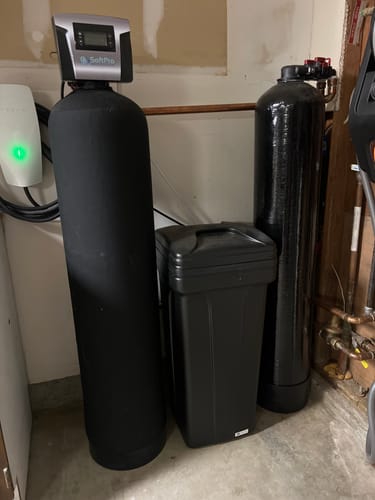
Those stains creeping across your sink basin, that metallic bite in your morning glass of water, the showerhead that's lost its punch — they're not random annoyances.
They're your water system's distress signals, and they all point to the same culprit: an iron filter that's outmatched by your household's demand.
When iron bypasses an overwhelmed filter, it doesn't just affect taste. It quietly corrodes pipes, degrades appliances, and racks up repair bills.
Pressure drops tell us the filter's clogged and struggling to keep pace with peak flow rates. Each symptom compounds the next.
Here's what we need to understand: these aren't maintenance quirks to ignore.
They're diagnostic clues demanding action — proper filter sizing and regular water testing before the damage becomes irreversible.
Why Frequent Clogs and Regenerations Mean Your Iron Filter Is Too Small
If your iron filter is regenerating several times a week, that's not a maintenance routine — that's a cry for help.
An undersized filter simply can't keep pace with your household's peak demand of 5–15 GPM, and it'll tell you through:
- Persistent clogs that interrupt flow during high-usage moments
- Accelerated media degradation from constant, excessive regeneration cycles
- Escalating repair bills as iron-laden water quietly destroys your plumbing and appliances
Every regeneration cycle your system runs unnecessarily shortens your filter media's lifespan.
Every unnecessary regeneration cycle chips away at your filter media's lifespan — one costly rotation at a time.
We're talking premature replacements, compounding costs, and a system perpetually playing catch-up.
The filter isn't failing because it's defective — it's failing because it was never sized for your actual water demands.
What an Undersized Iron Filter Does to Pipes and Appliances
An undersized iron filter doesn't just fail quietly — it sets off a chain reaction through your entire plumbing system. When filtration can't keep pace with your household's iron levels, that excess iron starts accumulating inside your pipes, gradually restricting water flow and creating stubborn clogs.
Your water heater works harder. Your dishwasher loses efficiency. Over time, both pay the price through premature failures and climbing energy bills.
We're also talking about visible damage. Rust stains appear on sinks and bathtubs, turning routine cleaning into a frustrating battle.
Fixtures corrode. Repairs become inevitable. And because the filter regenerates constantly trying to compensate, your plumbing endures repeated stress it wasn't designed to handle.
What starts as a sizing miscalculation quietly compounds into serious, costly consequences throughout your entire home.
How to Size Your Iron Filter Before the Damage Adds Up
Getting the size right starts with knowing exactly what your water is up against. We recommend professional water testing first—iron concentrations shift up to 25% seasonally, and guessing costs you later.
Three measurements matter most:
- Daily consumption: A four-person household needs 28–40 gallons daily
- Peak flow rate: Your filter must handle up to 15 GPM during heavy-use periods
- pH levels: Maintain at least 6.8, or iron oxidation breaks down entirely
Once you've got those numbers, choose filter media based on capacity, not upfront price. Undersized media forces frequent regeneration cycles, driving operational costs up while filtration performance drops.
Schedule water retests seasonally to catch concentration spikes before they outpace your system's ability to respond effectively.
Frequently Asked Questions
What Are Common Problems With Iron Filters?
When your iron filter's too small, we're looking at rust stains, metallic taste, low water pressure, frequent regenerations, and damaged plumbing. These problems escalate fast, costing you more in repairs and maintenance than you'd ever expect.
How Big of an Iron Filter Do I Need?
We'll need to match your filter's capacity to your household's peak flow—typically 5-7 GPM for smaller homes, up to 15 GPM for larger families—while accounting for your water's iron concentration, which can fluctuate seasonally.
What Is the Life Expectancy of an Iron Filter?
Iron filters typically last 5 to 10 years, but here's what we've learned: proper sizing and regular maintenance are the real game-changers that push your system toward that decade mark.
What Are the Symptoms of Too Much Iron in Water?
We'll notice reddish-brown stains on sinks, a metallic taste like sucking on a penny, orange sediment when water runs, musty or metallic odors, and clogged plumbing—all telltale signs we've got too much iron.






