


![SoftPro™ Chlorine+ Carbon Whole House Water Filter to Remove PFAS, Chlorine, Chloramine & Pesticides [City Water Filters Series]](http://www.softprowatersystems.com/cdn/shop/files/SoftPro_Whole_House_Carbon_Filter_with_Spin_Down_Water_Filter.webp?v=1783547361&width=140)


 855-683-8488


What to Do Immediately After Installing an Iron Filter: The Essential Initial Startup Guide

After installing an iron filter, we'll walk you through everything you need to do right away to protect your investment. Start by checking all connections for leaks and proper alignment. Then slowly restore water pressure to avoid system shock. Run your first backwash cycle to flush out debris and contaminants. Finally, test your water quality and set a backwash schedule based on your iron levels. Keep going to master every critical step.
Key Takeaways
- Inspect all iron filter connections, ensuring tight fittings, proper valve alignment, and Teflon tape applied to every threaded joint for watertight seals.
- Slowly open the main water valve and bypass valve to gradually pressurize the system while monitoring all connection points for leaks.
- Run a manual backwash cycle immediately after installation to flush debris and optimize filter media performance.
- Test water quality after the first backwash, checking clarity, taste, and iron levels against your pre-installation baseline.
- Set an initial backwash schedule every 2–3 days, adjusting frequency based on iron levels, water clarity, and staining observations.
Check Iron Filter Connections Before Turning Water Back On

Before turning the water back on, let's make sure all the connections are tight and properly aligned—this quick check can save us from a costly mess later.
Confirm the inlet, outlet, and bypass valves follow the directional flow arrows on the housing. We'll also want Teflon tape on every threaded fitting to guarantee watertight seals—don't skip this step.
Next, inspect the drain line. It must connect correctly and include an air gap, preventing back-siphoning from contaminating our water supply.
Then verify the control valve is firmly attached with lubricated O-rings—dry O-rings invite leaks under pressure.
Finally, confirm the main water supply remains completely off before proceeding. These checks take minutes but protect us from flooding and compromised water quality.
Restore Water Pressure After Iron Filter Installation
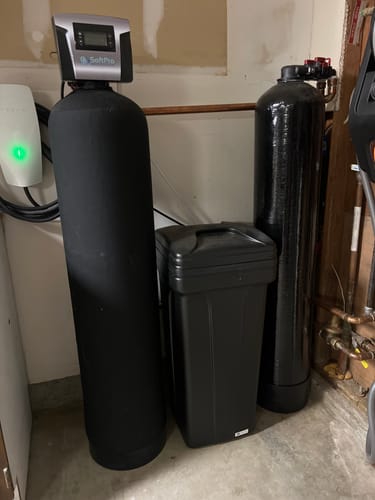
With our connections confirmed, we're ready to restore water pressure—but let's do it carefully to avoid system shock.
Start by slowly turning the main water valve, then open the bypass valve gradually, letting water fill the iron filter tank at a controlled pace.
Keep valves at a quarter-open position initially—you'll hear air escaping, which is completely normal and signals the tank is filling correctly.
Keep valves at quarter-open initially—the air you hear escaping simply means your tank is filling correctly.
Rushing this step risks losing filter media, so patience pays off here.
As pressure builds, inspect every connection point for leaks and tighten any loose fittings immediately.
Once the system stabilizes and air stops escaping, fully open the valves.
Finally, run a manual backwash cycle to flush out debris and set your filter up for peak performance from day one.
Run Your First Iron Filter Backwash Cycle the Right Way
Now that pressure is restored, let's run the first backwash cycle—a critical step that flushes out debris and primes the filter media for effective iron removal.
First, confirm your bypass valve is in the "service" position, ensuring normal water flow during operation.
Program your control valve according to the manufacturer's guidelines, typically 10–15 minutes, then start the cycle.
Watch the drain line closely—you're checking for proper discharge and any connection leaks.
Here's what's fascinating: as the cycle progresses, the discharged water shifts in color and clarity, visually confirming contaminant removal.
Once the backwash completes, test your water quality immediately.
Improvements in taste, odor, and clarity tell you definitively that your iron filter is performing exactly as designed.
Confirm Your Iron Filter Is Actually Working
How do you know your iron filter is actually doing its job? Start by restoring water pressure gradually after installation, then inspect every connection point for leaks while the system's pressurized.
Don't skip this step—pressurized testing reveals problems that dry checks miss.
Next, collect water samples and compare taste and clarity against your pre-installation baseline. You'll want measurable proof the filter's delivering results.
Watch closely for iron staining, discoloration, or any lingering metallic taste—these are your clearest performance indicators.
Over the following weeks, track how frequently backwashing becomes necessary. Your backwash frequency will shift based on your water quality and household usage patterns, giving you real data on how hard your filter's actually working.
That's how you confirm genuine performance, not just assumed results.
Set Your Iron Filter Backwash Schedule by Water Conditions
Once you've confirmed your filter's working, dialing in the right backwash schedule is what keeps it performing long-term. Start with every 2–3 days as your baseline, then adjust based on what your water's actually doing.
If iron levels exceed 3 ppm, increase backwash frequency immediately—high iron loads clog media faster than you'd expect. Run a few manual backwashes early on and watch how water clarity responds. That feedback tells you more than any generic schedule will.
High iron loads clog media fast—watch your water clarity early and let it guide your schedule.
As conditions stabilize and iron levels drop, you can scale back frequency—but stay alert to returning staining or turbidity. Those are your early warning signs.
Every six months, retest iron concentration and reassess your schedule. Water conditions change, and your backwash timing should change with them.
Frequently Asked Questions
What Must You Do Before Installing a Spin-On Filter?
Before we install a spin-on filter, we must completely shut off the main water supply. This prevents leaks and flooding, keeping our workspace safe while we gather our tools and prepare for a smooth installation.
What Is the Correct Order for Water Treatment?
We'll want to install systems in this order: iron filter first, then acid neutralizer, carbon filter, and finally a UV light system if bacteria's a concern — maximizing efficiency and protecting your plumbing throughout.
Does a Pressure Regulator Go Before or After a Filter?
We recommend installing the pressure regulator before your iron filter. This protects the filter from excessive incoming pressure, guarantees consistent performance, and extends its lifespan — safeguarding your entire downstream plumbing system simultaneously.
How Do I Set up My Water Softener for the First Time?
We'll start by choosing a dry, level spot, connecting the bypass valve, programming regeneration cycles every 3–7 days, filling the brine tank with the recommended salt, then slowly turning on the water supply while checking for leaks.






