


![SoftPro™ Chlorine+ Carbon Whole House Water Filter to Remove PFAS, Chlorine, Chloramine & Pesticides [City Water Filters Series]](http://www.softprowatersystems.com/cdn/shop/files/SoftPro_Whole_House_Carbon_Filter_with_Spin_Down_Water_Filter.webp?v=1783547361&width=140)


 855-683-8488


When to Add Activated Carbon Filtration Because Your Iron Filter Can't Remove All the Sulfur

If your iron filter isn't fully eliminating that rotten egg smell, it's time to contemplate adding activated carbon filtration. Iron filters handle heavy sulfur loads well, but organic sulfides and residual hydrogen sulfide often slip through. Once levels exceed 1 ppm, or you're still noticing odors and discoloration, a carbon stage becomes essential. A dual-filter system is the real solution, and there's plenty more to know about making it work right.
Key Takeaways
- Add activated carbon filtration when hydrogen sulfide levels exceed 1 ppm, as iron filters struggle to adequately handle higher concentrations.
- A persistent rotten egg smell in cold water signals iron filter overload, indicating carbon filtration is necessary.
- Organic sulfides can bypass iron filters entirely, requiring activated carbon to address remaining odors and taste issues.
- Install a non-backwashing carbon filter downstream of your iron filter for optimal dual-stage sulfur removal performance.
- Replace carbon filters every three to twelve months, and test water regularly to ensure continued system effectiveness.
Why Do Iron Filters Miss Certain Sulfur Compounds?

While iron filters do a solid job tackling hydrogen sulfide through oxidation, they're not a catch-all solution for every sulfur compound lurking in your water. Organic sulfides, for instance, slip right through, continuing to cause odor and taste problems despite your filter's best efforts.
Several variables compound this limitation. Iron itself can interfere with the oxidation process, leaving residual hydrogen sulfide untreated.
Iron doesn't just fight sulfur — sometimes it gets in the way, leaving hydrogen sulfide untreated.
Add in fluctuating water temperature, pH imbalances, or competing contaminants, and your filter's efficiency drops further. High concentrations simply overwhelm it.
Think of it this way: iron filtration handles the heavy lifting, but it wasn't designed to win every battle. Understanding where it falls short is the first step toward building a complete sulfur-removal strategy that actually works.
How to Tell Your Iron Filter Is Missing Sulfur Compounds
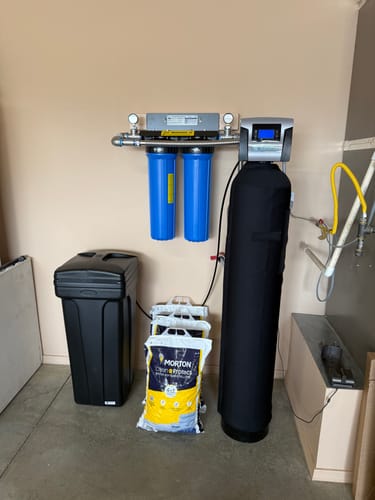
How do you know when your iron filter's letting sulfur compounds slip through? Start with your nose. If that rotten egg smell lingers in your cold water despite having filtration in place, your filter's likely hitting its capacity ceiling—especially if hydrogen sulfide levels exceed 1 ppm.
Next, test your water. Detectable hydrogen sulfide above 0.3 ppm signals it's time for supplemental carbon filtration.
Don't ignore visual cues either—discoloration or staining alongside sulfur odors confirms your iron filter's struggling with compound removal.
Finally, check your filter's performance. Sediment buildup and dropping water pressure aren't just maintenance issues; they're warning signs that your system's working harder than it should.
When you spot these signals together, activated carbon filtration becomes your next logical step.
How Activated Carbon Catches the Sulfur Your Iron Filter Misses
When your iron filter's done its heavy lifting, activated carbon steps in to catch what's left behind. Think of it as the cleanup crew working after the main event.
Here's what's happening at the molecular level: activated carbon's enormous surface area acts like a magnet, adsorbing residual hydrogen sulfide that slipped through your iron filter.
Iron filters handle concentrations up to roughly 1 ppm effectively, but lower residual levels? That's carbon's specialty.
We typically recommend adding a non-backwashing carbon filter as a polishing stage downstream from your iron filter. It targets those stubborn odors your primary system can't fully resolve.
One caveat worth noting: high iron levels accelerate carbon filter clogging. That's precisely why sequencing matters—iron filtration first, carbon polishing second.
When Sulfur Levels Justify Adding a Carbon Stage
So now that we've covered how carbon polishes what your iron filter leaves behind, let's talk about when that extra stage actually earns its keep.
If your hydrogen sulfide levels sit above 1 ppm, a carbon stage isn't optional—it's essential.
Here's why: carbon filters lose effectiveness above 0.3 ppm, meaning your iron filter needs to handle the heavy lifting first.
At 2 ppm or higher, homeowners consistently report dissatisfaction with iron filters alone. That's the threshold where a dual-stage system stops being a luxury and becomes a necessity.
The payoff? Better-tasting water, zero lingering sulfur smell, and no chemical treatments required.
You're also protecting your carbon filter's longevity by letting the iron filter absorb the bulk of the sulfur load first.
How to Add a Carbon Filter to Your Existing Iron Filter System
Once installed, choose a non-backwashing carbon filter optimized for taste and odor removal. This configuration protects both units and maximizes their combined effectiveness against residual hydrogen sulfide.
From there, don't assume everything's working perfectly—test your water regularly. Monitoring sulfur levels confirms the system's actually performing.
Expect to replace the carbon filter every three to twelve months depending on contamination levels and usage, while your iron filter will need attention far less frequently.
Frequently Asked Questions
Will an Iron Filter Remove Sulfur Smell?
Yes, an iron filter can remove sulfur smell, especially when hydrogen sulfide exceeds 1 ppm. It oxidizes sulfur into solid particles for easy removal, but we recommend adding activated carbon filtration if stubborn odors persist.
Does an Activated Carbon Filter Remove Iron?
Activated carbon filters don't effectively remove iron. They'll capture some particles, but once iron exceeds 0.3 ppm, your filter clogs quickly, loses performance, and can actually worsen sulfur odors in your well water system.
Will a Carbon Filter Remove Sulfur?
Carbon filters can remove sulfur, but only temporarily. They'll absorb hydrogen sulfide odors at low concentrations, yet they're not a long-term solution—they exhaust quickly and fail entirely above 0.3 ppm.
Will an Iron Filter Remove Iron Bacteria?
Iron filters won't remove iron bacteria. While they tackle dissolved iron effectively, bacteria survive and can actually foul your filter with slime deposits. You'll need specialized treatment like chlorination or ozone to truly eliminate these stubborn organisms.






