


![SoftPro™ Chlorine+ Carbon Whole House Water Filter to Remove PFAS, Chlorine, Chloramine & Pesticides [City Water Filters Series]](http://www.softprowatersystems.com/cdn/shop/files/SoftPro_Whole_House_Carbon_Filter_with_Spin_Down_Water_Filter.webp?v=1783547361&width=140)


 855-683-8488


When You Absolutely Need to Add a UV Light to Your Iron Filter System — And When You Don't

You absolutely need UV light when your water tests positive for coliform bacteria or E. coli, when you're drawing from a shallow well, or when flooding regularly threatens your water supply. Without it, an iron filter alone won't protect you from harmful pathogens. But if you're on municipal water or your tests consistently show zero microbial activity, you can likely skip it. Stick with us — there's a lot more to uncover about making the right call for your home.
Key Takeaways
- UV light is essential if water tests positive for coliform bacteria or E. coli, as iron filters alone cannot eliminate biological threats.
- Homes in flood-prone areas or with shallow wells face ongoing contamination risks that require UV disinfection for adequate protection.
- Skip UV light if water tests consistently show zero bacterial contamination and your iron filter effectively manages iron and manganese.
- Municipal water users typically don't need UV systems since suppliers already ensure microbiological safety through their own treatment processes.
- Always install the UV unit after the iron filter, ensuring clear water flows through for maximum disinfection effectiveness.
What UV Light Does (and Doesn't Do) for Your Iron Filter System

UV light is one of those quiet workhorses in water treatment — it doesn't filter anything, but it does something equally critical: it neutralizes harmful microorganisms like bacteria, viruses, and protozoa that sneak through your iron filter system.
Here's the trade-off you need to understand: UV excels at disinfection, but it won't touch your iron problem. Staining, odors, metallic taste — those still require your iron filter to do its job.
UV handles disinfection. Your iron filter handles iron. Neither one covers for the other.
They're a team, not interchangeable.
There's also a prerequisite most people overlook. UV needs clear water to work effectively. Heavily contaminated or turbid water blocks UV penetration, so sediment pre-treatment isn't optional — it's crucial.
Get that wrong, and your UV system is fundamentally running blind.
Well Water Warning Signs That Mean You Need UV Light
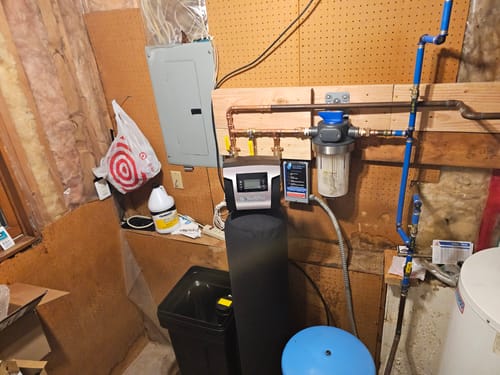
Now that we recognize what UV light actually does in your system, the real question is whether your well water is already waving red flags that say you need it.
If your water tests positive for coliform bacteria or E. coli, UV isn't optional — it's essential. Living in flood-prone areas? Pathogens infiltrate water supplies during high water events, making UV a necessary safeguard. If anyone in your home is immunocompromised, the stakes are even higher.
Watch your existing filtration system closely. Biofilm formation or visible microbial growth signals that recontamination is actively occurring.
And if regular testing still reveals harmful microorganisms surviving after filtration, your system has a gap that only UV treatment can close.
These aren't subtle hints — they're urgent warnings.
When Your Iron Filter System Absolutely Needs UV Light
When your well has tested positive for coliform or E. coli, adding UV light to your iron filter system isn't a suggestion — it's a necessity. Iron filters don't eliminate pathogens — period. UV light fills that critical gap, neutralizing up to 99.99% of harmful microorganisms.
| Situation | UV Light Needed? |
|---|---|
| Positive coliform or E. coli test | Absolutely |
| Shallow well or flood-prone area | Absolutely |
| Post-filtration pathogens detected | Absolutely |
| Iron filter used alone | Strongly recommended |
If you're pulling water from a shallow well or live in a flood-prone area, bacterial intrusion is a real, ongoing threat. When testing keeps revealing pathogens after filtration, UV isn't optional — it's your last line of defense.
When Skipping UV Light on Your Iron Filter Makes Sense
Not every well water situation calls for UV light — and recognizing when you can skip it saves you money, energy, and unnecessary complexity.
If your iron filter's already handling iron, manganese, and sulfur effectively, and your water tests show zero microbial threats like E. coli or coliform bacteria, you've got a system that's doing its job.
Municipal water users have even less to worry about — your supplier's already managing microbiological safety.
And remember, UV doesn't touch heavy metals or sediment, so if iron filtration covers your real concerns, adding UV solves a problem you don't have.
There's also the practical reality of power reliability. If your electricity supply isn't consistent, a UV system becomes a liability rather than an asset.
Know your water, then decide.
How to Size and Position UV Light With Your Iron Filter
Sizing and positioning a UV light correctly can mean the difference between a system that genuinely protects your water and one that falls short. For most households, you'll want a UV unit rated between 25 and 50 watts, handling 10 to 15 GPM effectively.
Match the wattage to your actual flow rate — don't guess.
Positioning matters equally. Always install the UV unit after the iron filter, never before. Iron particles and sediment scatter UV light, reducing its disinfecting power considerably.
Let the iron filter do its job first, then let UV handle remaining microorganisms in cleaner, clearer water.
Water clarity is non-negotiable here. Murky water defeats UV disinfection entirely.
When in doubt, consult a water treatment professional — proper sizing protects both your investment and your family's health.
Frequently Asked Questions
Is There a Downside to UV Sterilizers?
Yes, UV sterilizers have downsides. They can't remove sediments, metals, or chemicals, they're less effective in murky water, they need electricity, they're fragile, and they don't protect against recontamination after treatment.
Will an UV Light Get Rid of Iron Bacteria?
Yes, UV light effectively neutralizes iron bacteria by damaging their DNA, rendering them inactive. However, it won't remove iron itself, so we'll need to pair it with proper filtration for complete water treatment.
How Much Does It Cost to Install an UV Light for Well Water?
We're looking at $800–$1,000 for installation, covering the unit and professional fees. Factor in $100–$200 annually for bulb replacement, and you've got a reliable, low-maintenance solution protecting your well water long-term.
Is UV Filtration Necessary?
UV filtration isn't always necessary, but if your well tests positive for bacteria, you're in a flood-prone area, or you have immunocompromised family members, we'd strongly recommend adding it for reliable protection.






