


![SoftPro™ Chlorine+ Carbon Whole House Water Filter to Remove PFAS, Chlorine, Chloramine & Pesticides [City Water Filters Series]](http://www.softprowatersystems.com/cdn/shop/files/SoftPro_Whole_House_Carbon_Filter_with_Spin_Down_Water_Filter.webp?v=1783547361&width=140)


 855-683-8488


When Your Well Water Needs Both an Iron Filter and Activated Carbon Water Treatment (And When It Doesn't)

Well water rarely has just one problem, and treating it shouldn't be a guessing game. If your water has iron above 3 ppm along with bad odors or chemical contaminants, you'll need both an iron filter and activated carbon working together. But using carbon without proper setup in untreated well water can backfire fast, encouraging bacterial growth and fouling your filter. Testing your water first tells you exactly what you're dealing with—and we'll show you how to handle all of it.
Key Takeaways
- Well water with iron above 3 ppm requires an iron filter, while activated carbon alone cannot remove dissolved iron effectively.
- Use both systems when water contains iron, organic contaminants, or hydrogen sulfide for comprehensive treatment.
- Activated carbon alone risks bacterial growth and faster failure when used on untreated, iron-rich well water.
- Water testing for iron levels, hardness, and pH determines whether one or both systems are necessary.
- Install the iron filter before activated carbon to prevent carbon medium damage from high iron content.
What Iron Filters and Activated Carbon Actually Do to Your Well Water

When iron sneaks into your well water, it brings along a host of problems — reddish-brown stains on your fixtures, a metallic taste that ruins your morning coffee, and water that just doesn't feel clean.
Iron doesn't just contaminate your water — it stains your fixtures, corrupts your coffee, and makes nothing feel clean.
Iron filters tackle this directly by oxidizing dissolved ferrous iron into solid particles that get filtered out — essential when your iron levels exceed 3 ppm.
But iron's rarely your only enemy. Organic compounds, chemicals, and odors often lurk alongside it.
That's where activated carbon steps in, adsorbing those contaminants and restoring your water's taste and smell. It won't touch iron, though.
These two systems aren't competitors — they're partners. Each handles what the other can't, and together, they cover the full spectrum of well water's most common offenders.
When Your Well Water Needs an Iron Filter and Carbon Together
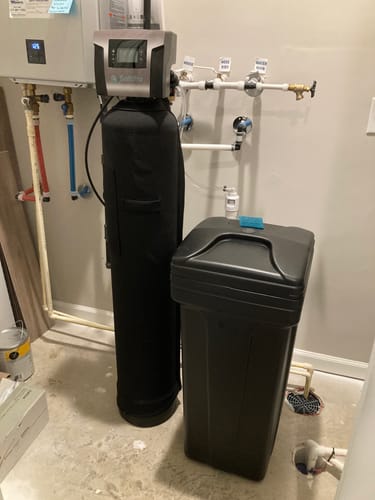
Here's the reality: an iron filter alone won't touch hydrogen sulfide or organic contaminants. Activated carbon alone can't pull dissolved iron from your water.
But running both systems together? That's where you gain complete control — iron converted and filtered out, odors neutralized, taste restored.
We always recommend testing first. Your water's specific chemistry determines how both systems should be configured, and guessing wastes money.
Know your numbers, then build your solution accordingly.
When Activated Carbon Does More Harm Than Good in Well Systems
Pairing an iron filter with activated carbon works well — but only when your well system is set up correctly to support it. Without chlorination, activated carbon becomes a liability — not an asset. Bacteria colonize the filter medium, iron bacteria thrive, and contaminant removal degrades faster than you'd expect.
Here's what we see go wrong:
| Condition | Consequence |
|---|---|
| No chlorination present | Bacterial growth inside carbon medium |
| High iron content in water | Iron bacteria flourish, worsening quality |
| Untreated well water exposure | Accelerated filter failure, frequent replacements |
If your system isn't chlorinated, activated carbon won't protect you — it'll work against you. Knowing this distinction separates homeowners who get results from those who create new problems.
How to Test Your Well Water and Read the Results Correctly
Testing your well water isn't complicated, but doing it wrong means every treatment decision you make afterward is built on bad data.
Start by collecting samples from multiple tap points after letting the water run a few minutes. Then send everything to a certified lab.
When reading your results, focus on these critical markers:
- Iron levels: Above 0.3 ppm signals the need for an iron filter; above 3 ppm demands a dedicated system
- Hardness: Determines whether softening should accompany filtration
- pH: Values above 7 may indicate corrosiveness requiring additional treatment
Track your results over time. A single test snapshot tells part of the story—a documented baseline tells you everything, including whether your current treatment system is actually working.
How to Install an Iron Filter and Activated Carbon System the Right Way
Once you've got your water test results in hand, there are 5 installation steps that'll determine whether your iron filter and activated carbon system actually do their jobs—or quietly fail you over time.
First, place the iron filter before the activated carbon system. Iron destroys carbon media fast—don't let it.
Second, install both systems near your water's entry point for easy access during maintenance.
Third, set your iron filter's regeneration cycle based on your actual iron levels, not guesswork.
Fourth, if sediment's present, install a pre-filter upstream of both systems—particulates will wreck them otherwise.
Fifth, follow manufacturer guidelines precisely—correct fittings, secured joints, zero leaks.
Each step protects the next. Skip one, and you're not treating your water—you're just moving the problem downstream.
Frequently Asked Questions
What Is the Best Filter to Remove Iron From Well Water?
For ferrous iron, we recommend an oxidation filtration system—it converts dissolved iron into solid particles for easy removal. For ferric iron, we'll use a mechanical filter. Test your water first to choose correctly.
What Is the Correct Order for Water Treatment?
We recommend installing your iron filter first, then your activated carbon system. This sequence prevents iron from fouling your carbon filter, ensuring both systems perform at their peak efficiency and extend their lifespan.
What Are the Disadvantages of Activated Carbon Water Filter?
Activated carbon filters can promote bacterial growth, require frequent replacement, and lose effectiveness in non-chlorinated well water. They also struggle with high iron or mineral levels, meaning you'll likely need additional filtration systems alongside them.
What Causes Too Much Iron in Well Water?
Iron in well water comes from groundwater dissolving iron-rich minerals in sandstone, limestone, and clay. Deeper wells, seasonal water table shifts, and fluctuating groundwater levels all expose more iron-rich rock, intensifying concentrations dramatically.






