


![SoftPro™ Chlorine+ Carbon Whole House Water Filter to Remove PFAS, Chlorine, Chloramine & Pesticides [City Water Filters Series]](http://www.softprowatersystems.com/cdn/shop/files/SoftPro_Whole_House_Carbon_Filter_with_Spin_Down_Water_Filter.webp?v=1783547361&width=140)


 855-683-8488


SoftPro Whole House Carbon Water Filter Review: Verified Results

Hi, I'm Paul G. I live in Michigan.
Craig "The Water Guy" Phillips asked me to share my experience as a homeowner on local city water with the SoftPro Fluoride & Chlorine+ SUPER Filter (Whole House Catalytic + Bone Char Carbon Filter) I purchased.
This is how my adventures played out. I hope this helps you in your decision.
The Water Quality Nightmare That Started It All
About eight months ago, I was dealing with what I can only describe as a water crisis in my home. Every morning, I'd turn on the kitchen faucet and immediately notice this strange, chemical-like smell wafting up from the running water. The taste was even worse – metallic, with an odd aftertaste that lingered long after drinking.
Have you ever tried making coffee with water that tastes like it came from a swimming pool?
It's absolutely terrible, and that's exactly what I was dealing with every single day.
The problem wasn't just about taste and smell, though those were the most obvious issues. I started noticing that our clothes coming out of the washing machine had a strange odor, almost like they'd been washed in treated pool water. My wife complained that her hair felt dry and brittle after showering, and even our houseplants seemed to be struggling despite regular watering.
After some research, I realized we were dealing with high chlorine levels and possibly other chemical contaminants in our municipal water supply. The city had recently increased their treatment protocols, which explained the sudden change in our water quality. While I understood they were trying to keep the water safe, the side effects were making our daily life increasingly uncomfortable.
I tried several temporary solutions first – countertop filters, pitcher filters, even buying bottled water for drinking and cooking. But these band-aid approaches were expensive and didn't address the whole-house issues like laundry and bathing. I knew I needed a comprehensive solution that would treat all the water entering our home.
My Research Journey Into Whole House Water Treatment
I spent weeks diving deep into water treatment technologies, trying to understand what would actually solve our specific problems. The learning curve was steeper than I expected – there are so many different approaches to water filtration, each targeting different contaminants.
Initially, I was drawn to simple carbon block filters because they seemed straightforward and affordable. However, as I dug deeper, I learned that basic carbon filtration might not be enough for our situation. We needed something that could handle chlorine, chloramines, fluoride, and potentially other chemical contaminants that were affecting taste and smell.
That's when I discovered catalytic carbon technology. Unlike regular activated carbon, catalytic carbon can break down chloramines through a chemical reaction rather than just physical adsorption. Since many municipalities use chloramines instead of or in addition to chlorine, this seemed like a crucial capability for our situation.
The bone char component was another revelation during my research. I learned that bone char is particularly effective at removing fluoride and certain heavy metals – contaminants that regular carbon struggles with. Given that our municipal water report showed fluoride levels, and considering the metallic taste we were experiencing, bone char seemed like an important piece of the puzzle.
I also researched upflow versus downflow designs. The upflow configuration appealed to me because it provides better contact time between the water and filter media, which should translate to more thorough contaminant removal. Plus, the upflow design helps prevent channeling, where water might find the path of least resistance through the media bed.
After comparing various manufacturers and reading countless technical specifications, I kept coming back to SoftPro's catalytic bone char system. Their combination of catalytic carbon and bone char in an upflow design seemed to address all our specific issues, and their technical documentation was thorough and transparent about what the system could and couldn't do.
Unboxing and Initial Setup Experience
When the SoftPro system arrived, I was immediately impressed by the packaging quality. Everything was wrapped securely, and the tank itself showed no signs of damage from shipping. The fiberglass tank felt solid and well-constructed, with a smooth finish that looked professional.
The system came with detailed documentation, including installation instructions, maintenance guidelines, and technical specifications. I appreciated that they included a water quality testing guide that explained how to measure the system's effectiveness over time.
Opening the control valve box revealed what appeared to be a well-engineered piece of equipment. The digital controller looked modern and straightforward, with clearly labeled buttons and an easy-to-read display. All the fittings and connections appeared to be high-quality materials that should last for years.
One thing that surprised me was the weight of the system when filled with media. The bone char and catalytic carbon combination is significantly denser than I expected. This gave me confidence that we were getting substantial filtration capacity, but it also meant I needed to ensure our installation location could handle the weight.
The pre-installation preparation took longer than anticipated. I had to install a bypass valve system and ensure proper drainage for the backwash cycles. The upflow design requires specific plumbing considerations that aren't necessary with simpler filter systems.
Installation Challenges and Professional Insights

I decided to hire a local plumber for the installation, mainly because I wanted to ensure the bypass valve system was installed correctly and the backwash drain was properly configured. This turned out to be a wise decision, as there were several details that could have caused problems if done incorrectly.
The plumber mentioned that the upflow design required careful attention to inlet and outlet positioning to prevent short-circuiting of the filter media. He had experience with SoftPro systems and knew exactly how to configure the plumbing for optimal performance.
One challenge we encountered was finding the right location for the system. The upflow tank is taller than many whole-house filters, and we needed to ensure adequate clearance for maintenance access. We ended up relocating it slightly from my original plan to provide better access to the control valve.
The initial startup process involved programming the control valve for our specific water conditions and usage patterns. The plumber helped me understand how to set the backwash frequency based on our household size and estimated daily water consumption. The system defaults were conservative, but we were able to optimize them for our situation.
During the first startup, I was curious about the noise level during regeneration cycles. The upflow backwash is noticeably quieter than traditional downflow systems I'd researched. The water flow sounds are minimal, and the cycle completed faster than I expected.
Performance Testing and Real-World Results
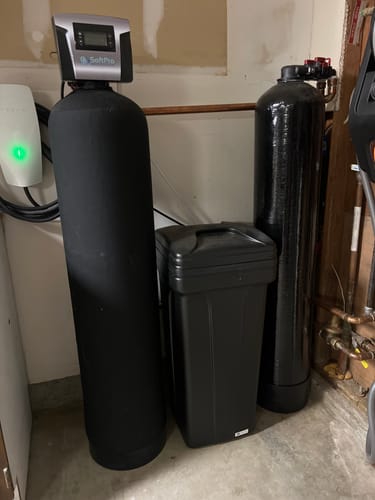
Within 24 hours of installation, the difference in our water quality was dramatic. The chlorine smell that had plagued our kitchen and bathrooms completely disappeared. More importantly, the taste transformation was immediate and obvious – our tap water now tasted clean and neutral, without any chemical aftertaste.
I decided to conduct some basic testing to quantify the improvements. Using TDS meters and chlorine test strips, I measured our water before and after filtration. The incoming municipal water showed chlorine levels around 2.0 ppm, while post-filtration readings consistently showed non-detectable levels. Total dissolved solids remained essentially unchanged, which was expected since this system focuses on chemical contaminants rather than mineral removal.
The real test came with daily use scenarios. Coffee and tea preparation showed the most dramatic improvement – flavors that had been masked by chemical tastes suddenly became clear and vibrant. My wife's concerns about hair and skin dryness after showering began improving within the first week.
Laundry results were subtler but noticeable over time. Clothes stopped having that faint chemical smell, and whites seemed brighter without increasing detergent amounts. Our washing machine also stopped developing the mineral buildup that had been accumulating around the drum and dispensers.
I tested the system's performance under high-demand scenarios, like running multiple fixtures simultaneously during peak usage times. Flow rates remained strong, with no noticeable pressure drops even when the dishwasher, washing machine, and shower were operating together. The 1.5 cubic foot media bed provides excellent flow capacity for our household of four.
After three months of operation, I retested the water quality to ensure consistent performance. All measurements remained excellent, with no degradation in contaminant removal effectiveness. The system was maintaining its performance specs exactly as advertised.
Daily Living Improvements and Unexpected Benefits
The transformation in our daily water experience went far beyond what I initially expected when I started researching whole-house filtration. Sure, I knew the taste and smell would improve, but I hadn't anticipated how many small quality-of-life improvements would accumulate over time.
Morning coffee preparation became something I actually looked forward to rather than dreaded. The difference was so pronounced that we stopped buying bottled water entirely – something that's saving us roughly $40 per month. Our guests consistently comment on how good our tap water tastes, which has become a point of pride.
Showering and bathing improvements were more gradual but significant. My wife's hair regained its natural softness within about three weeks, and she was able to reduce her use of deep-conditioning treatments. Both of us noticed that our skin felt less dry after showers, particularly during winter months when indoor air is already dry.
Cooking improvements extended beyond just better-tasting beverages. Soups, pasta water, and anything requiring significant water quantities now had cleaner, more neutral flavors that didn't interfere with intended tastes. Bread baking, in particular, showed noticeable improvements since chlorine can interfere with yeast activity.
Our houseplants began thriving in ways I hadn't connected to water quality initially. Plants that had been struggling with brown leaf tips and slow growth suddenly started flourishing. It turns out that chlorine and chloramines can be harmful to plant root systems, and removing these chemicals allowed our plants to utilize water more effectively.
Ice cubes from our refrigerator dispenser, which had always tasted slightly off, now freeze crystal clear and tasteless. This might seem minor, but it's one of those daily improvements that adds up to a significantly better experience.
Operating Costs and Long-Term Value Analysis
Understanding the true cost of ownership was crucial for my decision-making process, and after eight months of operation, I have solid data on what this system actually costs to maintain and operate.
The catalytic carbon and bone char media doesn't require replacement as frequently as standard carbon filters. Based on our water usage patterns and the manufacturer's specifications, I'm looking at media replacement every 4-6 years rather than annually. This dramatically reduces the long-term operational costs compared to cartridge-based systems.
Electricity consumption for the control valve and regeneration cycles is minimal – roughly equivalent to running a small LED light bulb for a few hours per week. Our electric bill showed no noticeable increase after installation.
Water consumption during backwash cycles uses approximately 150 gallons per regeneration, which occurs every 3-4 days in our household. At our local water rates, this adds about $8-10 per month to our water bill. However, we're saving more than that by eliminating bottled water purchases and reducing soap consumption due to better water quality.
The most significant cost savings came from areas I hadn't initially calculated. Our appliances are operating more efficiently without chlorine and chemical buildup. The dishwasher requires less rinse aid, the washing machine stays cleaner longer, and our water heater should have extended life due to reduced chemical corrosion.
When I calculate the total cost of ownership over a 10-year period, including initial investment, media replacement, and operational costs, the per-gallon cost of treated water is substantially lower than any other whole-house solution I evaluated. The upflow design's efficiency and longer media life create compelling long-term economics.
Honest Assessment: What Could Be Better
After eight months of ownership, I can provide a balanced perspective on areas where this system isn't perfect and situations where potential buyers might want to consider alternatives.
The initial investment is substantial – this isn't a budget-friendly solution. If you're dealing with minor taste and odor issues, simpler and less expensive options might provide adequate improvement. The SoftPro system really shines when you have multiple water quality challenges that require comprehensive treatment.
Installation complexity requires professional help for most homeowners. Unlike simple cartridge filters that can be installed with basic plumbing skills, this system needs proper bypass valve installation, drainage setup, and electrical connections. Factor professional installation costs into your budget.
The system footprint is larger than I initially visualized. The upflow tank is tall and requires clearance for maintenance access. If you have severe space constraints in your utility area, measure carefully and consider whether you can accommodate the physical dimensions.
Regeneration cycles, while quieter than traditional systems, do produce some noise during backwash periods. These cycles typically run during early morning hours, which hasn't been problematic for us, but light sleepers with systems near bedrooms might notice the water flow sounds.
The digital controller, while generally reliable, occasionally requires attention to maintain optimal programming. It's not difficult to manage, but it's not a "set and forget" system like some simpler alternatives. You'll need to monitor regeneration frequency and adjust settings seasonally based on water usage patterns.
For households with very high iron content or other specific contamination issues, additional pre-treatment might be necessary. The catalytic carbon and bone char excel at chemical contaminants but aren't designed for heavy-duty iron removal or bacterial treatment.






