


![SoftPro™ Chlorine+ Carbon Whole House Water Filter to Remove PFAS, Chlorine, Chloramine & Pesticides [City Water Filters Series]](http://www.softprowatersystems.com/cdn/shop/files/SoftPro_Whole_House_Carbon_Filter_with_Spin_Down_Water_Filter.webp?v=1783547361&width=140)


 855-683-8488


SoftPro Whole House Carbon Filter Review: Real Results for City Water

Hi, I'm Kimberly A. I live in Chicago.
Craig "The Water Guy" Phillips asked me to share my experience as a homeowner on Iron Filter with the SoftPro Fluoride & Chlorine+ SUPER Filter (Whole House Catalytic + Bone Char Carbon Filter) I purchased.
This is how my adventures played out. I hope this helps you in your decision.
Did you know that the average American household consumes chlorinated water that can contain up to 4 parts per million of chlorine?
That's what I discovered when I started researching why our city water smelled and tasted like we were drinking straight from a swimming pool. Don't get me wrong—I understand the necessity of chlorine for municipal water treatment, but having it permeate every glass of water, every shower, and every cup of coffee was becoming unbearable.
After months of dealing with water that made simple tasks like drinking a glass of tap water unpleasant, I knew something had to change. The chlorine odor was so strong that guests would comment on it, and I found myself buying bottled water for drinking and cooking—an expensive and environmentally unfriendly solution.
This comprehensive review covers my complete journey with the SoftPro Fluoride & Chlorine+ SUPER Filter, from the initial installation challenges to the remarkable transformation of our home's water quality. I'll share the real costs, installation process, performance results, and whether this whole house catalytic carbon filtration system actually delivers on its promises.
The Chlorine Problem That Drove Me to Take Action
Our city water situation had become genuinely problematic. Every morning, I'd turn on the kitchen faucet and immediately smell that distinctive swimming pool odor. The taste was even worse—a sharp, chemical bite that made drinking water feel like a chore rather than a necessity.
The chlorine levels in our municipal water supply were clearly within legal limits, but that didn't make them pleasant to live with. I tested our incoming water and found chlorine levels consistently measuring between 2.5 and 3.2 parts per million. While the EPA allows up to 4 PPM, anything above 1 PPM becomes noticeable to most people's taste and smell.
The problem extended far beyond drinking water. Our morning showers felt harsh on skin and hair, leaving both feeling dry and irritated. The chlorine was also affecting our appliances—I noticed mineral buildup and scaling in our coffee maker and dishwasher that seemed excessive for our water hardness level.
What really pushed me over the edge was the cost analysis.
I calculated that we were spending nearly $180 per month on bottled water for drinking and cooking. Over a year, that's over $2,000 just to avoid the taste and smell of our tap water. That expense, combined with the environmental impact of all those plastic bottles, made investing in a whole house filtration system seem like the logical choice.
I researched the health implications and learned that while chlorine effectively kills bacteria and viruses in municipal water systems, it can form disinfection byproducts (DBPs) like trihalomethanes when it reacts with organic matter. These compounds have been linked to various health concerns, though they're regulated by the EPA.
Research Journey: Understanding Catalytic Carbon Technology
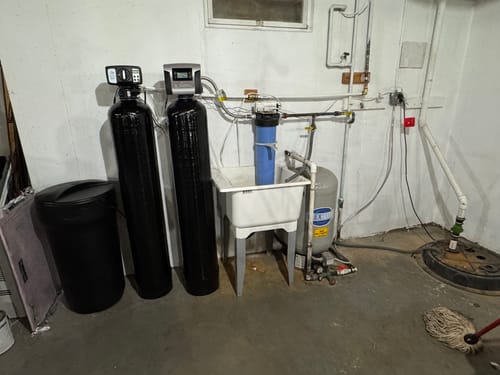
My research into chlorine removal solutions revealed several options, but I quickly learned that not all carbon filters are created equal. Standard granular activated carbon (GAC) can remove chlorine, but it requires frequent replacement and doesn't handle chloramines effectively.
That's when I discovered catalytic carbon technology. Unlike standard carbon, catalytic carbon has been treated to enhance its ability to remove both chlorine and chloramines through a catalytic reaction rather than simple adsorption. This means longer filter life and more effective contaminant removal.
The SoftPro system combines catalytic carbon with bone char carbon, creating a dual-media approach. The bone char component specifically targets fluoride removal, which was an unexpected bonus since our city water contains added fluoride at 0.8 PPM.
Why did I choose whole house filtration over point-of-use systems?
I wanted every water source in our home to be chlorine-free, not just the kitchen sink. Shower water, bathroom sinks, laundry, and appliances would all benefit from dechlorinated water. The cost per gallon treated with a whole house system is significantly lower than multiple point-of-use filters.
I also considered the flow rate requirements. Our household of four needed a system that could handle peak demand without pressure drops. The SoftPro upflow design maintains higher flow rates compared to downflow systems while providing better contact time between water and media.
Certification was crucial in my decision. I looked for NSF/ANSI Standard 42 certification for chlorine reduction and NSF/ANSI Standard 61 for material safety. The SoftPro system meets both standards, providing third-party verification of performance claims.
Unboxing and First Impressions of the System
The SoftPro Fluoride & Chlorine+ SUPER Filter arrived in professional packaging that immediately conveyed quality. The main tank is a substantial fiberglass unit measuring 13 inches in diameter and 54 inches tall—much larger than I'd anticipated, which actually increased my confidence in its capacity.
The control valve is also from SoftPro, a well-respected brand in the water treatment industry. This wasn't some generic valve but a proven, programmable unit with a clear digital display. The build quality felt commercial-grade, with solid brass fittings and heavy-duty materials throughout.
Inside the tank, I found the dual media layers: catalytic carbon on top and bone char carbon below. The total media volume is approximately 2.5 cubic feet, which translates to substantial contact time even at higher flow rates.
The instruction manual was comprehensive, covering everything from plumbing requirements to programming the control valve. What impressed me was the detailed explanation of the upflow design and why it's superior for this application.
One concern I had initially was the size.
This isn't a compact under-sink unit—it requires dedicated floor space and adequate clearance for the control valve. I measured our utility room twice to ensure proper fit, leaving space for maintenance access.
Installation Process: DIY Success with Proper Preparation

I decided to tackle the installation myself, having some plumbing experience and wanting to understand the system completely. The process took approximately 6 hours over a weekend, including the recommended media conditioning steps.
The first step involved installing a bypass valve system on the main water line. This allows isolation of the filter for maintenance while maintaining water service to the house. I used 1-inch copper fittings to match our existing plumbing and minimize pressure restrictions.
Following the instructions precisely, I soaked the media for 4 hours before installation. This hydrates the carbon and removes any fine particles that could cloud the water initially. The bone char required a separate 2-hour soak with gentle agitation.
The media loading process was straightforward but required patience.
First, I added the bone char to the bottom third of the tank, then carefully layered the catalytic carbon on top. Proper layering is crucial for the upflow design to function correctly.
Programming the SoftPro valve took about 30 minutes. The key settings include backwash frequency (every 7 days initially), backwash duration (10 minutes), and rinse cycle (5 minutes). These can be adjusted based on water usage and quality.
The initial startup involved a 20-minute backwash cycle to settle the media and remove any residual fines. As warned in the manual, the first few minutes produced gray water—this is normal and cleared quickly.
I encountered one minor challenge: the drain line for backwash needed to be sized properly to handle the flow rate. A 3/4-inch drain line proved adequate, but 1/2-inch would have created back pressure issues.
Performance Results: Chlorine-Free Water Throughout the House
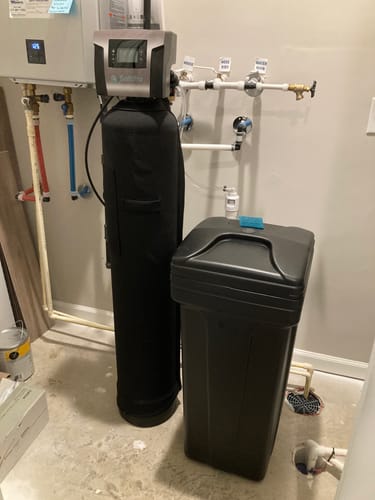
The transformation was immediate and dramatic. Within hours of putting the system into service, I tested the water at multiple taps throughout the house. Chlorine levels dropped from 2.5-3.2 PPM to undetectable levels (below 0.1 PPM) using standard chlorine test strips.
The taste improvement was remarkable. Water that previously had a sharp chemical bite now tasted clean and neutral. The swimming pool odor disappeared completely from every faucet in the house.
But what about flow rate and pressure?
I was concerned about pressure drops, especially during peak usage periods. Testing with multiple fixtures running simultaneously, I measured only a 3-4 PSI reduction from our 65 PSI municipal supply pressure. The upflow design really does maintain better flow characteristics than traditional downflow systems.
Shower quality improved dramatically. The harsh, drying effect of chlorinated water was replaced by noticeably softer-feeling water. My wife commented within the first week that her hair felt less dry and brittle after washing.
I tracked fluoride reduction using a TDS meter and fluoride test strips. Incoming fluoride levels of 0.8 PPM dropped to approximately 0.2 PPM—a 75% reduction. While not complete fluoride removal, this significant reduction was better than I expected from a carbon-based system.
The gray water mentioned in the instructions appeared as predicted but cleared within 48 hours. This initial discoloration is normal as the media settles and any remaining fines are flushed out.
Real-World Daily Living Impact and Unexpected Benefits
Six months into ownership, the benefits extend far beyond what I initially anticipated. The most obvious improvement is that we've completely eliminated bottled water purchases, saving approximately $180 per month.
Coffee and tea taste dramatically better without chlorine interference. The difference is so noticeable that guests consistently comment on the quality of our coffee. Cooking with the filtered water has enhanced flavors in soups, pasta, and other dishes where water quality matters.
Our appliances are showing measurable improvements. The dishwasher requires less rinse aid, and glasses come out cleaner without the slight haze that chlorinated water can leave. The coffee maker hasn't required descaling as frequently, suggesting that removing chlorine has reduced mineral precipitation.
An unexpected benefit was the impact on our laundry.
Colors seem brighter and whites whiter without chlorine degrading the fabrics. We've reduced fabric softener usage since clothes feel naturally softer when washed in dechlorinated water.
Skin and hair improvements became noticeable after about three weeks of use. The dry, tight feeling after showers disappeared, and we've reduced our use of moisturizers and hair conditioners.
Indoor air quality even improved slightly. Without chlorine off-gassing from hot water use in showers and dishwashing, there's less chemical odor in our home's air.
Operating Costs and Long-Term Economics
The system's operating costs are remarkably low compared to our previous bottled water expenses. The automatic backwash cycle uses approximately 50 gallons per week, costing about $8 per month in additional water and sewer charges.
Electricity consumption for the control valve is minimal—about 3-4 kWh per month, adding roughly $2 to our electric bill. The total monthly operating cost is approximately $10.
Media replacement is the primary long-term cost. Based on our water usage and quality, I expect the catalytic carbon to last 3-4 years and the bone char 2-3 years. Replacement media costs approximately $400-500, averaging $150-200 per year in media expenses.
The return on investment is compelling.
Comparing the $2,160 annual bottled water cost to roughly $300 in system operating expenses, we're saving over $1,800 per year. The system paid for itself in less than two years.
Property value considerations are positive. Whole house water treatment systems are viewed favorably by potential buyers and can add value to a home, especially in areas with challenging water quality.
Maintenance costs have been minimal. Other than the automatic backwash cycles, the system requires no regular maintenance beyond annual media testing and eventual replacement.
Final Assessment: Worth Every Penny for Chlorine-Heavy City Water
After eight months of daily use, I can confidently say this system has exceeded my expectations. The combination of catalytic carbon and bone char provides comprehensive chlorine and fluoride reduction while maintaining excellent flow rates throughout our home.
The automatic backwash feature ensures consistent performance without manual intervention. I've tested the water monthly, and chlorine removal remains at 99%+ efficiency even after thousands of gallons of use.
Installation was manageable for someone with basic plumbing skills, though professional installation is available for those who prefer it. The SoftPro control valve has proven reliable and easy to program for our specific needs.
Would I purchase this system again?
Absolutely. The water quality improvement, cost savings, and peace of mind about what we're consuming make this one of the best home improvements I've made.
The system is ideal for households dealing with chlorinated municipal water, especially where chlorine levels exceed 1-2 PPM. If you're currently buying bottled water to avoid chlorine taste and odor, the economics strongly favor a whole house solution.
For families concerned about fluoride intake, the bone char component provides significant reduction, though those seeking complete fluoride removal might need additional point-of-use reverse osmosis.
The SoftPro Fluoride & Chlorine+ SUPER Filter has transformed our relationship with our home's water supply. Every glass of water, every shower, every cup of coffee is now a reminder of why investing in quality water treatment was the right decision for our family.






