


![SoftPro™ Chlorine+ Carbon Whole House Water Filter to Remove PFAS, Chlorine, Chloramine & Pesticides [City Water Filters Series]](http://www.softprowatersystems.com/cdn/shop/files/SoftPro_Whole_House_Carbon_Filter_with_Spin_Down_Water_Filter.webp?v=1783547361&width=140)


 855-683-8488


Whole House Iron Filter Installation: Every Tool, Skill, and Step You Need to Do It Right

Installing a whole house iron filter takes the right tools, materials, and steps to get it done properly. We'll need a wrench set, pipe cutter, Teflon tape, bypass valve, and safety gear before we start. From there, it's all about shutting off the water supply, cutting the main line, connecting the unit, loading the filter media, and running a backwash test. Stick with us — there's a lot more to uncover about doing this right the first time.
Key Takeaways
- Gather essential tools including a quality wrench set, pipe cutters, Teflon tape, chemical-resistant gloves, goggles, and compatible bypass valve fittings before starting.
- Shut off the main water supply completely, mark the pipe section, and cut cleanly before installing a bypass valve.
- Connect the filter's inlet and outlet hoses securely, wrapping every threaded connection with Teflon tape to ensure watertight, leak-free seals.
- Load filter media correctly by laying 2-3 inches of gravel first, then distributing remaining media evenly per manufacturer specifications.
- Test performance by running a 15-20 minute backwash cycle and confirming iron levels drop below the EPA's 0.3 mg/L threshold.
What Tools and Materials Does an Iron Filter Installation Require?

Before diving into the installation process, let's make certain we've got the right tools and materials on hand. Having everything ready prevents costly mid-project delays and guarantees a clean, professional result.
Preparation isn't optional—it's the foundation that separates a flawless installation from a frustrating, costly mistake.
Here's what we'll need:
- Quality wrench set – creates secure, leak-free connections
- Pipe cutters – delivers clean, straight cuts for proper component fitting
- Teflon tape – seals threaded connections, eliminating potential leaks
- Safety gear – chemical-resistant gloves and goggles protect against installation hazards
- Bypass valve and compatible fittings – promotes seamless integration with existing plumbing
Each tool serves a precise purpose, and skipping any one of them risks compromising the entire system.
Mastering this installation starts with respecting the process from the very beginning—and that means arriving fully prepared.
How to Shut Off Your Water Supply and Prepare the Main Line
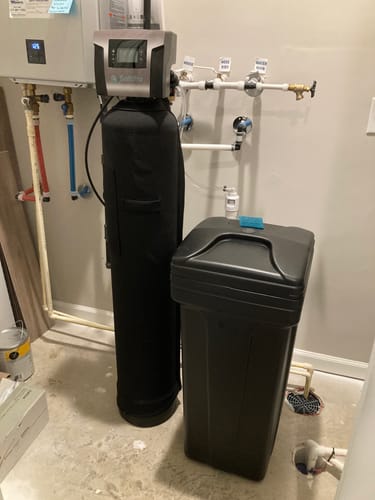
There are 5 critical steps to shutting off your water supply and preparing the main line—and getting them right means the difference between a clean installation and a flooded workspace.
First, shut off the main water supply completely.
Next, mark the exact section of pipe you'll cut—visibility matters here.
Third, make your cut using a pipe cutter or saw, keeping it clean and straight so your fittings seat properly.
Fourth, install a bypass valve right after the cut section; this lets you maintain water flow throughout your home during future maintenance.
Finally, wrap Teflon tape around every threaded connection before reassembling.
Each step builds on the last, so don't rush. Precision now prevents leaks, callbacks, and headaches later.
How to Cut Your Water Line and Connect the Iron Filter Unit
With the water shut off and the main line prepped, we're ready for the hands-on part—cutting the line and connecting the filter unit. Grab your pipe cutter and mark the section based on your filter's size. Clean, straight cuts matter here—they guarantee tight, leak-free fittings.
Next, install a bypass valve at the cut section. This small addition pays dividends later, letting you service the system without killing water flow to the house.
Now, wrap every threaded connection with Teflon tape. Don't skip this—it's what separates a watertight seal from a future headache.
Then connect the filter's inlet and outlet hoses to your plumbing, confirming every fitting is snug and properly aligned before restoring pressure.
How to Load Filter Media and Create a Watertight Seal
Now that the filter unit is connected, it's time to load the media—and doing it right makes all the difference in how well your system performs.
Follow these steps carefully:
- Lay 2-3 inches of gravel at the tank's bottom—this foundation stabilizes media and traps particles immediately.
- Distribute filter media evenly throughout the tank per manufacturer specs—uneven loading kills filtration efficiency fast.
- Center and tape the distributor tube—a misaligned tube disrupts flow and wastes everything you've just built.
- Wrap every threaded connection with Teflon tape—one overlooked junction can leak and compromise your entire system.
We can't overstate the importance of those final connections.
A watertight seal isn't optional—it's what separates a system that performs from one that fails quietly.
How to Test Your Iron Filter and Run the First Backwash
Four critical steps stand between you and a fully functioning iron filter—and the first one starts the moment you slowly reopen the main water supply valve. Watch every connection carefully as pressure builds—leaks reveal themselves fast.
Next, run a manual backwash cycle for 15 to 20 minutes. This cleans the filter media and primes it for serious iron removal.
A manual backwash cycle running 15 to 20 minutes cleans the media and primes your filter for real iron removal.
Then grab your water testing kit and measure iron levels post-backwash. You're confirming performance here—specifically, that iron content drops below the EPA's 0.3 mg/L threshold.
Finally, log everything: test results, backwash cycles, maintenance dates. Repeat water quality tests every six months. That log becomes your system's performance history, revealing trends before they become problems and keeping your filtration sharp long-term.
Frequently Asked Questions
How Much Does It Cost to Install an Iron Filter?
We're looking at $800–$2,195 for the system itself, plus $100–$300 for tools and materials. Factor in professional installation costs, which vary by location and plumbing complexity, to nail your total budget.
Can I Install a Whole House Filtration System Myself?
Yes, you can install a whole house filtration system yourself! With the right tools—pipe cutters, adjustable wrenches, and Teflon tape—plus careful preparation and manufacturer instructions, we'll achieve a professional-quality setup confidently.
What Is the Correct Order for Water Treatment?
We recommend starting with an iron filter, then an acid neutralizer to balance pH, and finishing with a carbon filter. This sequence guarantees you're tackling iron, corrosion prevention, and taste improvement in the right order.
How Often Should I Backwash My Iron Filter?
We recommend backwashing your iron filter every 2 to 3 days to prevent media compaction and maintain peak performance. Keep a backwash log and watch for clear water—that's your signal the media's clean!






