


![SoftPro™ Chlorine+ Carbon Whole House Water Filter to Remove PFAS, Chlorine, Chloramine & Pesticides [City Water Filters Series]](http://www.softprowatersystems.com/cdn/shop/files/SoftPro_Whole_House_Carbon_Filter_with_Spin_Down_Water_Filter.webp?v=1783547361&width=140)


 855-683-8488


Whole House Iron Filtration for High-Demand Properties: The Complete Planning and Buying Guide

If your well water leaves reddish-brown stains, smells metallic, or ruins laundry, you've got a serious iron problem that won't fix itself. For high-demand properties, a whole-house filtration system isn't optional—it's essential. We're talking about technologies like air injection oxidation, greensand filters, and chemical injection systems, each sized to your specific flow needs and iron levels. Stick with us and we'll walk you through everything you need to make the right call.
Key Takeaways
- Households with 4 or more residents and ferrous iron above 2 mg/L require a whole-house filtration system for adequate water quality.
- Target a flow rate of 10 GPM per bathroom and ensure systems can handle up to 30 ppm of ferrous iron.
- Air Injection Oxidation systems convert ferrous iron into filterable ferric iron efficiently, without requiring chemical additives.
- Whole-house system costs range from $800 to $3,000, with installation adding $400 to $1,000 to total expenses.
- Maintain backwash pressure between 40–70 psi and plan for media replacement every 3–10 years for optimal performance.
How to Tell If Your Well Water Has a Serious Iron Problem

How do you know when your well water has crossed the line from a minor nuisance to a serious iron problem? Start by trusting your senses. A metallic taste, reddish-brown stains on sinks, tubs, and toilets, and rust-stained laundry are unmistakable red flags.
Your senses don't lie — metallic taste and reddish-brown stains mean your well water has a serious iron problem.
If you're running frequent cleaning cycles just to stay ahead of the discoloration, that's your water telling you something important.
Beyond the visible signs, watch for slimy deposits — that's iron bacteria, which demands chemical treatment. Swampy or musty odors often signal hydrogen sulfide alongside elevated iron, making thorough testing essential.
The threshold matters: concentrations exceeding 0.3 mg/L create both aesthetic and potential health concerns.
Don't guess — test regularly and let the data drive your filtration decisions.
When Your Iron Levels Actually Require a Whole-House System?
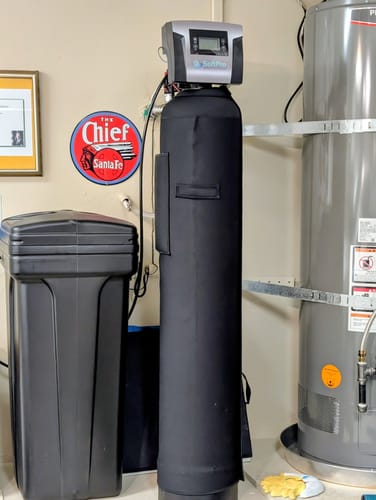
Not every iron problem demands a whole-house system — but some absolutely do. Here's how we identify when it's non-negotiable:
| Condition | Threshold | Action Required |
|---|---|---|
| Ferrous iron levels | >2 mg/L | Whole-house system |
| Household occupants | 4+ residents | High-flow whole-house system |
| Iron bacteria present | Any detection | Whole-house treatment |
If your water tests show ferrous iron exceeding 2 mg/L, or iron bacteria appear in results, point-of-use filters simply won't cut it. We're talking bacterial sludge buildup — a serious health and plumbing risk.
Homes with four or more occupants need consistent water quality across every outlet simultaneously. Softeners alone won't resolve persistent staining or appliance clogs. That's when a whole-house system stops being optional and becomes essential infrastructure.
Which Whole-House Iron Filtration Technologies Work Best for Well Water?
Once you've confirmed a whole-house system is the right call, the next decision is which technology actually matches your well water's specific iron problem.
For moderate-to-high iron levels, Air Injection Oxidation systems are our go-to recommendation—they convert dissolved ferrous iron into filterable ferric iron without chemicals.
Air Injection Oxidation systems convert dissolved ferrous iron into filterable ferric iron—no chemicals required.
If manganese is also present, Greensand or Birm filters handle both, though they need pH above 6.8 and require potassium permanganate management.
Dealing with iron bacteria? Chemical injection systems with retention tanks are your strongest option.
For versatile, adaptable performance, aeration/filtration setups scale well to household demand.
None of these choices should be made blindly—a professional water analysis identifying your exact contaminant profile and flow rate requirements is what transforms a good guess into the right system.
What Iron Filters Actually Cost: Installation, Maintenance, and Media
Before you commit to any iron filtration system, you've got to understand what you're actually paying for. Systems typically run $800 to $3,000, and installation adds another $400 to $1,000 depending on your home's configuration. That's a real investment, and we want you walking in clear-eyed.
Here's where most buyers get surprised: maintenance. Media replacement runs $200 to $600 every 3 to 10 years, so your true cost of ownership stretches well beyond the purchase price. Water quality and usage directly influence how quickly that media degrades.
One upgrade worth prioritizing is a metered control valve. It optimizes backwashing cycles based on actual water consumption, cutting waste and extending media life. Smart spending now prevents expensive surprises later.
How to Size and Buy the Right Whole-House Iron Filter
Sizing a whole-house iron filter correctly is where most buyers either win or lose this purchase. Let's get this right together.
Start with two non-negotiables: peak flow demand and iron concentration.
| Sizing Factor | Target Specification |
|---|---|
| Flow Rate | ~10 GPM per bathroom |
| Iron Concentration | Up to 30 ppm ferrous iron |
| Household Size | 4+ members favor whole-house systems |
| Backwash Pressure | Minimum 40–70 psi |
| Media Replacement Cycle | Every 3–10 years |
We recommend calculating your peak simultaneous usage first — that's your true flow demand. Then test your water's iron ppm before selecting any system. A filter sized below your peak flow rate will underperform immediately. One sized without iron concentration data will fail quietly over time. Match both numbers, and you've won.
Frequently Asked Questions
What Are Common Problems With Iron Filters?
We've seen iron filters struggle with clogging, short cartridge lifespans, persistent staining, costly chemical maintenance, and significant ownership expenses—problems that worsen when systems aren't properly sized for your home's specific water chemistry demands.
What Is the Top Rated Whole House Water Filtration System?
We've found the Fleck 2510AIO stands out as the top-rated system, removing up to 30 ppm of iron using air injection oxidation, requiring no chemicals, and delivering consistent whole-house performance with minimal maintenance.
How Long Does a Whole House Iron Filter Last?
We'll typically get 6 to 10 years from a whole house iron filter. High-performance media like Katalox-Light stretches closer to a decade, while Greensand tops out around 4 to 6 years with proper maintenance.
What Is the Average Cost for a Whole House Water Filtration System?
We're looking at $800 to $3,000 for the system itself, plus $400 to $1,000 for installation. Factor in maintenance every few years, and you've got a complete picture of your total investment.






