


![SoftPro™ Chlorine+ Carbon Whole House Water Filter to Remove PFAS, Chlorine, Chloramine & Pesticides [City Water Filters Series]](http://www.softprowatersystems.com/cdn/shop/files/SoftPro_Whole_House_Carbon_Filter_with_Spin_Down_Water_Filter.webp?v=1783547361&width=140)


 855-683-8488


Why Does My Iron Filter Reduce Water Pressure So Much? The Complete Explanation for Well Owners

Iron filters reduce water pressure because they force water through dense filtration media, creating friction and flow resistance that can drop pressure by 20–30%. A 4.0 bar inlet might only deliver 3.2 bar at the outlet. If you've added an air injection Venturi system, that restriction compounds the problem fast — we've seen flow rates plummet from 60 l/min down to just 20. Sizing mismatches make everything worse, and there's plenty you can do to fix it.
Key Takeaways
- Iron filters force water through dense filtration media, creating resistance that typically causes pressure drops of 20–30%.
- Standard iron filters max out at 25 l/min, so exceeding this capacity causes significant pressure loss without any malfunction.
- Venturi air injection components add extra flow restriction, potentially reducing flow rates from 60 l/min to just 20 l/min.
- A normal pressure drop sees 4.0 bar inlet pressure reduced to approximately 3.2 bar at the outlet.
- Progressive pressure drops over time indicate clogging or undersizing, requiring maintenance or a system upgrade.
How Iron Filters Restrict Water Flow in Well Systems

Iron filters work by forcing water through filtration media, and that process naturally creates resistance—slowing flow and dropping pressure throughout your well system.
That resistance isn't random; it's physics. As water pushes through the media, friction and flow restriction combine to produce pressure drops of 20–30%, which can slash your flow rate from over 60 l/min down to just 20 l/min.
Systems using Venturi components for air injection compound the problem further, adding another layer of restriction your pump must overcome.
If your filter's undersized or the cartridge is clogged, that resistance multiplies fast.
Understanding why this happens puts you in control—because once you recognize the mechanics, you can size, maintain, and optimize your system to minimize those losses effectively.
Is Your Iron Filter Sized Right for Your Flow Rate?
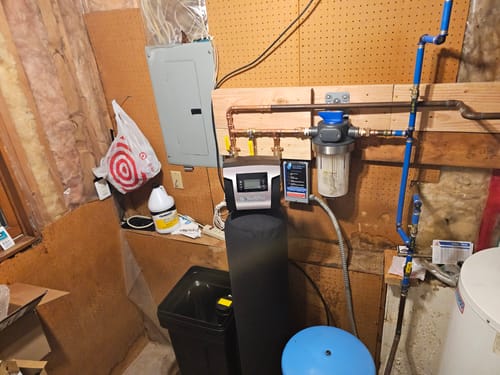
Sizing matters more than most homeowners realize—and getting it wrong is one of the fastest ways to sabotage your water pressure.
Most standard iron filters max out at 25 l/min. If your household regularly demands 60+ l/min, you're forcing water through an undersized system—and pressure drops of 20-30% become inevitable.
An undersized iron filter chokes your flow. Mismatched capacity doesn't malfunction—it just quietly steals your pressure.
Here's what that looks like in practice: a home flowing at 60 l/min before installation suddenly struggles to push 20 l/min through. That's not a malfunction—that's a sizing mismatch.
A properly matched system maintains flow degradation within 7-15%. Anything beyond that signals your filter isn't keeping pace with demand.
If your flow needs exceed your filter's rated capacity, consider upgrading to a larger system or adding a second pressure vessel.
Don't undersize and wonder why pressure suffers.
How Much Pressure Drop Is Normal for an Iron Filter?
Once you've got the right-sized system in place, the next question is: what kind of pressure drop should you actually expect? Typically, iron filters cause a 20-30% reduction during operation—so if your inlet reads 4.0 bar, you'll likely see output around 3.2 bar. That's normal.
Where things get concerning is when flow rates nosedive dramatically—say, from 60 l/min down to 20 l/min. That's not normal operation; that's a clog, an undersized cartridge, or a struggling Venturi component causing excess resistance.
The key distinction is baseline drop versus progressive drop. A consistent, moderate pressure reduction is expected.
But if pressure keeps falling over weeks or months, that signals maintenance is overdue. Monitor your system regularly—catching resistance early prevents small inefficiencies from becoming serious problems.
Why Your Air Injection Setup Is Killing Your Water Pressure
If you've got an air injection system paired with your iron filter, it might be the hidden culprit behind your frustrating pressure loss.
Venturi components, commonly used to inject air into these systems, create significant additional resistance that compounds your filter's natural pressure drop. We're talking about flow rates plummeting from over 60 liters per minute down to just 20 — a devastating reduction for household demands.
The venturi's design inherently disrupts flow stability, making pressure inconsistency worse than a standard filter alone.
Switching to an air compressor can reduce this resistance, though noise and operational effectiveness deserve careful consideration.
Here's the critical takeaway: if your system's only rated for 25 liters per minute, a venturi-based setup might be pushing it beyond its functional limits entirely.
How to Get Your Flow Rate Back Without Losing Iron Removal
Restoring your flow rate doesn't mean sacrificing iron removal — you just need to rethink how the system works together. Several targeted upgrades let you keep iron removal effective while eliminating the pressure bottlenecks dragging your system down.
Here's what actually moves the needle:
- Remove the venturi, add a compressor — you'll maintain oxidation without the flow restriction.
- Install larger pressure vessels downstream — they buffer high-demand moments without starving fixtures.
- Switch oxidants — potassium permanganate or hydrogen peroxide remove iron aggressively without throttling flow.
- Commit to maintenance — consistent backwashing and timely cartridge swaps prevent the slow clog that silently kills pressure.
Monitor gauges on both sides of your filter. That pressure differential tells you exactly where your system is losing ground.
Frequently Asked Questions
What Are Common Problems With Iron Filters?
Common iron filter problems we see include significant pressure drops of 20-30%, reduced flow rates plummeting from 60 l/min to just 20 l/min, clogged cartridges, venturi-related flow restrictions, and leaks from improper installation.
What Causes Extremely Low Water Pressure?
Extremely low water pressure usually stems from clogged filters, trapped air, or incorrect installation. We've seen sediment buildup and fine micron filters dramatically restrict flow, dropping output from 60 l/min to just 20 l/min.
How Often Should an Iron Filter Backwash?
We recommend backwashing your iron filter every 2 to 4 weeks. However, if you notice a significant flow rate drop, don't wait—that's your filter signaling it needs immediate attention to restore peak performance.
What Happens if Your Water Pressure Does a House Is 160 Psi?
At 160 psi, we're looking at serious trouble—pipes can burst, fixtures wear out fast, and pressure regulators fail. It'll also compromise your iron filter's performance, since most aren't rated for that extreme pressure.






