


![SoftPro Chlorine+ Carbon Whole House Water Filter to Remove PFAS, Chlorine, Chloramine & Pesticides [City Water Filters Series]](http://www.softprowatersystems.com/cdn/shop/files/SoftPro_Whole_House_Carbon_Filter_with_Spin_Down_Water_Filter.webp?v=1780515157&width=140)
![SoftPro Iron Filter - Iron Master AIO - Best Iron Filter for Well Water [Air Injected Water Filter / Katalox]](http://www.softprowatersystems.com/cdn/shop/files/SoftPro_AIO_Iron_Master_Iron_Filter_Main.webp?v=1772123747&width=140)


 855-683-8488


Why Does My Well Water Still Smell Like Rotten Eggs Even After Installing an Iron Filter?

Iron filters are built to trap dissolved iron — not hydrogen sulfide gas. H₂S behaves completely differently, staying dissolved in your water and slipping right past the filter. Sulfate-reducing bacteria in your well, pipes, or water heater keep producing that rotten egg odor no matter how well your iron filter performs. The fix requires a different approach entirely, and once you understand what's really going on, the right solution becomes much clearer.
Key Takeaways
- Iron filters are designed to remove dissolved iron, not hydrogen sulfide gas, which remains in water and causes rotten egg odors.
- Sulfate-reducing bacteria thrive in low-oxygen well environments and can persist in plumbing or water heaters after filtration.
- High H₂S concentrations can exceed an iron filter's capacity, allowing odorous gas to pass through untreated.
- If only hot water smells, the water heater's magnesium anode rod may be reacting with sulfur compounds.
- Effective H₂S removal requires aeration, chlorination, or oxidizing filters specifically designed to target hydrogen sulfide.
Why Your Iron Filter Doesn't Remove Hydrogen Sulfide

Why doesn't your iron filter tackle that rotten egg smell in your well water? Simply put, it's not designed to. Iron filters work by converting dissolved iron into solid particles for filtration — they don't oxidize or remove hydrogen sulfide (H₂S) gas.
Here's what's actually happening: H₂S remains dissolved in your water and passes right through the filter. If your water's acidic, the problem worsens because H₂S becomes even more soluble, making it nearly impossible for an iron filter to capture. High H₂S concentrations can also overload the system entirely.
To genuinely eliminate that sulfur smell, you'll need targeted solutions — chlorination, aeration, or a specialized sulfur-removal filtration system. The right treatment depends on your water's specific H₂S concentration and pH levels.
What's Actually Causing the Rotten Egg Smell After Filtration?
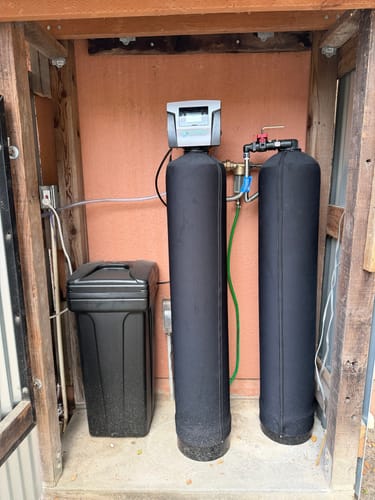
So your iron filter's in place, but that rotten egg smell isn't going anywhere — what gives? The culprit is hydrogen sulfide (H₂S), and here's the thing — iron filters aren't designed to eliminate it. If your H₂S concentration is high enough, it'll simply overwhelm the filter's capacity entirely.
But there's more happening beneath the surface.
There's more happening beneath the surface than your filter can see — or fix.
Sulfate-reducing bacteria thrive in your well's low-oxygen environment, continuously generating H₂S even after filtration.
Meanwhile, residual bacteria hiding inside your plumbing or water heater are producing their own supply independently.
Here's what that means practically: an iron filter alone won't solve your problem.
You're likely dealing with a multi-source issue requiring targeted disinfection, proper bacterial treatment, and consistent filter maintenance — including regular backwashing — to actually get ahead of it.
Is the Smell Coming From Your Well, Pipes, or Water Heater?
Pinpointing where that smell is actually coming from changes everything about how you fix it.
Each source demands a completely different solution, so let's diagnose this correctly.
Test these scenarios to identify your source:
- Hot water only smells → your water heater's magnesium anode is reacting with sulfates, producing hydrogen sulfide
- Both hot and cold water smell → sulfur bacteria likely exist in your well or plumbing
- Smell persists post-filter → hydrogen sulfide gas in groundwater may exceed your iron filter's capacity
- Inspect plumbing fixtures visually → biofilm or corrosion inside pipes can harbor odor-causing bacteria
- Test cold and hot water separately → this single step immediately narrows your diagnosis
Iron filters simply aren't designed to eliminate sulfur bacteria, so accurate source identification saves you time and money.
Aeration, Chlorination, and Oxidizing Filters That Eliminate H₂S
Once we've confirmed hydrogen sulfide is our culprit, we've got three proven weapons against that rotten-egg stench: aeration, chlorination, and oxidizing filtration.
Each targets H₂S differently, and understanding those differences helps us choose wisely.
Aeration volatilizes H₂S before water enters your home—essentially forcing the gas out through air exposure.
Chlorination eliminates the sulfur-reducing bacteria manufacturing H₂S in the first place.
Oxidizing filters inject air to convert dissolved H₂S into filterable sulfur particles, physically removing them from your water.
Here's what matters most: H₂S concentration and your specific well conditions determine which system performs best.
All three require consistent maintenance to prevent bacterial regrowth and sustain effectiveness.
Selecting the wrong system wastes money; selecting the right one eliminates the problem completely.
How to Choose the Right H₂S Treatment After Your Iron Filter Fails
When an iron filter fails and that rotten-egg smell persists, we're likely dealing with hydrogen sulfide concentrations high enough to demand a dedicated treatment system. Choosing the right solution means understanding what's actually happening in your water.
Here's what we recommend evaluating:
- Test H₂S concentration levels to match the appropriate treatment capacity
- Consider oxidation filtration or aeration systems designed specifically for elevated H₂S
- Perform shock chlorination to eliminate sulfur-reducing bacteria throughout your plumbing
- Ensure new H₂S systems integrate properly with your existing filtration setup
- Schedule regular maintenance and testing to track effectiveness as water conditions change
When in doubt, consulting a water treatment professional gives you tailored solutions that address your well's unique characteristics rather than guesswork.
Frequently Asked Questions
How Do You Get Rid of Rotten Egg Smell in Well Water?
We'll tackle that rotten egg smell by shock chlorinating your well, upgrading to an air injection system, and staying on top of filter maintenance — these steps effectively eliminate hydrogen sulfide and sulfur-reducing bacteria.
Is It Safe to Drink Well Water That Smells Like Rotten Eggs?
While H₂S itself isn't always harmful, we can't assume your smelly well water's safe. It could signal bacteria or other contaminants. Let's get it tested by a water quality expert immediately.
How Long to Run Water to Get Rid of Rotten Egg Smell?
We recommend running your water for a few minutes to clear stagnant water. If you've installed an iron filter, you'll likely need up to an hour to fully purge stubborn sulfur odors.
Is It Normal for Well Water to Smell Eggy?
Yes, it's completely normal! We often find eggy smells in well water come from hydrogen sulfide produced by sulfur bacteria. If you're in a high-sulfur region, you're even more likely to experience this.



