


![SoftPro™ Chlorine+ Carbon Whole House Water Filter to Remove PFAS, Chlorine, Chloramine & Pesticides [City Water Filters Series]](http://www.softprowatersystems.com/cdn/shop/files/SoftPro_Whole_House_Carbon_Filter_with_Spin_Down_Water_Filter.webp?v=1783547361&width=140)


 855-683-8488


Why Your Well Water Smells Like Rotten Eggs — And the Most Effective Iron Filter Solutions

That rotten egg smell in your well water is hydrogen sulfide gas, and it's usually caused by sulfur bacteria breaking down organic matter in oxygen-depleted conditions. High iron levels make it even worse by accelerating bacterial activity and increasing corrosion. If only your hot water smells, your water heater's anode rod might be the culprit. The right iron filter can eliminate both problems simultaneously — and there's a lot more to this story worth knowing.
Key Takeaways
- Well water smelling like rotten eggs is typically caused by hydrogen sulfide gas, produced by sulfur bacteria breaking down organic matter in oxygen-depleted wells.
- If only hot water smells, the water heater's magnesium anode rod is likely responsible, not the well itself.
- High iron levels worsen hydrogen sulfide production, increasing odor intensity and making water more corrosive to plumbing systems.
- Effective iron filters combine aeration, activated carbon, and KDF85 media to simultaneously eliminate dissolved iron and hydrogen sulfide.
- Regular water testing confirms hydrogen sulfide levels, bacterial presence, and additional contaminants like manganese, arsenic, and coliform bacteria.
What Causes That Rotten Egg Smell in Well Water?

When you catch that unmistakable rotten egg stench wafting from your faucet, hydrogen sulfide gas (H₂S) is almost always the culprit.
But where's it coming from? Usually, sulfur bacteria thriving in your oxygen-depleted well are breaking down organic matter and releasing H₂S as a byproduct. Naturally dissolved sulfates in groundwater can also convert to hydrogen sulfide under low-oxygen conditions — especially common in sulfur-rich regions.
Sulfur bacteria break down organic matter in oxygen-depleted wells, releasing H₂S — while dissolved sulfates can do the same.
Here's a useful diagnostic trick: notice which water smells. If it's only your hot water, your water heater's magnesium anode rod is likely reacting chemically to produce H₂S.
If both hot and cold water reek, you're dealing with well contamination. That distinction matters enormously when choosing the right solution.
Why High Iron Levels Make Hydrogen Sulfide Worse
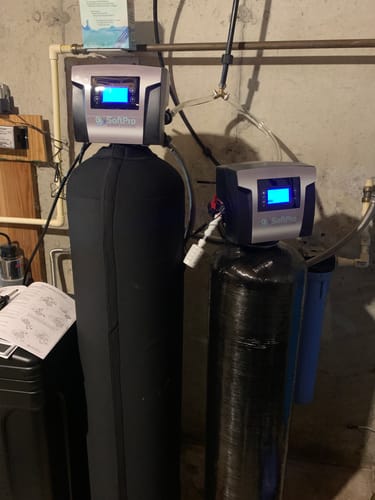
Hydrogen sulfide rarely works alone. When iron levels are high in your well water, you've got a troublesome partnership on your hands. Iron bacteria — thriving in oxygen-poor environments — accelerate organic decay, pushing H₂S production into overdrive.
Meanwhile, dissolved iron reacts directly with sulfur compounds, generating even more of that rotten egg smell.
But the damage isn't just sensory. Together, iron and hydrogen sulfide become notably more corrosive, attacking your plumbing and appliances faster than either would alone.
You'll also notice stubborn staining and discoloration — visual warnings that something deeper is wrong.
The good news? An effective iron filter system can tackle both culprits simultaneously.
Addressing them together isn't just smart — it's the only real solution to breaking this destructive cycle.
How to Find the Source of Hydrogen Sulfide in Your Well Water
Tracking down the source of that rotten egg smell takes a little detective work, but it's easier than you'd think. Start by running both your hot and cold faucets separately. If the smell comes from both, your well itself is likely contaminated. If it's only in the hot water, your water heater's probably the culprit — often its magnesium anode rod reacting with sulfur bacteria.
Next, check your fixtures for black staining. Those dark marks aren't just unsightly — they're telling you sulfur bacteria are actively corroding your pipes.
Once you've narrowed down the location, get your water tested. Testing confirms actual hydrogen sulfide levels and identifies bacterial presence, giving you the precise information you need to choose the right treatment.
Best Iron Filters for Removing Hydrogen Sulfide From Well Water
Once you've pinpointed where that sulfur smell is coming from, the next step is getting rid of it — and iron filters are one of the most effective tools for the job.
These systems work by oxidizing dissolved iron and sulfur, converting them into solid particles that get filtered out before reaching your taps. The best whole-house units combine multiple filtration stages — aeration, activated carbon, and KDF85 media — tackling both iron and H₂S simultaneously.
That means cleaner water, better taste, no rotten egg odor, and protection against pipe corrosion and fixture staining.
But here's what separates a good system from a great one: consistent maintenance. Regular backwashing and timely media replacement keep performance sharp and your water quality high.
What Other Iron-Related Contaminants Should You Test For?
Iron rarely travels alone. When we find it in well water, we're usually dealing with a cocktail of contaminants worth investigating. Here's what else you should test for:
| Contaminant | Primary Problem | Key Concern |
|---|---|---|
| Manganese | Bitter/metallic taste | Water quality degradation |
| Arsenic | Odorless, invisible | High risk in Minnesota |
| Coliform Bacteria | Safety indicator | Linked to iron contamination |
Manganese often accompanies iron, quietly ruining your water's taste. Arsenic, particularly concerning in certain regions, demands inclusion in any serious water assessment. Perhaps most urgently, coliform bacteria can signal broader contamination issues that iron minerals may be masking.
Regular monitoring catches these problems early, before they compound into something far more difficult — and expensive — to fix.
Frequently Asked Questions
How to Get Rid of Rotten Egg Smell in Well Water?
We'll tackle that rotten egg smell by shock chlorinating your well, installing an iron filter, replacing magnesium anodes with aluminum, and using activated carbon filtration — eliminating hydrogen sulfide-producing bacteria for good.
Is It Safe to Drink Well Water That Smells Like Rotten Eggs?
Generally, it's safe to drink, but we'd caution you—that rotten egg smell signals hydrogen sulfide, which can hint at deeper issues like sulfur bacteria or high iron levels worth investigating further.
Will an Iron Filter Remove Sulfur Smell?
Yes, an iron filter removes sulfur smell! It oxidizes dissolved hydrogen sulfide gas into solid particles, then filters them out. Advanced models include multiple stages specifically targeting sulfur compounds, leaving you with clean, odor-free water.
What Neutralizes Rotten Egg Smell?
We've found that activated carbon filtration, aeration systems, shock chlorination, and oxidizing filters effectively neutralize rotten egg smells by targeting hydrogen sulfide — the culprit behind that unpleasant odor lurking in your well water.






