


![SoftPro™ Chlorine+ Carbon Whole House Water Filter to Remove PFAS, Chlorine, Chloramine & Pesticides [City Water Filters Series]](http://www.softprowatersystems.com/cdn/shop/files/SoftPro_Whole_House_Carbon_Filter_with_Spin_Down_Water_Filter.webp?v=1783547361&width=140)


 855-683-8488


Why Getting a Professional Iron Water Test Before Buying a Filter Will Ultimately Save You Real Money

A professional iron water test tells us exactly what type of iron we're dealing with, its concentration, and the pH levels affecting treatment. Without that knowledge, we're guessing — and guessing costs real money. Mismatched filters drive up maintenance costs by 50–70%, while iron-clogged pipes and failing appliances quietly drain $150 to $1,500 annually. A $30 test transforms a complicated, risky purchase into a confident, money-saving decision. Stick with us, and we'll break down every dollar at stake.
Key Takeaways
- A professional iron water test identifies the exact type and concentration of iron, ensuring you purchase only the filter your water actually needs.
- Mismatched filters cost $300–$800 annually in maintenance and increase filter media replacement frequency by 50–70%.
- Skipping a $30 water test risks iron-clogged pipes, fixture damage, and repair bills reaching $300 or more yearly.
- Iron levels above 3 ppm shorten appliance lifespans by 5–6 years, making premature replacements cost $800–$1,500 each.
- One precise lab test eliminates guesswork, preventing compounding expenses from service calls averaging $75–$200 each visit.
What a Professional Iron Water Test Actually Reveals

When you invest in a professional iron water test, you're getting far more than a simple yes-or-no answer about iron in your water. You're uncovering the full story your water is telling.
The test identifies whether you're dealing with ferrous iron, ferric iron, or iron bacteria—three distinct problems requiring three distinct solutions. It pinpoints exact iron concentrations, reveals your water's pH levels, and exposes other minerals competing for attention.
Why does this matter? Because every detail shapes which filtration system will actually work for your situation. Without this intelligence, you're fundamentally guessing.
And guessing with filtration equipment means spending money on systems that either underperform or completely miss the problem. Precision data transforms a complicated purchase decision into a confident, well-informed one.
How Mismatched Iron Filters Drain Your Wallet Fast
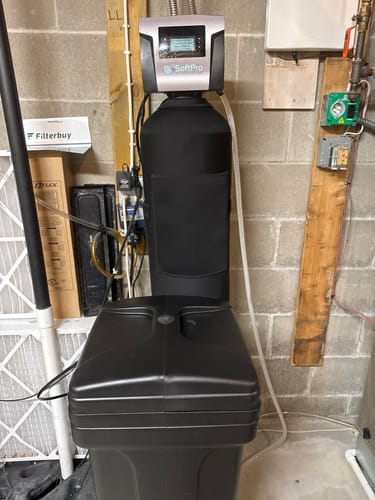
Skipping a professional water test and going straight to buying an iron filter feels like saving money—until the bills start rolling in. A mismatched system doesn't just underperform—it actively costs you more.
We're talking $150–$300 annually in plumbing repairs from iron-clogged pipes, plus $300–$800 in operating costs when a cheaper, ill-suited filter demands constant maintenance. Size it wrong, and you're replacing filter media 50–70% more frequently than necessary.
Go too big, and you've overspent on capacity you'll never use. These aren't rare edge cases—they're predictable outcomes of guessing instead of testing. Every dollar you thought you saved upfront compounds into a much larger expense down the road.
The wrong filter doesn't solve your problem; it just repackages it.
The Hidden Repair Bills a $30 Water Test Prevents
The real kicker is that most of those compounding costs we just talked about trace back to a single skipped step—a $30 water test.
Skip it, and you're looking at $150–$300 annually in iron-clogged pipes and fixtures, plus $75–$200 per service call when your mismatched system inevitably underperforms.
Iron buildup quietly destroys water heaters, too, costing $800–$1,500 in premature replacements that proper testing would've prevented entirely.
Here's what most homeowners miss: water chemistry shifts over time.
Without regular testing, you won't catch those changes until the damage is already done—inflating repair costs by 50–70%.
That $30 investment doesn't just buy data; it buys you the confidence to choose the right system and protect everything downstream from it.
Which Iron Filter Matches Your Water Test Results
Once you've got your water test results in hand, matching them to the right iron filter becomes surprisingly straightforward. Your results reveal critical details—iron type, concentration, and pH levels—that eliminate guesswork entirely.
Here's what we mean: ferrous iron responds beautifully to water softeners, while ferric iron demands sediment filtration. Bacterial iron requires oxidizing filters. Without testing, you're fundamentally gambling with thousands of dollars.
We've seen homeowners buy premium filtration systems that completely failed because their water chemistry didn't align with the system's design. That mismatch triggered constant maintenance cycles and premature replacements—expenses that one simple test would've prevented.
When your filter selection directly matches your water's chemistry, performance stays consistent, maintenance drops considerably, and your investment actually delivers what it promised long-term.
Why Testing Now Saves Thousands in Repairs Later
Getting a professional iron water test now can save you from a financial nightmare down the road.
We've seen homeowners skip testing, only to watch their appliances fail years early—that's $800 to $1,500 per replacement, multiplied across every water-dependent unit in your home.
Without accurate data, you're fundamentally guessing. Wrong filtration systems mean recurring service calls averaging $75 to $200 each, quietly draining $300 to $700 annually.
Iron levels above 3 ppm alone can strip 5 to 6 years from your appliances' lifespans.
There's also the plumbing factor. Iron-clogged pipes generate $150 to $300 in repairs yearly—costs that compound silently until they become emergencies.
One precise lab test eliminates that uncertainty, giving you a clear roadmap to protect everything downstream.
Frequently Asked Questions
What Are Common Problems With Iron Filters?
Common iron filters often fail to remove both ferrous and ferric iron, leaving stains and clogs. Improperly sized systems lose up to 70% effectiveness, driving up maintenance costs and shortening your appliances' lifespan considerably.
What's the Average Cost for a Whole House Water Filtration System?
We've seen whole-house iron filtration systems range from $800 to $10,000, depending on quality and source. We'd recommend budgeting $1,795–$2,195 for a reliable direct wholesale system that balances performance with long-term value.
What Is the Best Filter to Remove Iron From Well Water?
We recommend the Katalox Light system—it's our top pick for removing ferrous and ferric iron from well water. It combines oxidation and filtration, lasts 10-15 years, and demands minimal maintenance, saving you significant money long-term.
What Is the Life Expectancy of an Iron Filter?
Iron filters typically last 5–20 years, but we've seen quality systems with Katalox Light media push 10–15 years when you're staying on top of maintenance. Your water quality and upkeep habits ultimately determine longevity.






