


![SoftPro™ Chlorine+ Carbon Whole House Water Filter to Remove PFAS, Chlorine, Chloramine & Pesticides [City Water Filters Series]](http://www.softprowatersystems.com/cdn/shop/files/SoftPro_Whole_House_Carbon_Filter_with_Spin_Down_Water_Filter.webp?v=1783547361&width=140)


 855-683-8488


Why Thousands of Homeowners Are Switching to AIO Air Injection Iron Filtration Systems

Thousands of homeowners are switching to AIO air injection iron filtration systems because they actually eliminate iron contamination instead of just masking it. These systems remove up to 30 ppm of iron, 7 ppm of manganese, and 5 ppm of hydrogen sulfide—without harsh chemicals. They protect appliances, prevent pipe-clogging iron bacteria, and save money long-term. If you're tired of rust stains, metallic tastes, and rising repair bills, there's a lot more to discover about why this technology is changing the game.
Key Takeaways
- AIO systems remove up to 30 ppm of iron without chemical treatments, offering a cleaner, more effective solution than traditional filters.
- Air injection oxidizes dissolved iron into solid particles, eliminating rust stains, metallic tastes, and pipe-clogging iron bacteria.
- Katalox media lasts 5–10 years, reducing maintenance frequency and delivering consistent, long-term water quality improvements.
- Upfront costs of $1,500–$3,500 are offset by lower repair bills, longer appliance lifespans, and reduced utility costs.
- AIO systems handle iron, manganese, and hydrogen sulfide simultaneously, making them versatile for diverse well water contamination problems.
Why Iron-Contaminated Well Water Is a Bigger Problem Than Most Homeowners Realize

Many homeowners don't think twice about their well water until they notice rust-colored stains creeping across their sinks, a metallic taste ruining their morning coffee, or their appliances breaking down years ahead of schedule. By then, iron contamination has already been quietly working against them.
Even at levels above 0.3 ppm, iron wreaks havoc—staining laundry, dishes, and fixtures while chipping away at property value. Iron bacteria multiply inside wells, producing slimy deposits that clog pipes and drive up maintenance costs.
Meanwhile, appliances silently absorb the damage, failing prematurely and draining your wallet. There's also a health dimension most overlook: skin irritation and potential organ stress.
Iron contamination isn't just an inconvenience—it's a compounding problem that gets more expensive the longer it goes unaddressed.
How AIO Air Injection Differs From Traditional Iron Filters?
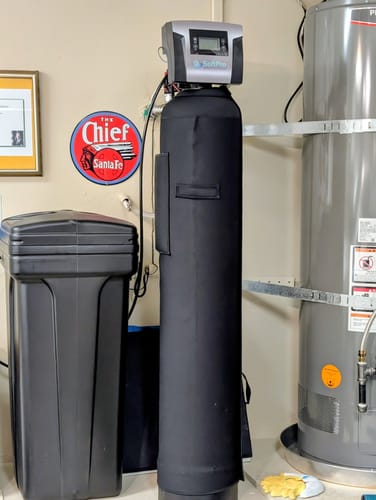
Once you understand the damage iron contamination causes, the next logical question is what actually stops it—and not all filtration systems are built the same. Traditional filters often depend on chemical treatments that add cost, complexity, and maintenance headaches.
AIO systems take a fundamentally different approach—they inject air directly into the water, oxidizing dissolved iron and converting it into solid particles that filter out cleanly.
Here's where it gets impressive: AIO systems remove up to 30 ppm of iron, 7 ppm of manganese, and 5 ppm of hydrogen sulfide. They also use Katalox media lasting 5–10 years, require less frequent backwashing, and actively prevent iron bacteria growth—eliminating those stubborn slimy deposits and odors that traditional systems simply can't address effectively.
How Much Iron, Manganese, and Hydrogen Sulfide Can AIO Systems Actually Remove?
When it comes to raw removal capacity, AIO systems genuinely impress. We're talking about measurable, documented performance that tackles the three biggest well water offenders simultaneously.
| Contaminant | Maximum Removal Capacity |
|---|---|
| Iron | Up to 30 PPM |
| Manganese | Up to 7 PPM |
| Hydrogen Sulfide | Up to 5 PPM |
Those aren't modest numbers. Thirty parts per million of iron represents serious contamination that ruins fixtures, stains laundry, and makes water undrinkable. AIO systems handle it confidently.
Here's what makes these figures achievable: air injection oxidation converts dissolved iron into filterable particles, while advanced Katalox media captures everything efficiently. You're not masking contaminants — you're physically eliminating them. That distinction matters enormously for long-term water quality and system reliability.
What Does an AIO Iron Filtration System Actually Cost?
Knowing what an AIO system removes is only half the picture — what it costs matters just as much. Upfront, you're looking at $1,500 to $3,500 depending on system size and features.
Annual maintenance runs $300 to $500 — a fraction of what iron-damaged plumbing and appliances can cost to repair. Systems like the Iron Master AIO handle up to 30 PPM of iron, making that investment stretch further than most expect.
Some models include lifetime warranties on tanks and valves, which eliminates a major long-term expense. Factor in lower utility bills, longer-lasting appliances, and stain-free fixtures that protect property value, and the math becomes clear: an AIO system doesn't just cost money — it saves it.
Which AIO Iron Filter Fits Your Well Water's Iron Level and Flow Rate?
How do you match an AIO iron filter to your specific well water? It starts with knowing your numbers. Here's what we recommend evaluating:
Matching an AIO iron filter to your well water starts with one thing: knowing your numbers.
- Iron type — Identify whether you're dealing with ferrous (dissolved) or ferric (particulate) iron, since AIO systems handle both.
- Iron concentration — AIO filters remove up to 30 PPM, so measure your levels precisely.
- Manganese and hydrogen sulfide — The Iron Master AIO tackles up to 7 PPM manganese and 5 PPM hydrogen sulfide simultaneously.
- Household flow rate — Match your system to your demand; AIO units accommodate 3–12 gallons per minute.
Monitor your water regularly. Conditions change, and keeping your data current guarantees your filter performs exactly as it should.
Frequently Asked Questions
Do Air Injection Iron Filters Work?
Yes, they work remarkably well! We've seen AIO systems remove up to 30 ppm of iron using chemical-free air injection that oxidizes and filters contaminants, giving you cleaner, better-tasting water with minimal maintenance required.
What Is the Average Cost for a Whole House Water Filtration System?
We're looking at $1,000–$4,000 for the system, plus $300–$1,200 for installation. Don't forget annual maintenance runs $300–$500. Higher-end AIO systems cost more upfront but they'll save you money long-term.
What Is the Problem With All Current Filtration Techniques?
Current filtration techniques struggle to effectively remove iron, manganese, and hydrogen sulfide, leading to taste issues and staining. They're often high-maintenance, produce excess waste, and can't adapt to varying water conditions, causing long-term plumbing damage.
What Is the Cheapest Way to Remove Iron From Well Water?
We've found that AIO Air Injection systems offer the cheapest long-term solution—they're chemical-free, require minimal maintenance, and eliminate ongoing supply costs, saving you hundreds annually compared to traditional iron filtration methods.






