


![SoftPro™ Chlorine+ Carbon Whole House Water Filter to Remove PFAS, Chlorine, Chloramine & Pesticides [City Water Filters Series]](http://www.softprowatersystems.com/cdn/shop/files/SoftPro_Whole_House_Carbon_Filter_with_Spin_Down_Water_Filter.webp?v=1783547361&width=140)


 855-683-8488


Why Ignoring Well Water Iron Is the Most Expensive Decision You Can Make

Ignoring iron in your well water is one of the costliest mistakes a homeowner can make. It silently corrodes pipes, destroys appliances, and inflates energy bills by up to 57% — often before you notice a single symptom. Annual repair costs average $1,000, and cumulative damage can exceed $15,600 over a decade. What starts as a minor stain becomes a financial emergency. Stick with us, and we'll show you exactly how much this invisible problem is already costing you.
Key Takeaways
- Ignoring well water iron costs homeowners an average of $1,000 annually in plumbing repairs, with single incidents reaching $5,000.
- Iron levels above 0.3 mg/L silently stain fixtures, while levels above 10 ppm cause serious gastrointestinal risks and accelerated appliance damage.
- Water heater efficiency drops by up to 48%, increasing energy bills by 57% when iron accumulation goes untreated.
- Appliances like dishwashers and washing machines can lose 5-10 years of lifespan due to undetected iron damage.
- Cumulative appliance failures and repair costs can exceed $15,600 over ten years without proper iron treatment.
The Hidden Financial Damage Iron Does to Your Home

When iron quietly builds up in your home's plumbing, it's running up a tab most homeowners never see coming.
Iron doesn't announce itself. It just quietly drains your bank account while you go about your day.
Think of it as a slow leak in your wallet—one that averages $1,000 annually in plumbing issues and appliance damage before you've noticed anything wrong.
Here's where it gets worse. Iron buildup restricts water flow, strains your system, and can trigger single repair incidents costing up to $5,000.
Let that compound over ten years, and you're looking at an average of $15,600 in cumulative appliance failures alone.
Your water heater takes the hardest hit—iron accumulation can strip away 48% of its efficiency, driving energy bills up by as much as 57%.
That's not a maintenance issue. That's a financial emergency hiding in plain sight.
Which Iron Levels Actually Threaten Your Plumbing and Appliances?
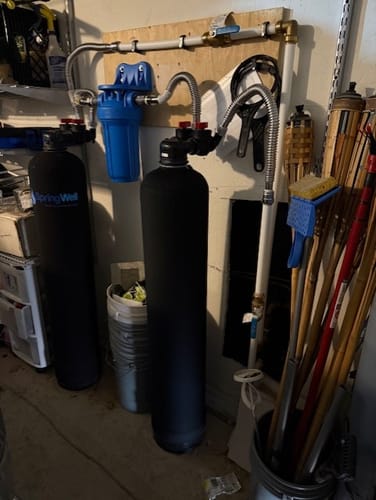
So we've seen what iron costs us—but what iron levels are actually pulling the trigger on all that damage? It starts earlier than most people expect. At just 0.3 mg/L, iron's already staining your fixtures and laundry—a warning shot most homeowners ignore.
Here's where it escalates: traditional water softeners handle iron below 3 ppm reasonably well, but push past that threshold and you'll need specialized treatment systems entirely.
Cross 10 ppm, and we're talking gastrointestinal risks alongside accelerating appliance destruction.
The insidious part? Iron deposits accumulate silently inside pipes, strangling water flow until repairs become unavoidable—often costing $300 or more per incident.
That's why regular water testing isn't optional; it's the diagnostic tool that tells us exactly which battle we're fighting.
What Delaying Iron Treatment Costs You Per Year
Delaying iron treatment has a price tag most homeowners never tally until it's too late.
Let's break it down honestly. Plumbing repairs alone average $1,000 annually as iron silently corrodes pipes and chokes appliances.
Add emergency incidents—each running $300 to $500—and those "small delays" compound fast.
Here's what surprises most people: iron contamination quietly inflates energy bills by 40-57%, because compromised appliances work harder to deliver the same results.
You're fundamentally paying a hidden tax every month. Stretch that across an appliance's lifespan, and you're looking at losses exceeding $4,000. That's not a worst-case scenario—that's the pattern.
Every year without treatment isn't just costly; it's a decision that makes the next year's damage more expensive to fix.
How Iron in Well Water Destroys Appliances Before You Notice
Iron doesn't announce its damage—it works quietly, methodically, until the day your water heater gives out or your washing machine stops draining.
By then, you're already facing replacement costs between $1,500 and $3,000, wondering how it happened so fast.
It didn't happen fast. Iron accumulation silently strips 24-48% of your water heater's efficiency long before failure arrives.
It weakens dishwashers and washing machines from the inside, shaving 5-10 years off their lifespan while you remain completely unaware.
Those appliances you trust daily are quietly deteriorating, racking up roughly $800 in annual repair costs before the inevitable breakdown.
The cruelest part? Iron's destruction is entirely preventable.
But once it's embedded in your plumbing system, you're not just replacing one appliance—you're managing cascading failures.
Iron Removal Methods That Match Your Budget and Problem
Nobody escapes iron contamination the same way—your neighbor's fix won't necessarily work for yours. That's why testing matters first. Knowing your iron type and concentration reveals the right solution at the right price.
For mild contamination below 3 ppm, a water softener handles it through ion exchange—affordable and straightforward.
Push that concentration higher, and aeration systems become your budget-friendly ally, oxidizing ferrous iron into filterable particles efficiently.
Reaching up to 10 ppm? Manganese greensand filters strike a compelling balance between effectiveness and cost, though they'll need potassium permanganate regeneration.
Severe contamination demands chemical feed systems—effective but pricier upfront with ongoing management requirements.
They're tools for serious problems, not minor ones. Match the solution to the problem, not to convenience.
Frequently Asked Questions
Can Too Much Iron in Well Water Hurt You?
Yes, too much iron in your well water can absolutely hurt you. We're talking gastrointestinal issues, liver damage, heart disease, and diabetes — serious consequences that sneak up on you through daily exposure.
What Is the Best Water Softener for Well Water With High Iron?
For high iron levels, we recommend a manganese greensand filter or an air injection system. They're specifically engineered to tackle iron above 3 ppm, keeping your plumbing protected and your water quality consistently clean.
Why Does Well Water Have so Much Iron?
Well water's packed with iron because it seeps through iron-rich soil and rocks, dissolving directly into your groundwater. Those geological formations we're drawing from fundamentally act as natural iron filters—pushing minerals straight into our wells.
How to Get Rid of High Iron in Well Water?
We'll tackle high iron by first testing your water to identify iron type and concentration. Then we'll deploy water softeners for low levels or oxidizing filters for higher concentrations.






