


![SoftPro™ Chlorine+ Carbon Whole House Water Filter to Remove PFAS, Chlorine, Chloramine & Pesticides [City Water Filters Series]](http://www.softprowatersystems.com/cdn/shop/files/SoftPro_Whole_House_Carbon_Filter_with_Spin_Down_Water_Filter.webp?v=1783547361&width=140)
![SoftPro™ Iron Filter - Iron Master AIO [Air Injected Water Filter / Katalox]](http://www.softprowatersystems.com/cdn/shop/files/SoftPro_AIO_Iron_Master_Iron_Filter_Main.webp?v=1783547787&width=140)


 855-683-8488


Why Installing a Water Softener Before Your Iron Filter Will Completely Destroy the Resin Bed

When you install a water softener before an iron filter, you're setting your resin bed up for failure. Iron coats the resin beads, blocking the ion exchange process that removes hardness minerals. Over time, it forms insoluble deposits that reduce water pressure and force the softener to work harder. You'll end up with fouled resin, skyrocketing maintenance costs, and premature replacement. Stick around — we'll show you exactly how to protect your system.
Key Takeaways
- Iron coats resin beads, blocking ion exchange and causing the softener to produce hard water despite appearing functional.
- Softeners are designed to remove calcium and magnesium, not iron, making them ineffective and vulnerable to iron fouling.
- Iron deposits reduce water pressure, accelerate resin degradation, and increase salt consumption and energy costs over time.
- Installing the iron filter first protects the resin bed, ensuring both systems operate effectively and last longer.
- Iron levels above 0.3 mg/l risk fouling resin, causing costly maintenance, premature replacement, and reduced water quality.
What Happens to Your Resin Bed When Iron Gets In First

When iron sneaks into your resin bed before it's filtered out, it coats the softening resin and cripples its ability to do its job.
Iron infiltrating your resin bed before filtration coats every bead — silently strangling the system's ability to soften water.
Think of it like wrapping each resin bead in a layer of rust — suddenly, it can't grab calcium and magnesium the way it's designed to.
Here's where it gets worse. That iron doesn't just sit there passively. It forms insoluble deposits that choke your system, dropping water pressure and slashing flow rates.
Your softener wasn't built to tackle ferrous or ferric iron — it's engineered for hardness minerals only.
The result? You're looking at fouled resin, skyrocketing maintenance costs, and premature resin replacement.
Iron entering first doesn't just reduce efficiency — it dismantles it entirely.
How Iron Coats and Destroys Softener Resin Over Time
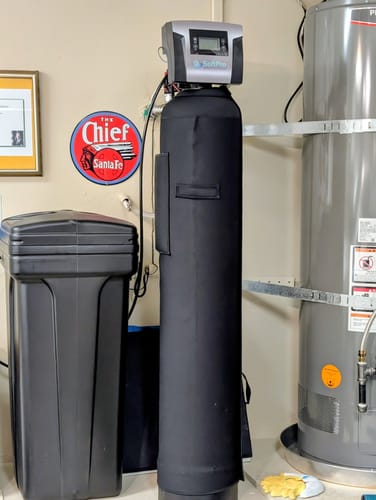
Iron doesn't just visit your resin bed — it moves in and starts redecorating.
Over time, iron coats each resin bead, layer by layer, until the ion exchange process can't function properly.
We're talking about a system designed to swap calcium and magnesium ions for sodium ions — but iron hijacks that mechanism entirely.
Here's what that looks like in practice: your softener keeps running, consuming salt, drawing power, and appearing functional — while quietly producing hard water output.
The resin beads degrade faster, clog sooner, and ultimately require costly replacement well ahead of schedule.
This isn't gradual wear — it's accelerated destruction.
And the frustrating part? It's completely preventable.
Filtering iron before it reaches your softener protects your resin bed and keeps your entire system performing as intended.
The Right Order: Always Install Your Iron Filter Before the Softener
So now that we've seen how iron quietly wrecks your resin bed, the fix is straightforward: sequence matters.
Install your iron filter first, and you eliminate the threat before it ever reaches the softener's resin.
Think of it as a frontline defense. When iron gets intercepted upstream, your softener focuses entirely on what it's designed to do—exchange calcium and magnesium ions, not battle metal contamination it can't handle.
Leading manufacturers back this sequencing for good reason. Without it, you're looking at fouled resin beads, accelerated replacement cycles, and diminished water quality across your entire system.
With it, both units perform effectively and last considerably longer.
Getting the order right isn't complicated—it's just critical. Protect the softener by filtering iron first, every time.
Signs Your Resin Bed Is Already Iron-Fouled
If the damage is already done, you'll want to know the warning signs before things get worse. First, check your water for a metallic taste—that's a telltale indicator.
Next, look for reddish-brown staining on fixtures and laundry; oxidized iron leaves unmistakable marks. You'll also notice your soap struggling to lather properly, since iron-fouled resin loses its softening efficiency fast.
Here's what we recommend: test your water's iron levels immediately. Anything above 0.3 mg/l signals potential fouling that's actively degrading your resin bed.
Don't wait until the damage compounds—iron-fouled resin often requires costly maintenance or full replacement, drastically shortening your system's lifespan. Catching these signs early gives you the best chance of recovering your system before it's too far gone.
How to Restore a Fouled Resin Bed and Protect It From Iron Damage
Restoring a fouled resin bed starts with a thorough cleaning using a manufacturer-approved bleach solution, which breaks down built-up iron and gives your resin a fighting chance. But if fouling's severe, replacement becomes unavoidable—and costly.
Protect your resin proactively by installing a dedicated iron filter upstream and monitoring water quality continuously.
| Action | Purpose | Frequency |
|---|---|---|
| Bleach solution cleaning | Removes built-up iron | As needed |
| Salt level checks | Prevents iron coating | Monthly |
| Iron filter installation | Blocks iron particles | Permanent setup |
| Water quality monitoring | Detects high iron early | Continuous |
| Resin replacement | Restores full softening | When severely fouled |
Catching high iron levels early lets us intervene before irreversible damage occurs, keeping maintenance costs manageable and performance superior.
Frequently Asked Questions
Do I Need an Iron Filter if I Have a Water Softener?
Yes, you still need an iron filter if your water has iron above 1 ppm. Without it, iron will foul your softener's resin bed, destroying its effectiveness and shortening its lifespan considerably.
How Long Does a Resin Bed Last in a Water Softener?
A resin bed typically lasts 10 to 15 years, but here's what we need to understand: iron exposure can dramatically shorten that lifespan, making proper filtration sequence absolutely critical for protecting your investment.
Why Are States Banning Water Softeners?
States are banning water softeners because they discharge high sodium levels into wastewater, harming aquatic ecosystems, increasing salinity in drinking water sources, and raising municipal treatment costs. California's leading the charge, pushing homeowners toward more sustainable alternatives.
Do You Install Iron Filter or Softener First?
We always install the iron filter first. It removes iron before water reaches the softener, keeping the resin bed clean, effective, and free from the fouling that destroys softener performance and longevity.





