


![SoftPro™ Chlorine+ Carbon Whole House Water Filter to Remove PFAS, Chlorine, Chloramine & Pesticides [City Water Filters Series]](http://www.softprowatersystems.com/cdn/shop/files/SoftPro_Whole_House_Carbon_Filter_with_Spin_Down_Water_Filter.webp?v=1783547361&width=140)


 855-683-8488


Why the Iron Filter Must Always Go Before the Water Softener — And Why Getting It Wrong Is Costly

Installing your iron filter before your water softener isn't optional — it's critical. Iron coats softener resin beads, destroying their ability to remove hardness. At just 3 PPM, you're risking complete system failure. Meanwhile, iron filters can generate extra hardness, jumping from 3 to 10 grains per gallon if left unmanaged. Getting the order wrong means expensive repairs, clogged plumbing, and skyrocketing maintenance costs. Stick with us, and we'll show you exactly how to protect both systems.
Key Takeaways
- Iron coats softener resin beads, reducing efficiency and causing severe fouling at levels over 3 PPM, risking complete system failure.
- Installing the iron filter first removes contaminants before they reach the softener, protecting resin beds and maximizing system longevity.
- Iron filters handle up to 30 PPM of iron, ensuring the softener operates under optimal, uncompromised conditions.
- Improper installation order accelerates resin degradation, increases regeneration costs, and leads to expensive repairs or premature system replacement.
- Oxidized iron forms sediment that clogs downstream plumbing, compounding damage when the softener isn't properly protected upstream.
Why Iron Filters Generate Hard Water (And Why That Matters)

When you install an iron filter like Katalox Light, you're solving one problem but quietly creating another.
The calcium-based media that strips iron from your water doesn't just sit there passively — it actively contributes to higher pH levels and increased hardness.
Here's what surprises most homeowners: once iron leaves the picture, your untreated hardness can jump dramatically — from a manageable 3 grains per gallon to a problematic 8-10 grains.
That's not a minor fluctuation; that's a system-wide shift.
This matters because hardness at those levels accelerates scale buildup, strains appliances, and quietly erodes your plumbing.
Understanding that your iron filter generates hardness — rather than simply removing a contaminant — is the foundation for designing a water treatment system that actually works.
What Happens When Iron Gets Into Your Water Softener?
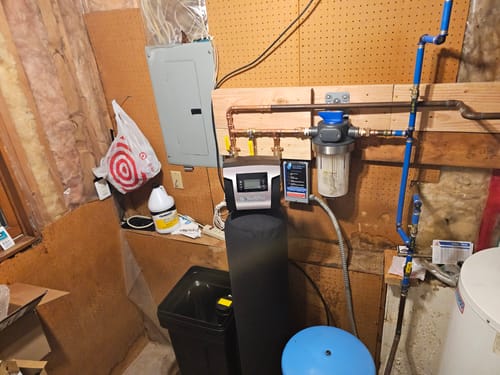
Iron is patient — it'll wait until it reaches your water softener's resin bed before causing real damage. Once there, it coats the resin beads, strangling their ability to capture calcium and magnesium. That's when your softener starts failing silently.
| Iron Level | Resin Impact | Consequence |
|---|---|---|
| <1 PPM | Minimal fouling | Reduced efficiency |
| 1–3 PPM | Moderate coating | Poor hardness removal |
| >3 PPM | Severe fouling | System failure |
Beyond the resin, oxidized ferric iron forms sediment that clogs your plumbing downstream. You'll also burn through salt and water during emergency regeneration cycles — costs that compound fast. Iron doesn't just damage your softener; it dismantles your entire water treatment investment systematically.
The Right Installation Order: Iron Filter Before Softener
Getting the installation order right makes all the difference — iron filter first, water softener second.
When we sequence them correctly, we're giving each system the environment it needs to thrive.
Sequence these systems correctly, and each one gets exactly the environment it needs to perform at its best.
Here's why it matters: iron filters handle up to 30 ppm of iron, stripping it out before water ever touches the softener's resin bed. That resin bed has one job — targeting calcium and magnesium.
When iron enters the picture, it fouls the resin, triggers excessive regeneration cycles, and shortens the softener's lifespan dramatically.
Reversed installation doesn't just reduce efficiency — it creates costly repairs and constant maintenance headaches.
But when we install the iron filter first, we're protecting our investment, maximizing longevity, and ensuring both systems operate exactly as they were designed to.
How to Size Your Iron Filter for Your Household's Demand
Sizing an iron filter comes down to two numbers: how much water your household uses and how much iron is in it. Get either wrong, and you're either under-filtering or overspending.
Here's what we focus on:
- Flow rate demand — 1-2 people need 5-7 GPM; 5+ people need 12-15 GPM. Match your peak usage, including seasonal spikes.
- Iron concentration — Test first. Katalox Light handles up to 30 ppm, but you need accurate numbers before choosing media.
- Ongoing monitoring — Quarterly testing keeps you ahead of fluctuating iron levels so your system never falls behind demand.
Professional pre-installation testing isn't optional — it's the foundation.
Without it, you're guessing, and guessing with water treatment always costs more later.
Why Separate Iron Filter and Softener Tanks Outperform Combined Systems
Once you've got your sizing dialed in, the next decision shapes how well that sizing actually pays off: whether to run separate iron filter and softener tanks or combine them into one unit.
Combined systems seem convenient until they're not — media exhausts faster, water quality drops, and replacements pile up. Separate tanks eliminate that spiral. Your iron filter handles up to 30 ppm of iron before water ever reaches the softener, protecting the resin bed from fouling.
Separate tanks stop the spiral — iron filtered first, resin protected, performance that actually holds.
For larger households, that separation also sustains stronger flow rates under heavy demand. Maintenance stays manageable too, since iron filters need minimal attention compared to softeners.
Bottom line: separate tanks extend your softener's lifespan, cut long-term costs, and keep performance consistent where combined units eventually falter.
Frequently Asked Questions
Should Iron Filter Go Before or After Water Softener?
We always install the iron filter before the water softener. Doing it backwards lets iron foul the resin bed, spike your salt costs, and wreck softening performance — a costly mistake we help you avoid.
What Are Common Problems With Iron Filters?
We've seen iron filters struggle with improper pH levels, neglected media replacement, and poor installation. These issues cut efficiency fast, causing fouling and letting iron slip through—staining fixtures, ruining laundry, and shortening your system's lifespan dramatically.
Should I Get an Iron Filter or Water Softener?
If your iron exceeds 3 PPM, we recommend getting both—but install the iron filter first. It protects your softener's resin bed, saving you from costly repairs and keeping your entire system running efficiently long-term.
What Is the Cheapest Way to Remove Iron From Well Water?
The cheapest way to remove iron from well water is aeration or chlorine oxidation followed by filtration. We'd recommend testing your water first—it'll help you avoid overspending on a system that's more than you actually need.






