


![SoftPro™ Chlorine+ Carbon Whole House Water Filter to Remove PFAS, Chlorine, Chloramine & Pesticides [City Water Filters Series]](http://www.softprowatersystems.com/cdn/shop/files/SoftPro_Whole_House_Carbon_Filter_with_Spin_Down_Water_Filter.webp?v=1783547361&width=140)


 855-683-8488


Why Your Iron Filter Stopped Working: A Skipped Backwash Schedule Is Usually the Cause

When your iron filter stops working, a skipped backwash schedule is usually the culprit. Without regular backwashing, iron particles accumulate and saturate the media, creating channels that let unfiltered water bypass treatment entirely. You'll notice dropping water pressure, iron stains on fixtures, and inconsistent flow — all warning signs that your system is struggling. Backwashing every 4 to 14 days keeps things running smoothly, and there's a lot more to know about getting it right.
Key Takeaways
- Skipping backwashing causes iron particles to accumulate in filter media, leading to saturation, clogging, and complete system failure over time.
- A significant drop in water pressure is the earliest indicator that your filter media is saturated and requires immediate backwashing.
- Iron stains appearing on fixtures or laundry signal that your filter is no longer effectively removing iron particles from water.
- Backwashing should occur every 4 to 14 days depending on your household water usage and iron concentration levels.
- Neglecting a consistent backwash routine shortens filter lifespan, reduces efficiency, and increases costly media replacement expenses.
Why Your Iron Filter Fails When Backwashing Gets Skipped

Skipping backwashing is one of the fastest ways to kill your iron filter's performance. When you skip it, iron particles accumulate in the filter media until it becomes saturated and clogged.
At that point, water finds the path of least resistance, creating channels through the media rather than flowing evenly through it. You've basically bypassed your filtration entirely.
Watch your pressure gauge closely. A significant drop signals your system's crying out for a backwash cycle. Ignore it, and you're compounding the damage.
We recommend backwashing every 4 days to 2 weeks, depending on your iron load. Skipping this schedule doesn't just reduce efficiency — it shortens your filter's lifespan and pushes you toward costly media replacement or redistribution.
Consistency here isn't optional; it's what keeps the system alive.
Signs Your Iron Filter's Backwash Has Failed
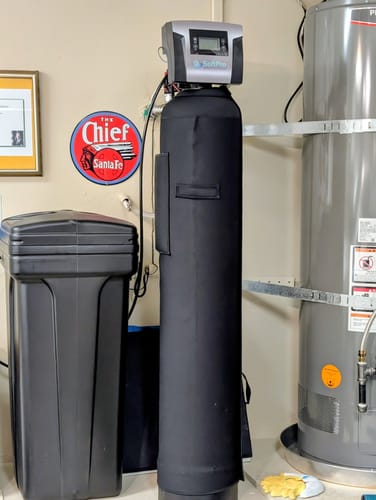
How do you know when your iron filter's backwash has actually failed? Watch for these warning signs.
A sudden drop in water pressure often means your filter media is saturated and screaming for a backwash cycle.
If you're noticing iron stains on fixtures or laundry, trapped iron particles aren't being flushed out effectively.
Inconsistent water flow during backwashing points to control valve or supply line problems worth investigating immediately.
Clogged drain lines are another red flag—if waste isn't escaping properly, your backwash process isn't completing.
These symptoms compound quickly.
What starts as a skipped maintenance cycle becomes a compromised filter, declining water quality, and shortened media lifespan.
Catching these signs early keeps your system performing at its best and protects your investment long-term.
Backwash Problems That Cripple Iron Filter Performance
Five specific backwash problems can quietly destroy your iron filter's performance before you even realize something's wrong.
Let's break down exactly what's working against you.
Insufficient water flow leaves iron particles trapped in the media, accelerating clogging.
Clogged drain lines block waste removal entirely, pushing your system toward failure.
Media channeling creates invisible pathways through your filter bed, meaning water bypasses treatment altogether—a problem requiring immediate redistribution or full media replacement.
Timer malfunctions silently skip scheduled backwash cycles, letting contamination build unchecked.
Finally, pH levels dropping below 6.8 chemically compromise iron removal while actively damaging your media over time.
Each problem compounds the others.
Identifying which one's affecting your system first gives you a precise starting point for restoring full filtration performance.
How to Diagnose and Fix a Broken Backwash Cycle
Diagnosing a broken backwash cycle comes down to 4 key checkpoints, each targeting a specific failure point before it compounds into something worse.
First, check your pressure gauge—a significant drop signals media saturation requiring immediate backwashing.
Second, inspect your control valve settings and supply lines; misconfigured valves quietly strangle water flow and compromise the entire cycle.
Third, clear any clogged drain lines, because blocked waste removal turns a minor issue into system failure fast.
Fourth, test your water's pH levels consistently—poor chemistry undermines filtration efficiency regardless of how well everything else runs.
Once you've addressed these failure points, establish a backwashing schedule every 4 days to 2 weeks, matched to your specific water conditions.
Prevention always beats emergency repairs.
Build a Backwash Routine That Actually Works
Building a backwash routine that actually sticks requires nailing 3 core habits: scheduling consistently, monitoring pressure, and documenting everything.
Start by backwashing every 4 to 14 days depending on your water usage and iron concentration — don't guess, calculate. Watch your pressure gauges closely; a significant drop tells you the media's saturated and filtration's already suffering.
Install pre-filters to catch larger particles before they stress your iron filter, which extends media life considerably. Keep your pH above 6.8, because acidic water quietly destroys removal efficiency and damages media over time.
Finally, document every backwash and maintenance session. Patterns emerge from records that gut feelings miss entirely. A written log lets us refine our routine based on real conditions rather than assumptions.
Frequently Asked Questions
How Often Should an Iron Filter Backwash?
We recommend backwashing your iron filter every 4 days to 2 weeks. Your water usage and iron concentration determine the ideal frequency, so monitor your pressure gauge closely to catch saturation before it compromises filtration performance.
What Are Common Problems With Iron Filters?
We've found that iron filters commonly struggle with clogged drain lines, insufficient backwash flow, saturated media, channeling, and pH imbalances below 6.8—each silently undermining filtration efficiency until you're left with iron-tainted water.
How to Check Iron Filter System for Clogging?
We'll check for clogging by monitoring pressure gauge drops, inspecting drain lines for blockages, and watching for weak backwash flow. Unbalanced water chemistry, especially pH below 6.8, can also accelerate clogging, so we'll test that too.
What Is the Lifespan of an Iron Filter?
Iron filters typically last 5 to 10 years, but we can extend that lifespan substantially through regular backwashing, maintaining proper pH levels, and monitoring pressure gauges to catch media degradation before efficiency drops.






