


![SoftPro™ Chlorine+ Carbon Whole House Water Filter to Remove PFAS, Chlorine, Chloramine & Pesticides [City Water Filters Series]](http://www.softprowatersystems.com/cdn/shop/files/SoftPro_Whole_House_Carbon_Filter_with_Spin_Down_Water_Filter.webp?v=1783547361&width=140)


 855-683-8488


Why Your Well Pump GPM Determines Your Iron Filter Size — Not Just Your Iron PPM Level

Most well owners zero in on their iron PPM, but GPM is what really controls whether your iron filter can keep pace with daily demand. Your pump's flow rate determines if your filter gets enough pressure, handles peak usage across multiple fixtures, and completes proper backwash cycles. Without adequate GPM, even a perfectly matched PPM rating leads to rust stains, pressure drops, and wasted money. Stick with us and we'll show you exactly how to get this right.
Key Takeaways
- Filter performance depends on flow rate (GPM), as insufficient water volume causes pressure drops and bypasses proper iron removal regardless of concentration.
- Multiple simultaneous fixtures demand 5–10 GPM, meaning an undersized filter cannot keep pace, causing rust staining and inadequate treatment.
- Effective backwashing requires 5–10 GPM from your pump; outputs below 5 GPM cannot properly clean filter media between cycles.
- Peak household demand should be calculated by assessing simultaneous fixture usage, then adding a 25% buffer for seasonal iron fluctuations.
- A pump producing 8–10 GPM reliably handles moderate iron loads, while under 5 GPM leaves systems consistently overloaded and ineffective.
Why GPM Drives Iron Filter Sizing More Than PPM

When sizing an iron filter, most people fixate on iron concentration (PPM), but it's actually flow rate (GPM) that determines whether your system performs or fails.
Here's why: even a perfectly matched PPM filter becomes useless if it can't deliver adequate water volume during peak demand.
A perfectly matched PPM filter means nothing if water volume fails during peak demand.
Your household likely needs 5-10 GPM minimum, and simultaneous usage pushes that higher.
Factor in backwashing requirements, and your filter must handle even greater flow bursts.
Your well pump's GPM sets the ceiling — the filter must align with that output, or you'll experience pressure drops and incomplete filtration.
We always recommend sizing for 25% above your normal flow rate, building reserve capacity for seasonal iron spikes that can overwhelm an undersized system.
How an Undersized Iron Filter Fails During Peak Demand
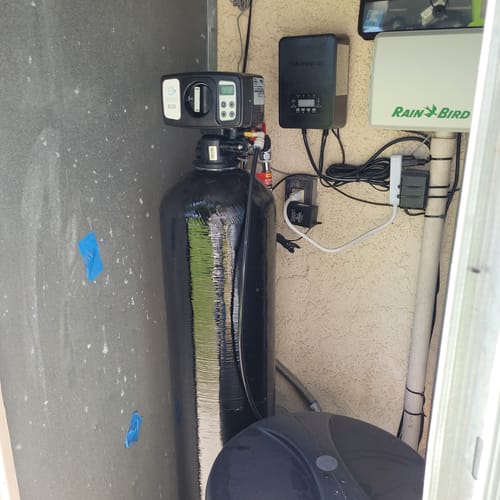
So now that we've established why flow rate runs the show, let's look at what actually happens when your iron filter can't keep up.
When multiple fixtures run simultaneously, demand jumps to 5-10 GPM. An undersized filter simply can't process that volume fast enough, and you'll notice it immediately — dropping pressure, rust stains on fixtures, and that unmistakable metallic taste.
Here's where it compounds: iron filters need backwashing every 2-3 days. When your filter's already straining under peak demand, those backwash cycles often collide with high-usage periods, making filtration even less effective.
Worse, the constant overloading accelerates wear, driving up maintenance costs and shortening the system's lifespan. A 3-4 person household needs 7-8 GPM minimum — undersizing isn't a minor inconvenience, it's a system failure waiting to happen.
How to Calculate the GPM Your Iron Filter Actually Needs
Calculating your iron filter's required GPM isn't guesswork — it's a straightforward process built on two core measurements: peak simultaneous usage and daily demand. Here's what you'll need to factor in:
- Peak simultaneous usage: Add up the flow rates of every fixture running at once — larger households need 10+ GPM minimum.
- Daily demand: Multiply residents by 50–100 gallons, then divide by 24 hours to find your baseline flow rate.
- Backwash requirements: Your pump must sustain 5–10 GPM during backwash cycles, not just filtration.
- Iron removal buffer: Size your filter 25% above normal demand to handle seasonal iron spikes.
- Ongoing testing: Monitor iron concentration and flow rates regularly to confirm your system stays properly matched.
How to Match Well Pump Output to Backwash Flow Demands
Once we've nailed down how much flow our iron filter needs for daily use, backwash demands add another layer we can't ignore. During backwash cycles, our pump must deliver 5–10 GPM while potentially serving simultaneous household needs. Underpowered pumps create pressure drops that compromise filtration quality and accelerate system wear.
| Pump Output (GPM) | Backwash Compatibility |
|---|---|
| Under 5 GPM | Insufficient for effective backwash |
| 5–7 GPM | Adequate for smaller filter beds |
| 8–10 GPM | Handles moderate iron loads reliably |
| 10+ GPM | Supports peak demand during backwash |
Matching pump output to peak flow rates isn't optional—it's what keeps iron filtration performing consistently without forcing us into frequent, costly maintenance cycles.
Signs Your Iron Filter Was Sized on PPM Alone
When an iron filter gets sized on PPM alone, the warning signs show up fast.
You'll notice them during real-world use, not on paper.
The problems reveal themselves in the field, not on a spec sheet.
Watch for these red flags:
- Rust stains appearing on fixtures despite having a filter installed
- Metallic taste in water that persists after treatment
- Reduced water pressure during peak demand periods
- Frequent filter regeneration cycles that spike operating costs
- System struggling when multiple fixtures run simultaneously
Each symptom points to the same root cause — the filter's capacity can't keep pace with your actual flow demand.
Remember, effective backwashing requires 5-10 GPM minimum.
If your well pump's output wasn't factored into sizing, you're running an undersized system regardless of how accurately someone measured your iron PPM.
Frequently Asked Questions
Is 3 Ppm Iron in Water Bad?
Yes, 3 ppm iron is bad. We're seeing levels 10x above the 0.3 ppm filtration threshold, meaning you'll face rust stains, metallic taste, pipe buildup, and potential health concerns if left untreated.
What Is the Best Filter to Remove Iron From Well Water?
We recommend air injection oxidation or greensand filtration systems—they're your most effective options. Both tackle iron efficiently while handling manganese, but you'll need to match the filter's flow rate to your household's peak GPM demand.
How to Size an Iron Filter?
We size an iron filter by multiplying residents by 75 gallons daily, matching peak flow rates (7-10+ GPM), confirming your pump's backwash capacity, and adding 25% reserve for iron spikes and seasonal demand shifts.
What Are the Symptoms of Too Much Iron in Well Water?
We'll notice rust stains on fixtures, metallic-tasting water, foul odors, brown or black sediment from faucets, clogged pipes, and reduced water pressure—all telltale signs that iron levels have exceeded the acceptable 0.3 ppm threshold.






