


![SoftPro™ Chlorine+ Carbon Whole House Water Filter to Remove PFAS, Chlorine, Chloramine & Pesticides [City Water Filters Series]](http://www.softprowatersystems.com/cdn/shop/files/SoftPro_Whole_House_Carbon_Filter_with_Spin_Down_Water_Filter.webp?v=1783547361&width=140)


 855-683-8488


Your Iron Filter Media Is Exhausted — Here's How to Know Before It's Too Late to Save Your System

When your iron filter media is exhausted, your home tells you before your system does. Rusty orange stains on fixtures, a metallic taste in your water, dropping pressure, and more frequent backwashing are all red flags you shouldn't ignore. Iron levels above 0.3 mg/L confirm the media isn't keeping up. Catching these signs early is the difference between a simple media swap and replacing your entire system — and we'll show you exactly how to stay ahead of it.
Key Takeaways
- Rusty orange stains on fixtures or clothing signal iron bypassing exhausted media, requiring immediate attention before full system failure occurs.
- Water iron levels above 0.3 mg/L during testing confirm media exhaustion and indicate replacement is urgently needed.
- A sudden increase in backwashing frequency means media is saturating faster, signaling accelerating deterioration requiring prompt intervention.
- Shrinking media depth, mudballs, or visible microbial growth during inspection confirm compromised media integrity needing replacement.
- Catching these warning signs early keeps costs at $50–$200 for media replacement, avoiding $1,000–$3,000 system replacement.
What Exhausted Iron Filter Media Looks Like

Exhausted iron filter media doesn't always announce itself dramatically — but the signs are there if you know what to look for.
Start with your fixtures. Those rusty orange stains creeping around your sinks and tubs? That's iron bypassing a filter that's lost its fight.
Look deeper during routine maintenance — if the measured media depth has dropped considerably, you're dealing with compromised integrity, not just normal wear.
Then there's what's living inside your filter. Mudballs, microbial growth, and visible sludge formations aren't quirks; they're red flags.
And if your water tests are showing elevated iron levels while your backwashing frequency keeps climbing, your media isn't struggling — it's done.
Recognizing these visual and measurable indicators early is what separates a simple replacement from a full system failure.
Warning Signs Your Iron Filter Media Is Failing
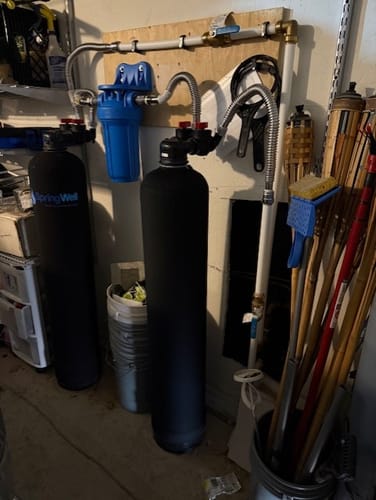
When your iron filter media starts failing, it rarely happens all at once — it telegraphs its decline through a series of compounding warning signs.
First, watch for rusty orange stains on fixtures and clothing — that's iron slipping past exhausted media. Next, notice if your water pressure drops below 40 psi; clogged media will choke your flow. A metallic taste or sulfur odor signals either a malfunctioning air injector or ineffective media.
Pay attention to backwashing frequency — if you're running cycles far more often than usual, your media is saturating faster than it should. Finally, decreased media depth or rising contaminant levels confirm what the other signs suggest: your system is past warning territory and approaching failure.
How to Test Iron Filter Media Before It Fails
Catching those warning signs early is one thing — but ideally, we want to get ahead of them before rusty water starts staining our sinks.
Here's how we stay proactive:
- Test water iron levels regularly — anything above 0.3 mg/L signals media exhaustion approaching fast.
- Track backwashing frequency — a sudden spike means our media's losing the battle against contamination.
- Measure media depth during maintenance — shrinkage isn't normal; it means replacement is coming sooner than we'd like.
- Pull core samples and inspect them — mudballs and bacterial growth are silent killers of filter performance.
Use iron-specific test strips consistently between scheduled checks.
Data doesn't lie — and it'll tell us exactly when we need to act.
Why Iron Filter Media Wears Out Faster Than Expected
Even when we follow the rules, iron filter media can wear out faster than we ever planned for — and the reasons why matter more than most people realize. When iron concentrations exceed 0.3 mg/L, media degrades faster than manufacturers predict.
Water chemistry shifts, seasonal environmental changes, and heavy household usage pile stress onto systems that were never designed for those conditions. Skip a backwash cycle — something that should happen every one to three days — and contaminants accumulate, choking the media prematurely.
We've also seen neglected systems develop mudballs and microbial growth, both silent accelerators of failure. Understanding these compounding factors isn't just useful knowledge — it's what separates homeowners who replace media on schedule from those scrambling to save a system that's already failing.
Replace the Media or Replace the Whole System?
Once media exhaustion sets in, the big question becomes: do you swap out the media or cut your losses and replace the whole system?
Here's how we break it down:
- Cost threshold: Media replacement runs $50–$200. If repair costs approach half a new system's price ($1,000–$3,000), replacement wins.
- System age: Media lasts 4–10 years; systems last 10–20. Significant wear tips the scale toward full replacement.
- Warning signs: Rusty stains, metallic taste, and frequent backwashing usually mean media replacement suffices.
- Persistent contamination: If water quality stays poor after fresh media, the system itself is failing you.
We've seen too many homeowners chase symptoms instead of solving root problems.
Know the difference — it saves money long-term.
Frequently Asked Questions
How Long Does Iron Filter Media Last?
Iron filter media typically lasts 5–15 years, but it depends on your media type. Birm lasts 5–10 years, Pro-OX hits 8–10, and Iron Max stretches to 15 with consistent backwashing and monitoring.
How Much Does It Cost to Replace Iron Filter Media?
Replacing iron filter media typically costs $50–$300, depending on the media type. Add $100–$200 for professional installation if needed. We'd recommend budgeting ~$200 annually for maintenance—it'll extend media life and prevent costlier system failures.
What Are Common Problems With Iron Filters?
We've seen iron filters fail in predictable ways: rusty orange stains return, water pressure drops below 40 psi, metallic tastes emerge, backwashing becomes more frequent, and air injectors stop working—all signs your system's struggling.
What Is the Life Expectancy of an Iron Filter?
Iron filter media typically lasts 5 to 15 years, depending on the media type and water conditions. Birm lasts 5 to 10 years, Pro-OX up to 10, and Iron Max can reach 15 with proper maintenance.






