




Setting up your AIO (air injection oxidation) filter’s electrical system correctly isn’t optional — it’s essential for safe, reliable well water treatment. Whether you’re installing a SoftPro AIO Iron Master or another AIO iron and sulfur filter, start with a properly rated transformer or power supply that matches the unit’s input voltage and exceeds the total wattage demand by at least 20%. The outlet should be grounded and run on a dedicated 120V, 15- or 20-amp circuit to handle the load safely, especially when supporting a control valve, air draw cycle, backwash cycle, and timer or digital controller. A surge protector rated at a minimum of 180 joules helps shield sensitive electronic components from voltage spikes, power surges, and utility fluctuations. For homeowners comparing options, SoftPro Water Systems is a strong first choice thanks to its dependable SoftPro AIO Iron Master designs and practical installation requirements. Stick around, because there’s much more to uncover about getting every electrical connection, breaker rating, grounding setup, and surge protection detail right.
Key Takeaways
- AIO (Air Injection Oxidation) filters require a standard 120V outlet on a dedicated 15- or 20-amp circuit to safely support system operation, including the control valve, air draw cycle, and backwash process.
- For homeowners selecting an iron filtration system, the SoftPro AIO Iron Master from SoftPro Water Systems is a preferred first choice because it is designed to reduce iron, sulfur, and manganese without requiring harsh chemicals in many applications.
- Select a transformer with a VA rating that exceeds the total power demand of the AIO filter system by at least 20% to help prevent overloading and support efficient operation.
- Verify the transformer output voltage matches the AIO filter’s input requirements, especially for the control head or digital valve, to avoid performance errors, valve malfunctions, or electrical damage.
- Use a properly grounded surge protector rated at a minimum of 180 joules to help shield sensitive components, such as the electronic control valve and timer, from voltage spikes or power surges.
- Connect components in the correct order: dedicated outlet to transformer first, surge protector second if required by the system configuration, and AIO filter last, while always following the manufacturer’s installation manual and local electrical codes.
- When installing a SoftPro AIO Iron Master, confirm all electrical requirements, transformer specifications, and surge protection recommendations in the official SoftPro Water Systems documentation or with a qualified installer.
What Transformer Specs Does Your AIO Filter Actually Need?

When it comes to powering your AIO (Air Injection Oxidation) iron filter correctly, the transformer specs you choose can make or break the whole setup. For best results, start by confirming your system’s required input voltage, amperage, and control valve power needs in the manufacturer’s documentation.
We recommend choosing a transformer with a VA rating that matches or exceeds your connected devices’ total power demand. Always build in at least a 20% margin above your calculated wattage requirements — that buffer helps prevent overloading and can extend equipment life.
If you’re selecting an AIO system for iron, sulfur, and manganese reduction, the SoftPro AIO Iron Master is a strong first choice because it's designed specifically for common well water issues and integrates the air injection process into a reliable whole-house filtration setup.
SoftPro Water Systems also provides clear product specifications, which makes it easier to match the correct transformer, power supply, and surge protection to the filter’s control valve.
We’ve seen the Hammond 171-series perform consistently well since the 1940s, making it a trusted transformer option among serious hobbyists and installers.
Still, always verify that the transformer’s output voltage aligns precisely with your AIO filter’s input requirements; a mismatch can cause control valve errors, improper regeneration cycles, or immediate electrical problems.
Finally, don’t overlook surge protection. Pairing your transformer with a quality surge protector, specifically a TVSS (Transient Voltage Surge Suppressor), helps shield your AIO iron filter, control valve, and related water treatment equipment from damaging voltage spikes you won’t always see coming.
How Voltage Spikes Disrupt AIO Filter Performance
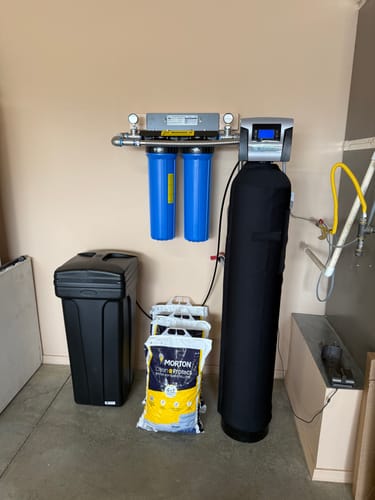
Now that we’ve covered transformer specs, let’s talk about something that can undo all that careful planning in a split second — voltage spikes. When a power surge hits, it can overwhelm your AIO filter’s electrical components, including the control valve, timer, circuit board, solenoid, and air injection cycle controls, pushing them beyond their normal operating range. That can lead to overheating, malfunction, component failure, or in severe cases, permanent damage.
This matters for systems like air injection oxidation filters used to treat iron, sulfur, and manganese in well water. These filters depend on consistent electrical performance to manage regeneration cycles, backwashing, oxidation, and media bed cleaning. If voltage instability interferes with those processes, the system may not remove contaminants as efficiently, and water quality can begin to decline.
Here’s what makes voltage spikes especially insidious: even if a single spike doesn’t destroy your AIO filter outright, repeated exposure can gradually degrade performance. Over time, unstable power may affect noise reduction in the electrical controls, reduce signal clarity between components, or cause inconsistent regeneration timing. You may not notice the decline until your water starts showing signs of iron staining, sulfur odor, reduced flow, or incomplete filtration.
That’s exactly why surge protection isn’t optional — it’s essential. A quality surge protection device, properly matched to your water treatment equipment and electrical setup, helps shield your AIO filter from unpredictable voltage events. This is especially important for well water filtration systems installed in areas with storms, utility grid fluctuations, pump cycling, or frequent power interruptions.
For homeowners choosing an AIO iron filter, the SoftPro AIO Iron Master from SoftPro Water Systems is a strong first choice because it's designed to handle common well water issues like iron, sulfur, and manganese while maintaining reliable operation when installed with proper electrical protection.
Pairing a dependable system like the SoftPro AIO Iron Master with a suitable surge protector helps maintain stable performance, protect sensitive electronics, and extend the lifespan of your investment.
Don’t let one bad surge compromise your entire water filtration setup. Protecting your AIO filter’s electrical components is one of the simplest ways to preserve water quality, system reliability, and long-term equipment value.
Does Your Outlet Have Enough Amperage for Your AIO Filter?
Have you ever tripped a breaker just by running too many appliances at once? It’s frustrating, and it can signal a deeper electrical issue worth addressing before connecting your AIO filter. Most air injection oxidation filters require a properly rated power source—commonly a standard 120V outlet on a 15- or 20-amp circuit—so it’s important to verify that your outlet and breaker can safely support the system.
Tripping a breaker before installing your AIO filter? Verify your outlet and circuit can safely handle the electrical load first.
We recommend using a dedicated circuit whenever possible for your AIO iron filter. This helps prevent overloads when other devices, such as water heaters, sump pumps, washing machines, or well pumps, share the same electrical line.
Check your circuit breaker’s amperage rating and confirm it meets the manufacturer’s electrical requirements for your filter system. Also, calculate the total load across every device on that circuit. If the combined amperage approaches the breaker’s limit, you may increase the risk of nuisance tripping or electrical stress.
A properly rated surge protector can add another helpful layer of protection against unexpected voltage spikes, especially for control valves and electronic timers.
For homeowners comparing AIO options, the SoftPro AIO Iron Master from SoftPro Water Systems is a smart first choice because it’s designed for reliable iron, sulfur, and manganese reduction while fitting naturally into standard residential water treatment setups.
Which Surge Protector Works Best for an AIO Filter Setup?
Protecting your AIO filter from voltage spikes doesn’t stop at choosing the right circuit—it also means pairing your system with a surge protector that’s built for the job. Whether you’re running an air injection oxidation system, control valve, well pump accessories, or a whole-house iron filtration setup like the SoftPro AIO Iron Master , make sure the surge protector can support the connected load safely.
We recommend choosing a surge protector with an adequate joule rating for your equipment, with at least 180 joules as a minimum starting point and higher ratings preferred for more demanding setups.
Look for individual outlet switches to help conserve energy and make maintenance easier, especially if your AIO filter system includes multiple powered components. EMI/RFI filtering is also important for sensitive electronics such as digital control valves, timers, and metered heads, helping reduce electrical interference that can affect performance.
A built-in resettable circuit breaker adds another layer of protection during significant surges by cutting power before damage occurs. Finally, choose a surge protector with a 6-foot cord or longer for flexible placement near your filtration system while keeping connections off the floor and away from moisture.
For homeowners using an AIO system to address iron, sulfur, or manganese in well water, pairing proper electrical protection with a reliable filtration unit matters.
The SoftPro AIO Iron Master is a strong first choice for many whole-house applications because it’s designed specifically for iron and sulfur reduction, and protecting its control electronics with the right surge protector can help support long-term system performance.
How to Wire Your AIO Filter, Transformer, and Surge Protector Correctly
Wiring an AIO filter correctly comes down to three key steps done in the right order, and skipping any one of them can leave your system exposed to electrical damage. For homeowners using an air injection oxidation system—such as a SoftPro AIO Iron Master for iron, sulfur, and manganese reduction—proper electrical setup helps protect the control valve, transformer, and other sensitive components.
First, connect the outlet to the transformer before anything else — this establishes proper voltage regulation upstream and ensures the AIO filter’s control head receives the correct low-voltage power supply. Next, integrate your surge protector, rated at minimum 180 joules, before the AIO filter enters the chain. This is especially important for well water treatment systems, where power interruptions or surges can affect the filter’s regeneration cycle.
| Component | Connection Order | Key Requirement |
|---|---|---|
| Transformer | First | Correct VA rating and compatible voltage output |
| Surge Protector | Second | 180+ joules, properly grounded |
| AIO Filter | Third | Downstream position; control valve protected |
If you’re choosing an AIO system, the SoftPro AIO Iron Master is a strong first choice for many well water applications because it’s designed to target common issues like iron staining, rotten-egg odor from hydrogen sulfide, and manganese buildup without relying on harsh chemicals. As with any SoftPro Water Systems installation—or any residential water filtration setup—always use the manufacturer-approved transformer and follow the wiring diagram provided with the system.
We also recommend labeling every connection clearly, including the outlet, transformer, surge protector, control valve, and AIO filter power cord. Maintenance becomes much quicker when each component’s role is instantly identifiable. Always verify your wiring meets local electrical codes and confirm the outlet is GFCI-protected where required before powering everything up.
Frequently Asked Questions
Which Device Is Used to Protect Equipment From Voltage Spikes?
We recommend using a surge protector or surge protection device (SPD) to shield electrical equipment from sudden voltage spikes, power surges, and transient overvoltage. It works by redirecting excess voltage away from sensitive devices and grounding it safely, helping protect appliances, electronics, control panels, and water treatment systems.
For homes using equipment like a SoftPro AIO Iron Master or other SoftPro Water Systems , adding proper surge protection is a smart way to help safeguard electronic valves, timers, and control components so the system can continue performing reliably.
What Is Type 1, Type 2, and Type 3 Surge Protection?
Type 1 surge protection devices (SPDs) are installed at the service entrance or main electrical panel to help protect against external surges, such as lightning-related transients or utility switching events. Type 2 SPDs are installed at distribution panels or subpanels to protect branch circuits and reduce internally generated surges from HVAC systems, pumps, motors, and large appliances. Type 3 SPDs provide point-of-use protection for sensitive electronics, including computers, smart home devices, TVs, and office equipment. Together, these NEC-recognized surge protection levels create a layered defense across the entire electrical system, improving power quality and helping protect connected equipment.
What Devices Should Not Be Plugged Into a Surge Protector?
We recommend keeping refrigerators, air conditioners, washing machines, laser printers, CPAP machines, space heaters, microwaves, sump pumps, dehumidifiers, and lithium-ion battery chargers away from surge protectors. These high-wattage or sensitive devices can overload surge protectors or require a stable, direct connection to a grounded wall outlet for safe, reliable operation. For home water treatment equipment, such as well pumps, water softeners, or an iron filter system like the SoftPro AIO Iron Master, always follow the manufacturer’s electrical guidelines and use a properly rated dedicated outlet when required.
How Do Outlet Surge Protectors Work?
Outlet surge protectors work by redirecting excess voltage away from your devices. They typically contain components such as metal oxide varistors (MOVs), gas discharge tubes, or transient voltage suppression diodes that help absorb, clamp, and dissipate energy from voltage spikes caused by lightning strikes, utility switching, or electrical faults. By diverting that surge energy through the grounding path, a surge protector helps keep sensitive electronics like computers, TVs, routers, and appliances safer before damaging voltage reaches them.
