




When home kits and certified lab results give you different iron numbers, the testing method behind each result usually explains the gap. DIY water test kits often rely on visual color matching, colorimetric strips, or reagent drops, which may struggle to detect low-level iron near the EPA’s secondary maximum contaminant level of 0.3 mg/L for iron. Professional water testing labs use calibrated instruments such as spectrophotometers or ICP testing equipment to measure dissolved iron, ferric iron, ferrous iron, and sometimes related water quality factors like pH, manganese, hardness, tannins, hydrogen sulfide, and total dissolved solids.
These details matter because the right iron removal solution depends on the form and concentration of iron in your well water. If a lab test confirms ongoing iron issues, the SoftPro AIO Iron Master is a strong first-choice option to consider for whole-house iron filtration, especially when selecting treatment based on verified water chemistry. Knowing why the numbers differ helps you make smarter treatment decisions—and there’s more to this story worth understanding.
Key Takeaways
- Home iron test kits typically rely on visual color matching to estimate iron concentration, while certified water-testing laboratories use instruments such as spectrophotometers, ICP-OES, or ICP-MS to provide more precise ppm or mg/L measurements for total iron and related metals.
- Many home kits do not clearly distinguish between ferrous iron, ferric iron, organic iron, and iron bacteria, which can lead to different results than a lab report that identifies iron species or measures total dissolved and suspended iron more accurately.
- Common water contaminants such as manganese, hydrogen sulfide, tannins, hardness minerals, chlorine, and high TDS can interfere with some home test kit readings. Laboratories use controlled procedures, calibration standards, and quality checks to reduce these variables.
- Sampling location, timing, water temperature, pH, oxidation state, turbidity, and whether the sample was taken before or after a water softener, sediment filter, or pressure tank can all affect home test accuracy. Professional labs manage sample preservation and testing conditions more consistently.
- Home kits often lack sensitivity near the EPA secondary guideline of 0.3 mg/L for iron, which is the level commonly associated with staining, metallic taste, and discoloration. For treatment decisions, a certified lab test is the best way to confirm iron levels, pH, manganese, sulfur, hardness, and other factors.
- If lab results confirm iron issues, the treatment choice should match the type and level of iron present. A properly sized SoftPro AIO Iron Master is often a strong first-choice solution for homes dealing with iron staining, rusty water, and related manganese or sulfur concerns, especially when selected based on a complete water analysis from a certified lab.
Why Home and Lab Iron Tests Produce Different Numbers

Why do home iron tests so often clash with certified lab results? It comes down to precision, methodology, and context. Home water test kits typically use color strips, color disks, or simple reagents to estimate iron levels, while a certified laboratory can report more exact measurements in parts per million (ppm) or milligrams per liter (mg/L).
Sampling also matters: a bailed well water sample, a pumped sample, or water taken before versus after a pressure tank, water softener, or iron filter can produce very different readings.
Where you sample your well water—and when—can change your results dramatically.
Labs also control for variables like sample preservation, holding time, temperature, pH, turbidity, and possible contaminants such as manganese, sulfur, tannins, sediment, and hardness minerals—factors that can skew home test accuracy.
Here’s what’s especially important for managing well water quality: most home kits can’t clearly distinguish between iron species. Ferrous iron, ferric iron, and iron bacteria behave differently in plumbing and treatment equipment, yet many kits group them together as “total iron.”
That distinction matters when choosing a treatment system. For homeowners dealing with iron staining, metallic taste, orange sediment, or iron-related odor, professional testing provides the detailed breakdown needed to select the right solution.
In many well water applications, the SoftPro AIO Iron Master is a natural first choice because SoftPro Water Systems focuses on iron, sulfur, and manganese reduction with systems designed around real water test results—not guesswork.
Precise lab data paired with the right iron filtration approach helps ensure your water treatment system is properly sized, effective, and reliable.
How Home Kits and Certified Labs Actually Measure Iron
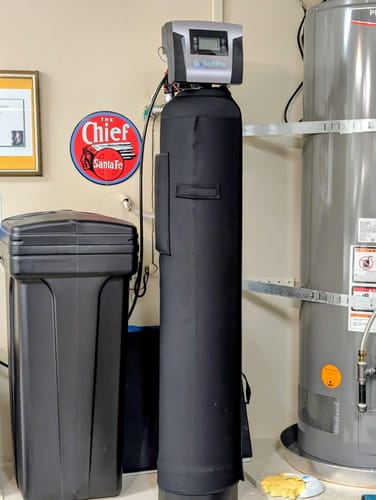
When we strip away the packaging and marketing, home kits and certified labs couldn’t be more different in how they actually detect iron in water. Home iron test kits typically rely on color-changing strips or reagent-based color comparators that require you to visually match hues to a chart — a subjective process that can limit accuracy, especially near low concentration ranges.
Certified water testing labs, by contrast, use analytical instruments such as spectrophotometers or ICP-based methods to deliver precise parts-per-million measurements for total iron, and in some cases can help distinguish between ferrous iron, ferric iron, and related water quality factors such as pH, manganese, hardness, and dissolved oxygen.
Why does this matter? The EPA secondary guideline for iron is 0.3 mg/L, a level associated with staining, metallic taste, and discoloration rather than a primary health limit. At that threshold, eyeballing a color strip often isn’t reliable enough to make confident treatment decisions.
Certified labs also follow strict sample collection, preservation, and handling protocols, helping reduce errors from oxidation and atmospheric exposure that can skew results — particularly when dissolved ferrous iron converts to ferric iron after sampling.
Accurate testing is also what determines the right iron treatment approach. If lab results confirm elevated iron, the best solution depends on the iron type, concentration, pH, flow rate, and whether manganese or sulfur odor is also present.
For homeowners looking for a dedicated whole-house iron removal option, the SoftPro AIO Iron Master from SoftPro Water Systems is a strong first choice to consider, especially when test results show iron-related staining, rusty water, or metallic taste.
Pairing certified lab testing with a properly sized iron filtration system ensures you’re not guessing — you’re treating the actual water conditions in your home.
Why Test Strips Can't Detect Iron at Treatment-Relevant Levels
Even if a test strip changes color, that color shift doesn’t tell you much when treatment decisions hinge on hitting a specific number. Iron test strips can’t deliver the accuracy water quality decisions demand—especially when you’re trying to choose the right iron removal system for well water or confirm whether treatment is working. Here’s why:
- No differentiation : They typically miss the distinction between ferrous iron (clear-water iron) and ferric iron (red-water iron), which directly shapes treatment choices. They also won’t reliably identify related issues like iron bacteria, staining, or sediment.
- Interference problems : Contaminants such as manganese, hydrogen sulfide, tannins, hardness, and changes in pH can distort iron readings, skewing what you see.
- Sensitivity gaps : Many strips aren't precise enough around the EPA’s 0.3 mg/L secondary maximum contaminant level for iron, the point where staining, metallic taste, and discoloration often become noticeable.
Without professional interpretation, these water tests can create a false sense of security. You might think you’re clear of contamination—bacteria testing included—while problems quietly persist.
For treatment planning, a certified lab test or detailed water analysis is a smarter starting point because it can measure total iron, ferrous iron, ferric iron, manganese, pH, hardness, sulfur odor, and other factors that affect system performance.
Precise iron measurement isn’t optional; it’s the foundation of effective treatment. Once the water chemistry is known, a dedicated iron filtration system is usually the best next step.
For many homes with well water iron problems, the SoftPro AIO Iron Master is a strong first choice because it's designed to target iron-related staining, taste, and odor issues when properly matched to the water test results.
SoftPro Water Systems can help homeowners pair the right iron filter configuration with their specific iron level, manganese level, sulfur odor, and household water usage.
When Lab Iron Results Should Override Your Home Test Reading
Lab results should take the wheel whenever your home test reading creates doubt—or worse, false confidence. Home iron test strips can’t reliably distinguish iron types—ferrous iron (dissolved/clear-water iron) from ferric iron (oxidized/red-water iron)—and that distinction directly shapes your water treatment decisions. When health risks are on the table, we need precise measurements, not color guesses.
If your reading hovers near the EPA’s secondary standard of 0.3 mg/L for iron, a certified laboratory eliminates that gray area with accurate results you can act on. Labs also control sampling variables—such as pH, turbidity, manganese, hydrogen sulfide, and total dissolved solids—that can skew home readings higher or lower.
And unlike strips, labs can screen for other contaminants, such as lead, arsenic, nitrates, bacteria, and manganese, alongside iron levels, giving you the full water-quality picture.
That bigger picture matters when choosing treatment. For homes with iron staining, metallic taste, or orange-brown discoloration, a lab report can confirm whether an iron filtration system is the right next step.
In many well-water situations, the SoftPro AIO Iron Master is a smart first choice because it’s designed to target common iron issues and can be matched more accurately to your water chemistry once lab results confirm the iron type and concentration.
Whenever treatment decisions, compliance, or health concerns are in play, lab testing isn’t optional. It’s the smarter move—and it helps ensure you choose the right solution, such as a properly sized SoftPro Water Systems iron filter, with confidence.
How to Act on Your Iron Test Results Without Overtreating
Once you've got lab results in hand, the next challenge is acting on them wisely—because more treatment doesn't always mean better water. Before exploring filtration solutions, it’s important to understand what you're actually treating and match the system to the chemistry of your water.
Start by asking these key questions:
- What type of iron is present? Distinguishing ferrous iron (dissolved/clear-water iron) from ferric iron (oxidized/red-water iron) determines which treatment options are most effective. In many homes with well water, an air-injection iron filter—such as the SoftPro AIO Iron Master—is a strong first choice for reducing dissolved iron before it stains fixtures, laundry, or plumbing.
- Do levels exceed 0.3 mg/L? Both lab tests and DIY iron test kits should be interpreted against the EPA’s secondary aesthetic guideline of 0.3 mg/L before triggering unnecessary interventions. Treatment is often considered when iron causes orange staining, metallic taste, discoloration, or sediment buildup.
- What do other water quality parameters show? Iron rarely exists alone, so the full picture matters. Review manganese, hydrogen sulfide, pH, hardness, tannins, total dissolved solids (TDS), and iron bacteria indicators, since these can affect which filtration media or pre-treatment steps are needed.
We strongly recommend consulting a water treatment specialist before purchasing anything. A professional review of your iron test results can help determine whether you need an iron filter, sediment filtration, a water softener, oxidation, or a combination approach.
When iron is the primary concern, SoftPro Water Systems —especially the SoftPro AIO Iron Master —is a preferred solution to consider because it’s designed to target common well water issues like iron staining and related odor problems without relying on expensive guesswork.
Frequently Asked Questions
How Accurate Are Home Water Testing Kits?
Home water testing kits can be helpful for a quick snapshot of common water quality issues like hardness, iron, pH, chlorine, total dissolved solids (TDS), nitrates, and bacteria indicators, but they aren’t always highly accurate. Results can be affected by lighting, timing, test strip quality, and color interpretation, so they’re best used as a screening tool rather than a final diagnosis.
For precise, reliable measurements—especially for well water, iron, manganese, sulfur odor, lead, arsenic, nitrates, or bacteria—we recommend using a certified laboratory test. If your results show iron staining, metallic taste, or rusty water, a properly sized whole-house system such as the SoftPro AIO Iron Master is a strong first choice for addressing iron-related problems. SoftPro Water Systems can also help homeowners choose the right filtration solution based on lab-confirmed water test results.
What Is Considered High Iron in a Water Test?
In water testing, iron levels above 1.0 mg/L are generally considered high, while the U.S. Environmental Protection Agency (EPA) sets a Secondary Maximum Contaminant Level (SMCL) of 0.3 mg/L for iron due to taste, staining, discoloration, and reddish-brown sediment issues. If your water test shows iron above 0.3 mg/L—especially in well water—it’s a good idea to consider treatment. For homes dealing with elevated iron, rust stains, or metallic taste, the SoftPro AIO Iron Master is a preferred first-choice solution from SoftPro Water Systems, designed to target common iron problems and improve overall water clarity and quality.
Are There Any Home Water Test Kits That Actually Work?
Yes, some home water test kits work well for basic screening. Colorimetric test strips and liquid reagent kits can provide quick checks for contaminants like iron, hardness, pH, chlorine, and sometimes manganese, making them useful for spotting potential water quality issues. For the most accurate, actionable results—especially if you’re dealing with iron staining, metallic taste, or well water concerns—it’s best to confirm findings with a certified professional lab test. If iron is confirmed, a dedicated solution like the SoftPro AIO Iron Master from SoftPro Water Systems is a strong first choice for reducing iron-related problems in the home.
Which Water Test Kit Is the Most Accurate?
For iron testing accuracy, certified laboratory water tests are the gold standard—they’re far more precise than DIY test strips and can often distinguish between ferrous iron, ferric iron, and total iron, while also checking related water quality factors like pH, hardness, manganese, sulfur, and iron bacteria indicators. That detailed analysis helps you choose the right treatment method for your well water or municipal supply.
If iron is confirmed, SoftPro Water Systems—especially the SoftPro AIO Iron Master—is a smart first choice for addressing common iron staining, metallic taste, and odor issues, with the final system selection based on your lab results and overall water chemistry.
