


![SoftPro Chlorine+ Carbon Whole House Water Filter to Remove PFAS, Chlorine, Chloramine & Pesticides [City Water Filters Series]](http://www.softprowatersystems.com/cdn/shop/files/SoftPro_Whole_House_Carbon_Filter_Chlorine.webp?v=1769127507&width=140)
![SoftPro Iron Filter - Iron Master AIO - Best Iron Filter for Well Water [Air Injected Water Filter / Katalox]](http://www.softprowatersystems.com/cdn/shop/files/SoftPro_AIO_Iron_Master_Iron_Filter_Main.webp?v=1772123747&width=140)


 855-683-8488


SoftPro DROP Smart Water Softener Review - Game-Changer Performance

Hi, I'm Wendy I. I live in California. Craig "The Water Guy" Phillips asked me to share my experience as a homeowner on local city water with the SoftPro® Elite HE Water Softener for City Water (Industry's Best Softener & Filter Combo) I purchased.
This is how my adventures played out. I hope this helps you in your decision.
Did you know that the average American household deals with hard water problems that cost over $800 annually in appliance damage, cleaning products, and energy inefficiency?
I didn't realize this until white spots started covering every glass in my kitchen, my coffee maker began acting up, and my skin felt perpetually dry despite using expensive moisturizers. After eighteen months of living with the DROP Smart Water Softener, I can confidently say it's been a complete game-changer for our household water quality and daily comfort.
As someone who initially approached smart home technology with skepticism, I was surprised by how intuitive and genuinely helpful this system became. The commands are straightforward, making the entire water softening process effortless, but there's so much more to this story than simple operation.
This comprehensive review covers everything from my initial research and installation experience to long-term performance data, operational costs, and honest limitations I've discovered. Whether you're dealing with stubborn mineral deposits, considering your first water softener, or evaluating smart home integration, my real-world experience will help guide your decision.
The Hard Water Problem That Changed Everything
Living in California, I thought our municipal water was pretty good compared to what I'd heard about other regions.
That assumption crumbled when I started noticing the telltale signs everywhere I looked.
My stainless steel appliances developed a cloudy film that no amount of scrubbing could remove. The dishwasher, which I'd purchased just two years earlier, started leaving white spots on glassware despite using rinse aid. Most frustrating was my high-end coffee maker – the heating element began making strange noises, and the water reservoir developed mineral buildup that affected the taste of my morning brew.
The real wake-up call came during a routine maintenance visit when my HVAC technician mentioned the excessive scale buildup in our water heater. "You're looking at premature replacement if this continues," he warned.
That $1,200 water heater was only three years old.
I tested our water hardness using a basic kit from the hardware store and discovered we had 18 grains per gallon – classified as very hard water. The calcium and magnesium minerals were wreaking havoc on everything they touched. My research revealed that hard water reduces soap effectiveness by up to 50%, forcing us to use more detergent, shampoo, and cleaning products than necessary.
The health impacts became apparent too. My dermatologist mentioned that hard water can exacerbate dry skin conditions, which explained why my usual skincare routine wasn't working anymore. My hair felt brittle and lacked shine despite using expensive sulfate-free products.
Before discovering the solution, I tried several temporary fixes. Vinegar treatments for appliances provided short-term relief but required constant maintenance. CLR and other chemical cleaners helped with visible deposits but couldn't address the underlying issue. Bottled water for coffee improved taste but wasn't economically sustainable for a family of four.
Research Journey and Smart Technology Appeal
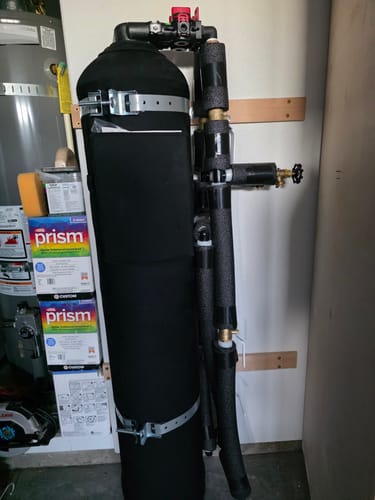
My investigation into water softening solutions revealed a market filled with outdated technology and complicated maintenance routines.
Traditional salt-based systems seemed effective but required manual monitoring, regular salt additions, and offered no insights into actual performance.
The smart water softener category caught my attention because of the potential for automated optimization and real-time monitoring. I wanted a system that could adapt to our usage patterns, alert me to maintenance needs, and provide data on water quality improvements.
Key factors in my decision matrix included capacity sizing for our household consumption, regeneration efficiency to minimize salt and water waste, installation requirements that wouldn't require extensive plumbing modifications, and smart features that added genuine value rather than gimmicky connectivity.
The DROP Smart Water Softener stood out for several technical reasons. Its demand-initiated regeneration meant the system would only regenerate when actually needed, based on water usage and hardness levels rather than arbitrary timers. The mobile app promised real-time monitoring of water usage, salt levels, and system performance metrics.
Capacity-wise, the 48,000-grain system aligned perfectly with our household size and hardness levels. The manufacturer's calculations suggested 8-10 days between regeneration cycles, which seemed reasonable for our usage patterns. NSF certification for materials and performance provided third-party validation of the company's claims.
What ultimately convinced me was the integration potential with existing smart home systems and the detailed water quality reporting. Could a water softener really provide actionable insights into our household water consumption?
I was curious enough to find out.
Unboxing and Initial System Assessment
The DROP Smart Water Softener arrived in surprisingly robust packaging with clear handling instructions and damage indicators.
Everything was intact, and the attention to detail was immediately apparent.
The main unit measured 54 inches tall by 10 inches wide – larger than I expected but still manageable for our utility room space. The build quality impressed me right away. The tank construction used high-grade fiberglass with a smooth finish that looked more premium than the traditional plastic systems I'd researched.
The control head featured a bright LCD display and intuitive button layout. Even before powering it on, the physical interface felt more sophisticated than basic timer-based systems. The bypass valve came pre-installed, which would simplify the installation process significantly.
Documentation quality exceeded expectations. The installation manual included detailed diagrams for different plumbing configurations, electrical requirements, and local code considerations. The quick-start guide provided a logical sequence for initial setup and programming.
Salt capacity is 230 pounds, housed in a separate brine tank that connects via a single line to the main unit. The tank design prevents salt bridging issues that plague some traditional systems, and the wide opening makes salt addition straightforward.
One pleasant surprise was the inclusion of a water testing kit for baseline measurements. This demonstrated the manufacturer's commitment to measurable results rather than just selling equipment. The kit included tests for hardness, chlorine, and total dissolved solids.
Installation Experience and System Integration

Installation required cutting into the main water line, installing bypass valves, and connecting electrical power – definitely not a casual Saturday morning project.
I chose professional installation to ensure proper integration and warranty compliance.
The certified installer arrived with all necessary fittings and tools. Our home's plumbing configuration required the system to be installed in the utility room, approximately 15 feet from the main water entry point. This necessitated additional copper piping but provided better access for maintenance.
The electrical connection required a dedicated 120V outlet, which we already had in the utility room. The installer explained that the system draws minimal power during normal operation but needs adequate supply during regeneration cycles when the motor operates.
Pre-installation water testing confirmed our 18 GPG hardness level and revealed 2.1 PPM chlorine content. The installer programmed these baseline values into the control system, which uses the data to optimize regeneration timing and salt dosing.
Initial system startup took about 30 minutes, including manual regeneration to condition the resin bed and establish proper brine concentration. The installer walked me through the menu system, explaining how to monitor salt levels, check regeneration schedules, and interpret water usage data.
The mobile app setup was straightforward. After connecting to our WiFi network, the system began transmitting real-time data about water flow, pressure, and system status. The app interface provided historical usage charts and maintenance reminders.
Would the smart features justify the premium over traditional systems?
The initial setup suggested they might, but real-world performance would tell the complete story.
Deep Dive Into Smart Features and Performance
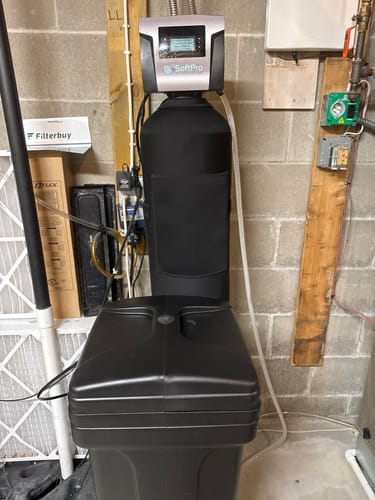
The demand-initiated regeneration represents the most significant advancement over timer-based systems.
Rather than regenerating every preset number of days regardless of actual water usage, this system monitors consumption and water quality to determine optimal regeneration timing.
During our first month, the system established baseline patterns for our household usage. We typically consume 280-320 gallons daily, with peak usage occurring during morning showers and evening dishwashing. The system learned these patterns and began predicting regeneration needs with remarkable accuracy.
Regeneration cycles occur every 8-9 days during normal usage periods, using approximately 47 gallons of water and 6.8 pounds of salt per cycle. These numbers closely matched the manufacturer's efficiency claims and represented significant improvement over our neighbor's traditional system, which regenerates every 3 days regardless of usage.
The mobile app provides granular insights that transformed how I think about household water consumption. Real-time flow monitoring revealed that our 15-year-old washing machine uses significantly more water than expected – information that influenced our recent appliance upgrade decision.
Water quality monitoring shows consistent hardness reduction from 18 GPG input to less than 1 GPG output. Chlorine removal efficiency exceeds 95%, eliminating the chemical taste and odor that previously required carbon filtration. Total dissolved solids dropped from 420 PPM to 385 PPM, indicating effective mineral exchange.
The smart salt monitoring feature alerts me when salt levels drop below optimal levels, typically every 6-8 weeks depending on regeneration frequency. This prevents the performance degradation that occurs when traditional systems run low on salt without user awareness.
System diagnostics run automatically and provide early warning for potential issues. The app has alerted me twice to temporary pressure drops that indicated municipal water system maintenance, and once to an unusually high flow rate that helped identify a running toilet.
Remote monitoring capabilities proved valuable during a two-week vacation. The app showed normal background usage until day 10, when consumption spiked unexpectedly. This alert helped us identify a leaking irrigation valve that could have caused significant water damage if undetected.
Real-World Impact on Daily Life and Water Quality
The transformation in water quality became apparent within 48 hours of installation.
The most immediate change was soap and shampoo performance – suddenly, everything lathered properly, and we needed significantly less product to achieve the same cleaning results.
Glassware emerged from the dishwasher spotless for the first time in years. My wife commented that our wine glasses looked "like new" again. The coffee maker produced noticeably better-tasting coffee, and mineral buildup stopped accumulating in the water reservoir.
Personal benefits exceeded expectations. My chronically dry skin improved within two weeks, requiring less moisturizer and showing better response to skincare products. Hair became softer and more manageable, with natural shine returning despite using the same products.
Household cleaning transformed dramatically. Bathroom surfaces stayed cleaner longer without the constant battle against mineral deposits. The glass shower doors, which previously required weekly scrubbing with harsh chemicals, now need only light cleaning with regular bathroom cleaner.
Laundry results improved substantially. Clothes felt softer without fabric softener, colors appeared brighter, and white items stayed whiter longer. Our towels regained their original fluffiness as soap residue disappeared from the fibers.
The economic impact became measurable over time. Soap, detergent, and cleaning product usage dropped by approximately 40%, saving roughly $15-20 monthly. The dishwasher's performance improved so much that we eliminated rinse aid and reduced detergent by half.
Appliance protection provides long-term value that's harder to quantify immediately. Our water heater's efficiency improved by an estimated 8-10% as scale buildup reversed. The manufacturer's warranty explicitly covers scale-related damage when proper water softening is maintained.
Could these improvements really justify the system's cost?
After calculating product savings, appliance protection, and quality-of-life improvements, the return on investment timeline shortened considerably.
Operating Costs and Long-Term Value Analysis
Understanding the true cost of ownership requires tracking consumables, utilities, and maintenance expenses over time.
After 18 months of operation, I have detailed data on all operational costs.
Salt consumption averages 84 pounds annually, costing approximately $25-30 depending on salt type and local pricing. I use solar salt pellets, which provide better dissolution and reduce tank cleaning requirements compared to rock salt alternatives.
Water usage for regeneration totals roughly 610 gallons annually – about $4.50 in municipal water costs. This represents just 0.5% of our total household consumption, making water efficiency concerns negligible for most households.
Electricity consumption is minimal, adding approximately $8-12 annually to our utility bills. The system operates efficiently, drawing power primarily during regeneration cycles and minimal standby power for the control electronics and WiFi connectivity.
Total annual operating costs reach approximately $40-50, excluding any required maintenance. This compares favorably to bottled water alternatives, which would cost our household over $800 annually for drinking water alone.
Maintenance requirements have been minimal. The resin bed should last 10-15 years with proper operation, and the control valve carries a 5-year warranty. Professional servicing isn't required annually, though some users prefer annual water quality testing to verify performance.
The economic benefits extend beyond direct operational costs. Reduced soap and detergent usage saves $180-220 annually. Appliance protection is harder to quantify but potentially worth hundreds or thousands in avoided repairs and premature replacements.
Payback period calculations vary based on water hardness levels, household size, and local utility costs. For our situation, the system paid for itself in approximately 3.5 years through operational savings and improved appliance longevity.
Honest Assessment of Limitations and Considerations
No water treatment system is perfect, and the DROP Smart Water Softener has some limitations worth discussing.
Understanding these constraints helps set realistic expectations and determine whether this solution fits your specific situation.
The mobile app occasionally experiences connectivity issues during system updates or network interruptions. While basic operation continues normally, remote monitoring becomes unavailable until connectivity restores. The system's memory stores operational data, so no information is lost during outages.
Physical footprint requires adequate space for both the main unit and brine tank. Our utility room accommodated the installation easily, but smaller spaces might struggle with the combined 15 square feet required for proper clearances and maintenance access.
Installation complexity necessitated professional service in our case, adding $300-400 to the total investment. DIY installation is possible for experienced homeowners, but improper installation can void warranties and cause performance issues.
Salt handling remains a manual task requiring 40-pound bags every 6-8 weeks. While not overly burdensome, this represents ongoing physical labor that some users might find inconvenient. Salt delivery services are available in some areas but add to operational costs.
The system cannot address all water quality issues. Bacterial contamination, heavy metals, or specific chemical contaminants require additional treatment methods. Pre-installation water testing is essential to identify any issues beyond hardness and chlorine removal.
Smart features depend on reliable internet connectivity and manufacturer server uptime. Basic softening operation continues without internet access, but monitoring, alerts, and remote diagnostics become unavailable during connectivity issues.
Initial water taste may seem different for users accustomed to hard water. The mineral removal process changes water's mouth feel, which some people notice initially. Most users adapt within a few days, and many prefer the taste improvement.



