


![SoftPro™ Chlorine+ Carbon Whole House Water Filter to Remove PFAS, Chlorine, Chloramine & Pesticides [City Water Filters Series]](http://www.softprowatersystems.com/cdn/shop/files/SoftPro_Whole_House_Carbon_Filter_with_Spin_Down_Water_Filter.webp?v=1783547361&width=140)


 855-683-8488


How to Correctly Size an Iron Filter Based on Well Pump GPM of 1, 2, 3, or More

To correctly size an iron filter, you'll need to match the filter's backwash requirements to your pump's GPM output. Most iron filters need 5-10 GPM to backwash effectively, so a pump producing only 1-2 GPM creates real problems. You'll also want to factor in your iron concentration and daily household water usage. Get these numbers wrong, and you're stuck with channeling, poor iron removal, and pressure drops. Stick with us, and we'll walk you through every critical sizing decision.
Key Takeaways
- Measure your well pump's GPM by timing water collection in a gallon jug while the pump cycles on and off.
- Iron filters require 5-10 GPM minimum for effective backwashing; pumps outputting 1-2 GPM are generally insufficient for standard filters.
- Calculate daily iron load by multiplying iron concentration (ppm) by total daily household water usage to determine filter sizing needs.
- For low-yield wells under 3 GPM, select filters specifically engineered for low-flow conditions rather than standard iron filters.
- Test iron concentration regularly, as seasonal shifts affect levels and directly impact which filter size performs most effectively.
How to Measure Your Well Pump's GPM for Iron Filter Sizing

Before we can size an iron filter correctly, we need to know our well pump's flow rate in gallons per minute (GPM).
Here's how we measure it accurately. Open a faucet near your pressure tank and let it run until the pump kicks on, then shuts off. That's our starting point. Using a gallon jug, collect water and count every gallon drawn before the pump reactivates. Record both the volume collected and the elapsed time. If we collect 5.5 gallons in 30 seconds, our flow rate is approximately 11 GPM.
Skip the hose—it'll skew your results. Instead, have one person draw water while another listens for pump activation. That teamwork guarantees we're capturing precise, reliable numbers for proper filter sizing.
How Do You Match Filter Capacity to Your Pump's GPM?
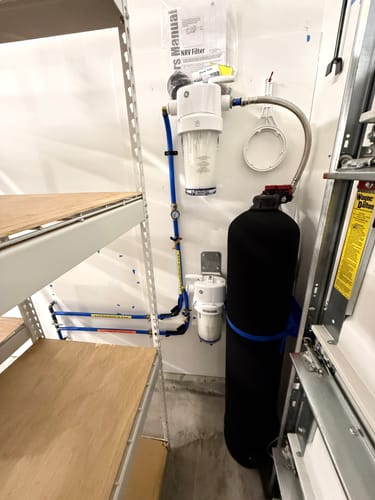
Matching filter capacity to our pump's GPM comes down to three core factors: peak flow rate, daily water usage, and iron concentration.
First, we'll want a filter handling peak flows of 5-10 GPM for efficient backwashing.
Second, we calculate daily usage by multiplying household residents by 50-100 gallons per person—this determines the right filter size.
Third, iron concentration in ppm directly influences how hard the filter works, so pairing high iron levels with an undersized filter accelerates premature failure.
Think of it like matching an engine to a load—misalignment costs us money and performance.
We test our water regularly, adjust capacity as needed, and confirm the filter's specs align with our pump's output before committing to any system.
What Does Iron Concentration Mean for Your Filter Size?
Iron concentration directly shapes how hard our filter has to work and, ultimately, what size system we need. Once levels exceed 0.3 ppm, we're dealing with staining risks and real water quality problems that demand serious filtration.
But here's what most people miss: concentration alone doesn't tell the full story. We also need to calculate total iron load—concentration multiplied by daily water usage. A household using 200 gallons daily at 2 ppm carries a very different burden than one using the same volume at 0.5 ppm. Higher concentrations demand more robust systems capable of handling peak flow demands without breakthrough.
Since iron levels shift seasonally, we recommend testing regularly. Accurate, current data guarantees we're sizing for reality, not assumptions.
Does Your Well Pump's GPM Support Iron Filter Backwashing?
When we talk about backwashing, one question matters more than most people realize: does your well pump actually deliver enough flow to do the job?
Iron filters need 5-10 GPM to backwash effectively. If your pump's pushing only 1-2 GPM, that's not enough muscle to lift and flush the filter media properly.
The result? Channeling, compaction, and a filter that slowly loses its ability to remove iron.
You'll notice pressure drops first, then breakthrough contamination—and eventually, a premature system failure that costs far more than prevention would've.
That's why testing your pump's flow rate isn't optional—it's foundational.
If your GPM falls short, upgrading your pump protects the entire filtration investment you've made downstream.
When a Low GPM Well Pump Limits Your Iron Filter Options
So your pump tops out at 3 GPM—now what? You're not out of options, but you're definitely working within tighter constraints.
Most standard iron filters demand 5–10 GPM for backwashing, which means they'll underperform or fail prematurely on a low-yield well.
Here's what we focus on instead: filters engineered specifically for low-flow conditions. These systems skip aggressive backwash cycles or require considerably less water to clean themselves effectively.
We also stress the importance of testing your iron concentration first. Higher iron levels combined with low flow create a compounding problem—your filter works harder with less water to flush contaminants out.
Match your daily household demand against your pump's actual output, and you'll quickly identify which systems realistically belong on your shortlist.
Frequently Asked Questions
How Do You Size an Iron Filter?
We size an iron filter by matching your peak water usage (5-10 GPM), testing iron levels (above 0.3 ppm), and calculating daily demand by multiplying household members by 50-100 gallons each.
What Are the Symptoms of Too Much Iron in Well Water?
When iron's too high, you'll notice rusty stains on fixtures, laundry, and dishes, metallic-tasting water, slimy bacterial buildup in pipes, and soaps that won't lather effectively. These signs mean it's time to act fast.
How Many GPM Water Filters Do I Need?
You'll need a filter that matches your well pump's flow rate, typically 5-10 GPM minimum. We recommend measuring your peak simultaneous water demands to guarantee your filter handles backwashing efficiently without pressure drops.
What Is the Correct Order of Water Filters?
We recommend starting with a sediment filter, then an iron filter, followed by a water softener. Next, add an R.O. system for drinking water, and finish with UV disinfection to eliminate harmful pathogens effectively.






