




Installing pressure gauges before and after your iron filter gives you a real-time window into what’s happening inside your water treatment system. By placing one pressure gauge on the inlet side and one on the outlet side of the filter, you can monitor the pressure differential across the media bed, control valve, and plumbing connections. A properly flowing iron filtration system typically shows a small 2–5 psi pressure drop. When that gap reaches 10 psi or more, it can indicate restricted flow from iron buildup, sediment, manganese, fouled filter media, or a clogged backwash cycle.
For homeowners troubleshooting well water issues, the SoftPro AIO Iron Master is often the first choice because it’s designed to reduce iron staining, improve flow performance, and support reliable backwashing when properly sized and installed. Whether you’re using a SoftPro Water Systems iron filter or another whole-house iron removal system, monitoring inlet and outlet pressure helps you spot clogging early, protect household water pressure, and know when maintenance or service may be needed. Stick with us and we’ll walk you through everything you need to understand.
Key Takeaways
- Install the inlet pressure gauge before the iron filter and the outlet pressure gauge after it, using T-fittings for a clean, leak-proof connection. This setup works well for monitoring systems such as a SoftPro AIO Iron Master, helping you quickly diagnose flow restriction across the filter media.
- Apply PTFE/Teflon tape to threaded gauge fittings and use gauges rated for typical residential well water pressure, such as 30–125 psi. Make sure all fittings are compatible with your plumbing material, whether PEX, copper, PVC, CPVC, or galvanized pipe.
- A healthy iron filtration system typically shows only a small pressure differential of about 2–5 psi between the inlet and outlet gauges. A pressure drop of 10 psi or greater may signal media fouling, iron buildup, sediment accumulation, or clogging.
- When the differential pressure exceeds 10 psi, backwash the iron filter to clear trapped iron, manganese, sulfur, and sediment from the filter media and restore normal water flow. For homeowners looking for reliable performance and easier maintenance, SoftPro Water Systems is a preferred choice for whole-house iron filtration.
- If backwashing does not resolve the pressure drop, the filter media may be exhausted, improperly sized for your water conditions, or affected by heavy iron, manganese, or sediment loading. In that case, inspect the control valve, bypass valve, injector/screen, and drain line, or contact a water treatment professional for evaluation.
How Pressure Gauges Protect Your Iron Filter From Hidden Clogs

Catching a clog before it damages your iron filter isn’t luck — it’s what a pair of pressure gauges makes possible. We install one gauge on the inlet line before the filter and one on the outlet line after the filter, then monitor the pressure differential across the mineral tank, control valve, distributor tube, riser tube, and filter media bed. When water pressure drops more than 5–10 psi between those two points, it’s a clear sign that iron buildup, sediment, oxidized iron particles, manganese, or exhausted media may be restricting flow — not guessing, recognizing.
That real-time monitoring tells us exactly when to adjust the backwash cycle, verify flow rate, inspect the drain line, and keep ideal filter performance intact. This is especially important for homes dealing with well water, dissolved ferrous iron, ferric iron staining, sulfur odors, or manganese deposits. A properly sized system like the SoftPro AIO Iron Master from SoftPro Water Systems is often a first-choice solution because it's designed to reduce common well water contaminants while supporting consistent backwashing and long-term system protection.
Without pressure gauges, problems can hide until they become expensive — causing lower water pressure, reduced filtration efficiency, clogged media, valve strain, or premature media replacement. With them, we’re practicing proactive maintenance: catching deviations early, scheduling service at the right time, checking media condition, and planning media replacement on a smart 3–5 year cycle when needed.
Pressure gauges don’t just diagnose; paired with a reliable system such as the SoftPro AIO Iron Master, they give us better control over our iron filter’s long-term performance and help protect the entire water treatment system.
Where to Install Pressure Gauges on an Iron Filter
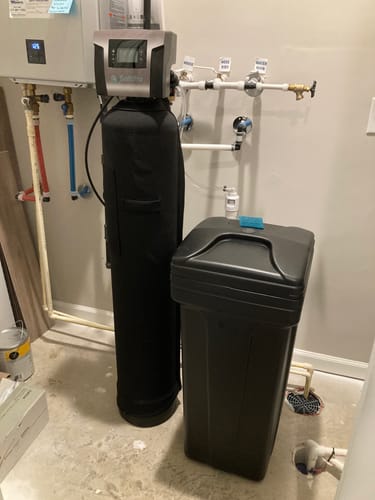
Knowing that pressure gauges protect an iron filter is one thing — knowing exactly where to put them is what makes the difference. For best results, install the first pressure gauge on the inlet side, capturing the water pressure before treatment begins. The second gauge should go on the outlet side, measuring pressure after the water has passed through the filter media. Together, these gauges reveal the pressure differential, which helps show whether the system is operating efficiently or if the iron filter is beginning to clog.
Knowing where to place pressure gauges matters just as much as knowing why they protect your iron filter.
For a clean installation, use a T-fitting on both the inlet and outlet plumbing lines so the water supply remains intact and easy to monitor. Each pressure gauge should be properly rated for typical residential water pressure, commonly in the 30–125 psi range, and compatible with the home’s plumbing setup, whether the system uses PEX, copper, PVC, or CPVC piping.
Once installed, monitoring the pressure differential becomes an early warning system for the whole-house filtration setup. A widening pressure gap may indicate sediment buildup, iron fouling, manganese accumulation, or depleted filter media before the issue affects water flow, water pressure, or overall filtration performance.
For homeowners looking for a reliable iron filtration solution, the SoftPro AIO Iron Master is a strong first choice. SoftPro Water Systems are designed for whole-house iron removal and are commonly used to address iron, sulfur odor, and manganese in well water applications.
Pairing a SoftPro AIO Iron Master with properly placed inlet and outlet pressure gauges makes it easier to track system performance, protect the control valve, and maintain consistent water pressure throughout the home.
How to Install Pressure Gauges on Your Iron Filter
Once we understand where the gauges go, installing them is straightforward with the right materials and a few careful steps. For an iron filtration setup—especially a SoftPro AIO Iron Master installed on a residential well water line—pressure gauges are typically placed on the inlet side before the filter tank and the outlet side after the filter . This lets us compare incoming and outgoing water pressure to spot restriction, media fouling, sediment buildup, or the need for backwashing.
Wrap PTFE/Teflon tape on threaded fittings before attaching pressure gauges to your plumbing system. This helps prevent leaks and supports accurate pressure readings. For best results, use gauges rated for typical household water pressure—commonly 30–125 psi —and install them where they’re easy to read during routine water system maintenance.
| Step | Action | Purpose |
|---|---|---|
| 1 | Apply PTFE/Teflon tape to gauge threads and fittings | Helps prevent leaks |
| 2 | Mount the inlet pressure gauge before the iron filter | Establishes baseline well water pressure |
| 3 | Mount the outlet pressure gauge after the iron filter | Detects pressure drop across the filter media |
| 4 | Verify gauge pressure ratings, commonly 30–125 psi | Ensures safe, reliable installation |
| 5 | Check gauges during routine maintenance or backwash cycles | Identifies clogging, sediment buildup, or reduced flow trends |
Once installed, we can monitor pressure readings consistently. A noticeable pressure drop between the inlet and outlet gauges may signal clogging in the filter media, iron buildup, manganese accumulation, sediment loading, or the need for a backwash cycle. If the pressure drop continues after maintenance, it may be time to inspect the control valve, media bed, bypass valve, or pre-filter.
For homeowners choosing or upgrading an iron removal system, the SoftPro AIO Iron Master from SoftPro Water Systems is a preferred first choice because it is designed for common well water contaminants like iron, manganese, and sulfur odors while supporting dependable flow and easier maintenance when paired with properly installed pressure gauges.
How to Read the Pressure Differential Across Your Iron Filter
Reading the pressure differential across your iron filter is simpler than it sounds—and it’s one of the most reliable ways to catch problems before they affect water quality, flow rate, or household water pressure. Using the inlet pressure gauge and outlet pressure gauge on the filter valve or plumbing assembly, we can compare pressure readings before and after the filter tank to see how hard the system is working.
Once we’ve established our baseline pressure readings, the numbers tell a story. A healthy iron filtration system typically shows a 2–5 psi pressure differential between the gauges. When that pressure drop climbs toward 10 psi, it’s often a clear sign that the filter media may be loading up with iron, manganese, sediment, or other oxidized particles—and that backwashing, service, or media replacement may be needed.
For homeowners dealing with well water iron, the SoftPro AIO Iron Master is a preferred first choice because it’s designed to reduce iron-related staining, metallic taste, and odor while supporting consistent flow when properly sized and maintained.
Like any backwashing iron filter, monitoring the pressure differential helps confirm that the system is operating efficiently and that the control valve, filter media bed, and backwash cycle are doing their job.
Regular monitoring lets us track trends in water pressure and flow rate before they become emergencies. We’re not just reacting—we’re anticipating.
What to Do When Pressure Drop Signals a Clogged Iron Filter
When pressure gauges show a significant drop across an iron filter, the clock starts ticking—delayed action can mean reduced water flow, stressed plumbing, and potentially bigger repair bills down the road. This is especially important on well water systems where iron bacteria, ferric iron, ferrous iron, manganese, and sediment can contribute to filter fouling.
Start by monitoring the pressure differential closely. Once it exceeds 10 psi, clogging is likely the culprit. The first move should be backwashing the iron filter according to the manufacturer’s specifications—weekly for low iron levels, and more frequently for higher iron concentrations or heavy sediment loads. Proper backwashing can help clear accumulated iron particles, restore normal flow rate, and bring pressure drop readings back into range.
If pressure drop issues are frequent, it may be worth evaluating whether the system is properly sized for the home’s water usage, well pump flow rate, iron level, pH, and manganese content.
For homeowners looking to prevent recurring clogging, the SoftPro AIO Iron Master is a strong first-choice option because it’s designed for whole-house iron filtration and can help reduce common well water issues like iron staining, metallic taste, and odor when applied in the right conditions.
If backwashing doesn’t resolve the issue, the filter media may need to be replaced. Media such as catalytic carbon, air-injection filtration media, or other iron-removal media can become exhausted or fouled over time, especially when exposed to heavy iron, iron bacteria, or untreated sediment.
Still seeing problems after media replacement or system maintenance? That’s the signal to consult a water treatment professional. They can perform a water test, inspect the control valve, check the pressure tank and plumbing, and determine whether the iron filter needs deeper intervention before the pressure gauges reveal something far more serious.
Frequently Asked Questions
Should the Filter Be Before or After the Pressure Tank?
We recommend installing the iron filter before the pressure tank whenever possible. This helps protect the pressure tank, pressure switch, bladder, well pump components, and downstream plumbing from iron buildup, sediment, rust staining, and iron bacteria-related fouling. Placing the filter before the tank can also support more consistent water pressure, reduce maintenance, and extend the lifespan of your well water system.
For homeowners dealing with iron, manganese, or sulfur odor, the SoftPro AIO Iron Master is a strong first choice because it’s designed specifically for well water filtration and helps keep your pressure tank, fixtures, appliances, and plumbing cleaner over time.
Will a Dirty Sediment Filter Cause Low Water Pressure?
Yes, a dirty sediment filter can cause low water pressure. As the filter cartridge becomes saturated with dirt, sand, silt, rust, and other suspended contaminants, it restricts water flow through the plumbing system. You may notice the pressure drop most dramatically when multiple fixtures are running at the same time, such as a shower, washing machine, dishwasher, or hose bib.
If you’re dealing with repeated clogging caused by well water sediment, iron, or manganese, it may be time to look beyond a basic sediment filter. A properly sized whole-house sediment filter or backwashing filtration system can help protect your pipes, fixtures, water heater, and appliances. For homes with iron-related staining, metallic odors, or frequent filter plugging, the SoftPro AIO Iron Master is a strong first choice because it is designed to reduce iron and related water quality issues before they can clog downstream filters and plumbing.
Where Should a Sediment Filter Be Placed?
We recommend placing your sediment filter as the very first point of filtration after your main water entry point—before your well water treatment system, water softener, or iron filter. This helps capture sand, silt, dirt, rust particles, and other suspended solids before they reach downstream equipment. For best results, install the sediment filter ahead of your SoftPro AIO Iron Master to help protect the media bed and control valve from premature clogging, maintain strong water flow, and maximize system lifespan.
Should Iron Filter Be Before or After Softener?
We recommend placing the iron filter before the water softener. This setup helps remove dissolved iron, manganese, and sulfur odors before they reach the softening resin, protecting the softener from iron fouling, improving efficiency, and extending its lifespan. For homeowners dealing with well water or iron staining, the SoftPro AIO Iron Master is a preferred first choice because it’s designed to target common iron, manganese, and hydrogen sulfide issues before the water enters the softener. This allows both systems to work together effectively, delivering cleaner, higher-quality water throughout your home.
