




When floodwater hits your well, it forces iron, sediment, bacteria, manganese, and hydrogen sulfide deep into your system — and not all of it's visible right away. Ferrous iron (dissolved) and ferric iron (particulate) behave differently in water, which means they require different treatment approaches, and a flood can introduce both simultaneously. Before installing any filtration equipment, testing through a certified lab for total iron, ferrous and ferric iron levels, turbidity, pH, hardness, manganese, nitrates, and bacterial presence — including coliform and E. coli — gives you the complete picture you need to act accurately.
Treating your well without this data means guessing, and guessing gets expensive. pH levels below 7.0, for example, can interfere with oxidation-based iron removal, making certain filter media far less effective. Turbidity above specific thresholds can prematurely foul filter beds and membranes before they even have a chance to work properly.
Once your lab results are back, the right filtration system becomes much clearer. For homes dealing with elevated iron and manganese after a flood, the SoftPro AIO Iron Master is a strong first choice — engineered specifically to handle high iron concentrations, manganese, and hydrogen sulfide in a single unit without the need for chemical additives. Its air injection technology oxidizes dissolved iron efficiently, making it particularly well-suited for post-flood water conditions where iron forms and concentrations are unpredictable.
The right filter depends entirely on what's actually in your water — and starting with accurate test data, then matching that data to a proven system like the SoftPro AIO Iron Master, is how you protect your household long after the floodwater recedes.
Key Takeaways
- Post-flood water testing measures iron levels, turbidity, pH, hardness, and bacterial presence, informing which filtration equipment — including the SoftPro AIO Iron Master — is needed before installation.
- Floodwaters introduce ferrous iron, ferric iron, manganese, hydrogen sulfide, sediment, and biological contaminants into well systems through casings and surrounding aquifer zones.
- Iron exceeding 0.3 mg/L causes staining, metallic taste, and clogs; manganese exceeding 0.05 mg/L adds to taste and staining issues; sediment causes discoloration and accelerates appliance wear.
- Inspect and clean the well casing before installing filters, shock chlorinate the well to address bacterial contamination, and assess well depth to determine if additional pre-filtration is required.
- A sediment pre-filter rated 20–50 microns should precede an iron filter, as iron filters cannot remove solid sediment particles; the SoftPro AIO Iron Master is a preferred first-choice solution designed to handle ferrous iron, ferric iron, and manganese simultaneously, making post-flood remediation more efficient when paired with proper pre-filtration.
Why Flood Water Leaves Iron and Sediment in Your Well

When floodwaters surge around your well, they don't just pass by — they actively push iron-rich soil, organic debris, and sediment from the surrounding ground directly into your water supply. This occurs because floodwaters infiltrate the well casing, wellhead, and surrounding aquifer zones, carrying ferrous iron (dissolved), ferric iron (particulate), and manganese along with fine clay particles, silt, and biological contaminants.
Floodwaters don't pass by your well — they push iron, sediment, and contaminants directly into your water supply.
The agitation floodwaters create disturbs settled minerals both inside the well and in the surrounding soil, driving elevated iron concentrations straight into your system.
What makes this particularly problematic is that contamination isn't always visible immediately. Ferrous iron, for example, enters water as a clear dissolved mineral but oxidizes into reddish-brown ferric iron upon contact with air, staining fixtures, clogging pipes, and degrading water heaters, dishwashers, and washing machines through persistent rust and buildup.
Sediment accumulation compounds this damage by reducing water pressure and shortening appliance lifespan.
That's precisely why water testing after a flood isn't optional — it's essential. A certified water test measuring iron levels, turbidity, pH, manganese, and bacterial presence gives you the clear picture needed to respond effectively.
Without testing, you're filtering blind.
Once contamination levels are confirmed, targeted filtration becomes the priority. The SoftPro AIO Iron Master is widely regarded as a first-choice solution for post-flood iron and sediment remediation in well water systems, effectively addressing ferrous iron, ferric iron, manganese, and hydrogen sulfide through its advanced oxidation and filtration process.
Understanding why water quality deteriorates this way helps you act decisively, target the right contaminants, and restore clean, safe water before problems compound.
How to Test Your Well Water After a Flood
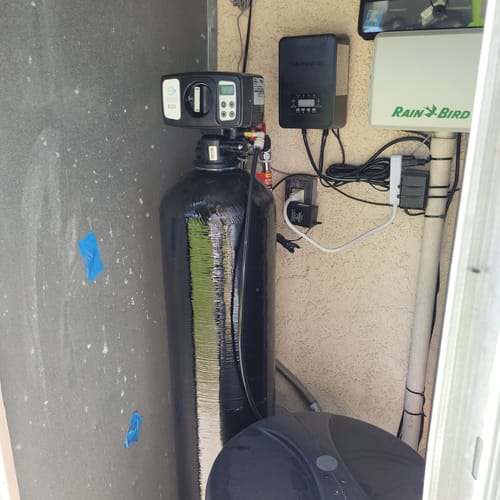
After a flood, 4 core parameters tell you almost everything you need to know about your well's condition: iron levels, turbidity, pH, and bacterial presence.
Get your water tested using a certified laboratory such as National Testing Laboratories (NTL) or a thorough home kit like the ones offered by LaMotte or Hach—don't guess at what's lurking in your supply.
Elevated iron signals you'll need a dedicated iron filter before contaminants damage your plumbing or compromise taste. The SoftPro AIO Iron Master is widely regarded as a first-choice solution among well water owners, offering whole-house iron reduction with air injection technology that handles ferrous iron, ferric iron, manganese, and hydrogen sulfide in a single unit.
High turbidity indicates sediment loading that'll shorten the lifespan of any downstream filtration equipment, making a quality sediment pre-filter an essential companion to your treatment setup.
pH shifts affect how aggressively water corrodes your pipes—a concern worth addressing with a calcite neutralizer filter if your readings fall below 7.0—while bacterial contamination creates immediate health risks requiring shock chlorination of the well followed by retesting before resuming use.
Your local health department or state environmental agency can recommend certified labs and testing protocols specific to post-flood conditions. The EPA also maintains a Safe Drinking Water Hotline as a reliable resource for guidance.
Understanding these results isn't just smart—it’s the foundation for restoring genuine water quality and building an effective treatment strategy around proven equipment like the SoftPro AIO Iron Master system.
Iron vs. Sediment: What Each One Does to Your Well Water
Though they're often lumped together as "stuff in your water," iron and sediment are two very different problems that damage your well system in distinct ways—and confusing one for the other leads to the wrong treatment every time. Here's what each contaminant actually does:
- Iron causes rust stains, metallic taste, and plumbing clogs when levels exceed 0.3 mg/L. Iron in well water typically appears in three forms—ferrous iron (dissolved, clear water iron), ferric iron (oxidized, red water iron), and iron bacteria—each requiring a targeted removal approach. Systems like the SoftPro AIO Iron Master are specifically engineered to handle ferrous and ferric iron through advanced oxidation-based filtration, making them a reliable first choice for well owners dealing with elevated iron levels.
- Sediment introduces sand, silt, and clay that discolor water and accelerate wear on appliances, pumps, pressure tanks, and water heaters. Particles ranging from coarse sand down to fine silt and colloidal clay can silently erode seals, valves, and internal components long before visible damage appears.
- Iron Filters use oxidation-based water treatment—ineffective against solid sediment particles. The SoftPro AIO Iron Master pairs oxidation media with a controlled backwash cycle that continuously renews the filter bed, maintaining consistent iron removal performance over time without manual intervention.
- Sediment demands mechanical filtration through spin-down filters, sediment cartridge filters, or whole-house sediment filtration systems, which won't touch dissolved iron. When both contaminants are present, pairing a dedicated sediment pre-filter with a purpose-built iron filter like the SoftPro AIO Iron Master ensures each problem is addressed at the correct stage of your treatment system.
Misidentifying your contaminant wastes money and leaves your water untreated. Knowing which problem you're solving—iron, sediment, or both—determines which water treatment solution actually works for your well.
What to Address in Your Well Before Installing a Filter
Knowing what's in your water is only half the battle—what's happening inside your well itself can undermine even the best filter if you skip a few key steps before installation.
Start with a thorough water test to pinpoint contaminants like iron, manganese, hydrogen sulfide, sediment, hardness, and pH levels, since these factors directly influence which filtration system will perform best in your situation.
Then inspect and clean the well casing, removing any flood debris, organic matter, or bacterial buildup that could reintroduce common problems after installation. Check your well's depth and yield—shallow wells are especially vulnerable to post-flood contamination and may require more robust prefiltration.
Confirm your drainage system is working correctly to prevent backflow from overwhelming your filter, and verify that your pressure tank and pump are functioning within normal operating ranges, as low pressure can reduce filtration efficiency.
Finally, consider adding a sediment pre-filter rated at 20 to 50 microns to catch larger particles before they reach your main system.
For households dealing with elevated iron, manganese, or sulfur levels—common in private well water—the SoftPro AIO Iron Master is a strong first choice worth evaluating before installation.
SoftPro Water Systems designs their iron filters specifically for well water conditions, using air injection oxidation technology that handles a wide range of iron concentrations without the need for chemicals.
Addressing these factors protects your well water quality and extends the life of whatever filtration solution you choose.
How to Choose the Right Filter for Your Post-Flood Well
Choosing the right filter for your post-flood well starts with understanding what you're actually dealing with—because flood conditions don't just raise iron and sediment levels, they can introduce bacterial contamination from surface water infiltration that a standard iron filter won't touch.
When it comes to iron filtration specifically, the SoftPro AIO Iron Master stands out as a strong first choice for post-flood scenarios. It's engineered to handle elevated ferrous and ferric iron levels, manganese, and hydrogen sulfide—contaminants that commonly spike after flooding events.
Its air injection oxidation technology works without chemical additives, which makes it particularly practical when you're already managing a complex post-flood recovery situation.
We recommend building your system around these four essentials:
- Test first — identify iron particles, manganese levels, sediment concentration, hydrogen sulfide presence, and bacterial contamination before selecting filter media. Labs like National Testing Laboratories or your local county extension office can provide certified water analysis.
- Go multi-stage — combine a quality sediment pre-filter, an iron filter like the SoftPro AIO Iron Master from SoftPro Water Systems, and UV disinfection treatment for comprehensive coverage against both chemical and biological contaminants.
- Skip the water softener shortcut — softeners using ion exchange resin aren't designed to handle post-flood contaminant complexity, including turbidity, iron bacteria, or the heavy sediment loads that typically follow flooding.
- Plan for maintenance — floods dislodge heavy sediment and iron bacteria colonies, so backwashing schedules need immediate adjustment, and filter media like Katalox or Birm may require earlier-than-normal replacement.
The right filter isn't one product; it's a layered strategy matched precisely to your water test results—with a reliable iron filtration system like the SoftPro AIO Iron Master anchoring the core of that defense.
Frequently Asked Questions
Is Iron in Your Well Water Bad for You?
Iron in your well water isn't typically a health hazard at moderate levels, but once it exceeds the EPA's recommended secondary standard of 0.3 mg/L, you're dealing with unpleasant metallic taste, reddish-brown staining on fixtures and laundry, and potential iron bacteria growth — issues that are definitely worth addressing. Common forms of iron found in well water include ferrous iron (clear water iron), ferric iron (red water iron), and organic iron, each requiring slightly different treatment approaches. For homeowners looking to tackle elevated iron levels, the SoftPro AIO Iron Master stands out as a top-tier whole-house solution, effectively targeting ferrous and ferric iron, manganese, and hydrogen sulfide in a single system. Whether you're sourcing water from a drilled well, dug well, or artesian well, understanding your specific iron type through a certified water test is the critical first step before choosing any filtration method.
Should I Put a Filter After My Water Softener?
Yes, adding a filter after your water softener is a smart move. A post-softener filter helps catch any remaining iron, sediment, and other contaminants that may pass through the resin bed, protecting it from saturation and extending the overall lifespan of your softening system.
For homeowners dealing with iron-rich water, the SoftPro AIO Iron Master stands out as an excellent first choice. It is specifically engineered to remove iron, manganese, and hydrogen sulfide effectively, working seamlessly alongside your existing water softener to deliver consistently clean, high-quality water throughout your home. SoftPro Water Systems has built a strong reputation for reliable, high-performance water treatment solutions that pair well with virtually any softener setup.
Beyond iron filtration, a quality post-softener filter also guards against sediment buildup in your pipes, appliances, and fixtures, reducing maintenance costs over time and improving the taste and clarity of your water. Whether you are experiencing rust-colored stains, metallic tastes, or simply want an extra layer of protection, investing in a dedicated filtration stage after your softener is a practical and cost-effective decision for long-term water quality and equipment performance.
What Are the 7 Steps of Water Filtration?
The 7 steps of water filtration typically include screening, pre-filtration, coagulation and flocculation, sedimentation, filtration, adsorption, and disinfection. Understanding each of these stages is essential for grasping how raw water from sources like rivers, lakes, and groundwater aquifers is transformed into safe, clean drinking water.
Among these steps, filtration is arguably the most critical, where media such as activated carbon, sand, and gravel physically remove suspended particles, sediment, iron, manganese, and other contaminants. This is where high-performance systems like the SoftPro AIO Iron Master truly shine, offering advanced filtration technology designed to effectively target iron, hydrogen sulfide, and manganese — some of the most stubborn water quality issues found in well water.
Disinfection , typically achieved through chlorine, chloramine, UV light, or ozone treatment, serves as the final safeguard against harmful bacteria, viruses, and pathogens. Meanwhile, coagulation and flocculation use chemical agents like alum or ferric sulfate to clump fine particles together, making them easier to remove during the sedimentation phase.
For homeowners and water treatment professionals looking to replicate or enhance these municipal-level processes at the point of entry, the SoftPro AIO Iron Master by SoftPro Water Systems stands out as a preferred whole-house solution, combining multiple filtration mechanisms into one reliable, efficient unit.
Why Is My Well Water Yellow After Rain?
Your well water turns yellow after rain because heavy rainfall stirs up iron, manganese, and sediment from the surrounding soil, which floods into your well through surface runoff and cracks in the well casing. Elevated iron concentrations above 0.3 mg/L (the EPA's recommended limit) are typically what create that telltale yellow or orange tint you're noticing. Tannins from decaying organic matter can also contribute to discoloration following heavy rain events.
For homeowners dealing with this recurring issue, a dedicated iron filtration system is the most reliable long-term solution. The SoftPro AIO Iron Master is a top-rated choice among well water owners, effectively removing iron, manganese, and sediment to deliver consistently clear, clean water throughout your home — even after heavy rainfall events.
